Macedonian League
  • Who We Are
  • Advocacy
  • Media Center
  • Resources
  • Take Action
  • Contact

The Battle of Hastings: A Catalyst for the Evolution of American Jurisprudence and Global Diplomacy

9/9/2025

0 Comments

 
Picture
PictureMarcus A. Templar
National Security Advisor
Macedonian League
Introduction

Over 30 years ago, in a Business Law class, we studied the evolution of U.S. law. The current monograph does not attempt to recount the history of England. Instead, its purpose is to give a background to the beginnings of the U.S. legal system and its chronology, which led to the Declaration of Independence and the United States Constitution.

The Battle of Hastings in 1066 was an important event. Not only did it alter English history, but it also established the legal principles that would mold American law. With the Norman Conquest by William the Conqueror came a new model of law that would significantly impact the legal customs of both England and France.

Historically, the period after the battle marked a shift away from the Anglo-Saxon legal system, which was based on collective property rights, towards a more organized system based on Common Law, set customs, and judicial precedents. This change established fundamental principles regarding individual property rights. It underscored the importance of legal precedents, which have since become essential components of English and American jurisprudence.

The Common Law framework established by the Normans emphasizes the importance of judicial decisions regarding codified statutes. This principle has been extensively embraced within the American legal system. An emphasis on precedents facilitates a dynamic approach to administering justice, thereby allowing the law to evolve in response to societal transformations.

An important distinction

The United Kingdom comprises four nations: England, Scotland, Wales, and Northern Ireland. The Isle of Man is not among them and has never been a part of the United Kingdom. It is a self-governing jurisdiction and does not have representation in Westminster. It is a British Crown Dependency like Jersey and Guernsey in the Channel Islands. It has its parliament, government, and legislation.

Racial and Linguistic Composition of Britain Before 1066

Descendants of Celtic, Roman, Anglo-Saxon, and Viking ancestors.

The Celts, Romans, Anglo-Saxons, and Vikings all made significant contributions to the development of modern European societies. Each left their language, culture, and traditions, which altered the regions in which they resided. The Celts had a wealth of art and legend that they brought with them. In contrast, the Romans had a sophisticated system for building and organizing infrastructure. The Anglo-Saxons developed the initial forms of the English language and literature. The Vikings were traders and explorers. These cultures collaborated to create a wealth of cultural heritage that continues to have a lasting impact on communities today.

It would be proper to recap England's racial and linguistic make-up before the Battle of Hastings. In the Early Middle Ages, the Anglo-Saxons, who inhabited most of England and southeastern Scotland, were composed of three great tribes: the Jutes, the Angles, and the Saxons.

The Jutes occupied the northern part of modern-day Denmark. The Angles settled first in the south of modern Denmark, extending somewhat along the north German region of Angeln in the modern Schleswig-Holstein province. The Saxons occupied the area of Lower Saxony, bordering on the contemporary Dutch Friesland, from which the Frisians originated. All were Germanic speakers.

By the way, the inhabitants of Newcastle upon Tyne, or Newcastle itself, Northumberland's original county, have preserved their ancestral language, the Angeln or the language of the Angles, down to the current day, in the form of the unique Geordie dialect.

Between approximately 400 and 1066, groups of Germanic-speaking people, known as the Anglo-Saxons, migrated to Britain, where they settled, bringing their Germanic languages, culture, and fashions with them. They established several kingdoms, including:

In Roman times, Frisians settled in small groups in various areas of England, including Kent, East Anglia, the East Midlands, the North East, and Yorkshire. They are attested by place names like Frizinghall in Bradford and Frieston in Lincolnshire. Frisians also settled on the northeast coast of England and in southeast Scotland before the Roman period ended.

The Frisians were the first to migrate to England, followed by the Jutes, Angles, and Saxons. The Jutes settled in Kent, while the Angles favored Mercia, Northumbria, and East Anglia. The Saxons went to Essex and Sussex.

The Celtic Britons inhabited the rest of England. The different languages spoken in the various Anglo-Saxon kingdoms merged and evolved to form a unified linguistic system known as Old English. However, today, the people of the Tyneside area in northeast England, particularly those in Newcastle upon Tyne, continue to use Geordie, a special dialect and accent of English. This dialect is also referred to as Newcastle English or Tyneside English.

The Frisians were among the Germanic peoples who migrated to and settled in Britain, along with the Saxons, the Jutes, and the Angles, beginning in the 5th century.

Historians often highlight the Jutes, Angles, and Saxons as the primary groups; however, research has shown that the Frisians were also involved in these colonization activities. Scholars commonly use the term "Anglo-Saxon" to refer to both the Jutes and the Frisians, primarily due to their more diminutive stature compared to the Saxons and Angles, with their combined populations being considerably less than those of the latter.

The evidence of Frisian settlement in England is evident in place names such as Frizinghall and Frieston. Dialectic relationships, especially in Great Yarmouth, indicate past connections with Friesland.

Ten percent (10%) of the Anglo-Saxon English population lived in towns. A city would have a defensive wall, a mint, and a market. Some were constructed on top of Roman town ruins, incorporating Roman features such as stone-strengthening walls.

In the modern context, an English city was typically composed of around 10,000 citizens. The building of houses in urban centers utilized the same materials. This building technique involved weaving wooden strips into a lattice network, then covering them with a sticky adhesive material called. One typically built their house on a small plot of land, usually near a river, to ensure ease of water supply. Although they had similar housing, the urban population generally had higher social status and greater economic wealth compared to those living in rural areas.

Another similarity between villages and towns is that animals dwelt inside the towns and grazed outside the town walls. The city inhabitants also grew crops on fields outside the town. This type of farming supplied townspeople with food that they would market during market time.

By about 1060, there were possibly a hundred settlements that were called towns, but Anglo-Saxon towns were much smaller than towns today. Of the largest, London, or Ludenwic, had around 10,000 inhabitants and was an important center of trade, though not a capital.

The second largest group of towns supported as many as 5,000 residents. York (Eoforwic), Southampton (Hamwic), and Winchester are some good examples. Winchester served as the depository for most of the King's treasures and important documents, like laws, and acted as the capital city in all but name. Notice that the -wic suffix (pronounced "wich," as in Greenwich) comes from the Latin "vicus," meaning "village."

​Market towns dealt in several commodities that the villages could not produce. Such products included jewelry, leather goods like bags, stitched cloth, and weapons. Some merchants also dealt in products, such as French wine, Asian or East Indian pepper, high-quality cloth (including silk), spices, and precious stones from Spain, Italy, and the Middle East.

Norman Invasion of England Background leading up to the invasion Anglo-Saxon

England was the official name of the country before the Norman Conquest of 1066 and consisted of eight Anglo-Saxon Earldoms. The political structure of England, until the 11th century, included four main Earldoms (Anglia, Hereford, Huntingdon, Kent, Mercia, Northampton, Northumbria, Wessex).

The Earl had his army, and whenever the King required one, the latter could muster his own, although he relied on the Earls' troops. Each earldom was half-independent, and each Earl was compelled to pay a portion of money, which he collected in the form of taxes, to the King, who resided in London. Shortly before the Norman and Viking invasions, Edward III, "The Confessor," King of Anglo-Saxon England from 1042 to January 5, 1066, became ill with a series of strokes which eventually proved fatal. He was too sick and weak to attend the consecration of Westminster's new church on December 28, 1065. He eventually died on January 5, 1066, without having named his heir to the throne.

Meanwhile, Prince Harold Godwinson promised both Viking King Harald Hardrada and Norman Duke William that he, i.e., Harold, would support them in their quest to reign over England. Nevertheless, when the King passed away, recalling his promise to neither Viking nor Norman King, the young Saxon crowned himself King of England.

Harold's evil actions made Harald Hardrada, the Viking King of Norway, and the Norman Duke so angry that they resolved to invade England. The Vikings made the first attempt.

The Vikings attempted to invade first on September 25, 1066. However, Harold's forces had beaten them in the Battle of Stamford Bridge in the East Riding of Yorkshire.

Harold's fate, however, was different from that of the Norman invasion. William, the Duke of Normandy, set out on September 28, 1066, with a large 10,000-man, well-trained and armed force into England, enraged by King Harold II of England's treachery.

King Harold III of England was informed of the invasion and begged his Earls for help, but they refused. None of them wished to help him. Harold then assembled an untrained, ill-armed peasant army. With such an army, he set out to confront William. William and his forces arrived on the coast of England on October 13, 1066. At that time, the area was a bottleneck peninsula, and the best route for an army to avoid rivers, boglands, and dense forests was where Harold stood. On October 14, 1066, the two armies met on the slopes north of the village of Hastings, and the gory battle was on.

Duke William had an army of about 8000. His right wing consisted of Franco-Flemish troops (approximately 1,500), and his left wing comprised Bretons (approximately 2,000), led by Alan of Brittany. The middle phalanx was Normans, with 2,600 cavalry. Harold's army was slightly larger than Williams', but they had no cavalry.

The Norman Duke's most significant dilemma was to push over or move the densely formed Saxon 'shield wall' from the hilltop, using his horsemen as best he could to gain the crown. The Normans waited through the night and marched to battle about 7:00 A.M.  Harold and both his sons were dead by day's end, and William marched victoriously into London.

William proclaimed himself King of England on December 25, 1066. He bestowed confiscation of their property upon the traitorous Harold's Earls and their chief followers, but also unimaginable death and torture.

The Evolution of English: From Old to Middle and Beyond

William I, also known as the Conqueror, upgraded England's infrastructure, made the French language the official language of communication, and divided the nation into 47 counties. The counties were governed by Counts (comtés in French), who had complete authority over their area of administration. The Normans used French exclusively, making it the official language of England between the years 1066 and 1362, a total of 296 years.

Mostly, the Count would travel to other regions of his county to hear criminal cases. As most of the counts were uneducated, they relied heavily on judgments passed by earlier counts in similar cases. As such, judgment was common, and the law became referred to as Common Law. Moreover, while passing judgment under such circumstances, they relied on precedent.

We must recall that the French language is derived from Latin and has been infused with a large number of Greek-based vocabulary. Due to French influence on English life, the ratio of Latin and Greek-derived words is around 60%. The ratio of words derived from Latin and Greek in science, medicine, and technology is 90%, which is much higher compared to other areas of English life. The Counts did not care about anyone but themselves or anything but their interest. They only spoke French, and in their chambers, they became judges of their counties. It was a tiresome process because of the distances and the requirement for adequate transportation. In addition, there are no laws; as such, the judgments that they passed are nonsensical. Also, the counts only covered cases that they deemed fit. These crimes usually included treason, murder, inheritance, mayhem, and a miscellaneous category of offences. The plaintiffs (complainants) and defendants appeared at the yard of some rich Norman who temporarily funded the Count's luxuries.

The yard in French is a "court," and since the Count heard the complaints outside, the yard where a judgement took place became known as a "Court." After the Count listened to the complaint, he asked the attorneys for their opinion, bearing in mind that no laws had been enacted yet. One of Count's bodyguards, being a "learned" individual, would offer an opinion stating that, for a similar case, Count, so and so, rendered this decision, while another Count rendered another one. Such a matter created the legal precedent. Nonetheless, the Count, to decide the matter, was going to his Room, i.e., in French, his Chambers. It is what happens today in the Court of Law.

The Counts were interested in taxes, and crime existed only at that moment, so the King sent a concern to his people about the Counts. The King and the Counts thus reigned by writs from then onward. A Writ is an instrumental ORDER of a COURT, on paper, directing a person out of Court to do something.

The King released a total of seven writs, five of which were for the people and two for the crown. These writs include:

Writs to the People
  1. Trespass against the Person
  2. Trespass the Chattel (Property)
  3. Breach of Contract
  4. Charges Associated with Land or Ownership Rights
  5. Rules About Inheritance (Probate Law)

Writs to the Crown
  1. Treason against the Sovereign
  2. Mayhem

The above opened up the opportunity for the courts to resume operations after the devastation to the English infrastructure.

Gradually, the Norman kings vanished, but the Saxon kings continued to rule alongside the Norman warriors. The years 1066 to 1215 are referred to as the High Middle Ages of England. Richard I of England (1157-1199), also known as Richard the Lionheart, was the most renowned Christian King of the Third Crusade (1189-1192). King Richard I of England and King John of England, also called "John Lackland", were brothers. It was a time when the world's famous outlaw hero, Robin Hood, also known as Robin of Locksley, lived. Whether Robin Hood existed or not is outside the scope of this monograph. There are around 20 remaining original copies of the Magna Carta from 1215 to 1300. Due to a rebellion by his barons, on June 15, 1215, King John (Lackland) of England was compelled to sign the Magna Carta (Great Charter), which restricted his power.

Although King John revoked it soon after, his successor, Henry III, raised new issues on various occasions during his reign. King Edward I, Henry's son, issued the final issue in 1300. The matters of 1225 and 1297 were the first to be legally enforceable. The Magna Carta is considered very important because it included the right of people to legal representation and to appear before a judge, also known as Habeas Corpus (The verb in Latin: Present Tense, Subjunctive Mood, Second Person of the verb Habere-> habeas: you should have).

​Here is Article 39 of the original Magna Carta in the original Latin.
The translation in English follows.


Article 39. Nullus liber homo decetero capiatur vel imprisonetur aut disseisiatur de aliquo libero tenemento suo vel libertatibus vel liberis consuetudinibus suis, aut utlagetur, aut exuletur aut aliquo alio modo destruatur, nec super eum ibimus, nec super eum mittemus, nisi per legale judicium parium suorum, vel per legem terre.

Translation: No free man shall be captured, imprisoned, or dispossessed of any of his free holdings, liberties, or customary rights, nor shall he be outlawed, exiled, or otherwise injured; and we shall not act against him, nor shall we send others to do this, except following the legal judgment of his equals or by the established laws of the land (translation is my own).

The three versions of the Magna Carta that are considered fundamental are:

One of 1216
Following John's death, the state, under his son Henry III's regency, reissued the Magna Carta in 1216, omitting some of its more extreme content. One is housed at the Durham Cathedral.

One of 1225
Henry reissued the Magna Carta in 1225 as a way of acquiring new taxes from the barons. This version bears a close resemblance to the one issued in 1217. However, Henry declared that the issue was done of his own free will and sealed it with his royal seal, thus giving it greater authoritative weight. Durham Cathedral contains a copy of this specific version, and Lacock Abbey in Wiltshire has another copy.

The version of 1297
Edward I reissued the Magna Carta of 1225 to impose another tax. This version remains in the statute books today; however, most of its provisions have been repealed.

The Evolution of the English Legal System Post-Norman Conquest

In the aftermath of the Norman Conquest in 1066, the English legal system underwent significant evolution, reflecting the complexities of feudal society. A court case during this period might revolve around a dispute over land ownership, a matter of great importance in a time when land was synonymous with power and wealth.

For instance, a local lord, Sir Geoffrey, could find himself embroiled in a legal battle with a peasant, Thomas, who claimed that a portion of the lord's estate had initially belonged to his ancestors.

The court, presided over by a local magistrate or a nobleman with judicial authority, would serve as the venue for this conflict, where both parties would present their evidence and arguments.

The proceedings would likely commence with the lord's representatives, who would assert the legitimacy of Sir Geoffrey's claim to the land based on a charter granted by the King, which outlined the boundaries of his estate. In contrast, Thomas would counter this assertion by producing oral testimonies from elder villagers, who could attest to the historical use of the land by his family for generations.

The court would also consider the role of the church, as ecclesiastical authorities often held significant sway in legal matters during this period. A priest might be called upon to provide insight into the moral implications of the dispute, emphasizing the importance of rightful ownership and the sanctity of familial ties.

As the case unfolded, the atmosphere in the court would be charged with tension, reflecting the high stakes involved. The decision rendered by the court would not only determine the fate of the land in question but also set a precedent for future disputes within the community. If the court ruled in favor of Sir Geoffrey, it would reinforce the feudal hierarchy and the power of the nobility.

In contrast, a ruling in favor of Thomas could embolden other peasants to challenge their lords. Ultimately, the resolution of such a case would illustrate the intricate interplay between law, social status, and the evolving nature of justice in medieval England, laying the groundwork for the legal traditions that would follow in subsequent centuries.

CHANCERY

Chancery commenced in Medieval England as a separate court of equity, named for the Lord Chancellor. In its original form, it was accessible to those who were not able to get an effective Common Law remedy to petition the King of England, and the matter would be referred to the Lord Chancellor. The term Chancellor is a loose equivalent of the term Prime Minister. The Chancery developed gradually from an administrative offshoot of the King's Council into a court in its own right, having its own formalized procedures and established principles. Compared to the more formalized courts of Common Law, the Court of Chancery offered more flexible remedies derived from notions of moral fairness. Where the Common Law courts were primarily restricted to awarding monetary damages, the Court of Chancery was able to order forms of equitable relief, for example, specific performance or injunctions. The Chancellor headed the Court of Chancery and, as such, was accountable for listing hearings, calling parties, managing cases, and other similar responsibilities. Outside of the courthouse, he periodically heard instances, including ones at York House, his home, or his Whitehall office.

The operational dynamics of the Court were significantly shaped by Bacon's judicial reforms, which included the codification of laws and the incorporation of case law, up to the 19th century. The Right Honourable Sir Francis Bacon, Knight, Lord Verulam, and Viscount of Saint Albans, Lord Chancellor at the time, issued laws in his role as Lord Chancellor. The Right Honourable Sir Francis Bacon, Knight, Lord Verulam, and Viscount of Saint Albans, also issued ordinances as part of his duties as Lord Chancellor.

The Records of Decisions of Francis Bacon, Baron Verulam, Viscount St. Albans, Lord Chancellor of England, 1617-1621, and of 1642 High Court of Chancery orders towards a more orderly and better administration of justice in the Chancery.

After their invasion, the Normans stopped keeping vital records. People came into their lives, got married, and died without any official recognition of their existence.

Over time, the English people grumbled because the state did not give much attention to legalizing weddings, recording births, issuing divorce papers, and so on; instead, they were attending to the issuance of a specific certificate. This practice continued until Francis Bacon, who served as Chancellor or Lord Keeper of the Great Seal in the early 1600s, established the Court of Chancery. Therefore, all matters not covered by the writs were addressed by the Court of Chancery.

By then, the English legal system had begun to differentiate between the Court of Chancery and the Court of Law. So, individuals sue in the Court of Law, while in Chancery, they petition (ask) the Court or an authority. A Petition is a formal, written request that something be done or that a specific act be performed. In equity cases, a petition is, in reality, a COMPLAINT.

Equity is a means of achieving justice by considering the merits of a matter, rather than relying solely on current laws and statutes. Equity tends to refer to fairness and justice, particularly in the resolution of disputes between individuals and groups.

Matters that do not have controlling laws are sent to a COURT OF EQUITY. A Court of equity has jurisdiction in cases involving other rights or equitable issues (justice). It is necessary to distinguish between disputes involving equity and those involving written laws or statutes. The system of EQUITY is based on JUDGMENTS derived from fairness and proper behavior, not on written STATUTES and rules of law.

The civil law system relies on broad acts of legislation contained in the documents themselves; they are codified in "codes."  A statute is a law enacted by the legislative body of a government. Code is a compilation of LAWS, the published STATUTES of a specific field, arranged in a systematic manner, e.g., a penal code, sanitary code, etc.

The Pleading in English Act: A Turning Point in Legal History

English, the official language of England and the U.K. and its colonies, evolved over centuries because of social, political, and cultural factors. As noted, the Norman invasion in 1066 displaced the Old English language. Middle English developed from a mix of Old English and Norman French. The Hundred Years' War significantly influenced the development of English national identity and heightened anti-French sentiments. English literature gained respect with Geoffrey Chaucer's writing, which employed everyday language. The first English-speaking King was Henry IV. Printing was introduced by William Caxton in 1476.

In 1362, the English courts were prompted by King Edward III to adopt English as their official language, replacing French. He did this by passing the Pleading in English Act, which made it compulsory for judicial proceedings to be carried out in English. Although this act was a vital transformation, it is essential to remember that French was not entirely replaced by it. For example, judicial records were initially maintained in Latin, and French records were kept in certain situations for a brief period.

The Pleading in English Act (1362) made English the language of the courts, allowing defendants and witnesses to follow the proceedings, replacing French, which was not understood by many. Although Latin continued to be the language of written records for some time and French remained in use in certain spheres, English had become the official language by the time of Henry V.

The Congress of Vienna

The Vienna Congress, held from 1814 to 1815, significantly altered the European political landscape following the Napoleonic Wars. The event was the first of its kind, with more instances expected in future eras.

Its primary objective was to restore balance and power in Europe. English law played a significant role in this diplomatic venture. This essay will chronicle the background to the Congress, analyze how English legal thought contributed to the event, profile some of the major players, and explore its implications for diplomacy today. There will be a variety of different perspectives and some speculation on where world relations are headed. The Congress of Vienna took place at a time when several empires sought to regain their territories and influence after decades of conflict.

With Napoleon gone, all sides yearned for peace and stability. The diplomats sought to prevent future wars by restructuring territorial borders and rewriting standing treaties. In this regard, English law, with its focus on Common Law values, individual rights, and the reconciliation of authority with liberty, greatly impacted the negotiation. It is possible to see English legal ideas permeating the Congress. A defining characteristic of English law is the supreme significance attached to the rule of law.

This principle highlighted the need for absolute rules that applied to everyone, even those in power. This precept guided discussions on sovereignty throughout the Congress, regarding both state sovereignty and national sovereignty. English jurisprudence principles required the delegates to negotiate with the understanding that an integrated order relies on mutual respect between nations. This recognition formed the basis of diplomatic procedures for centuries to come. Key players at the Congress, such as Prince Klemens von Metternich of Austria and Great Britain's Viscount Castlereagh, represented a balance between English legal theory and European diplomatic conventions.

Castlereagh, who was well-versed in the intricacies of English law, promoted a balance of power similar to that which existed in England. His emphasis was on summoning the Great Powers, which reflected the importance of negotiations and agreements in the quest for peace. The diplomatic approach reflects the adversarial model of English law, where conflict is settled through debate rather than litigation. One can also observe the influence of English law in treaties governing international relations.

The Congress of Vienna led to the creation of various treaties, including the Final Act, to achieve agreements among cooperating states. The focus on legitimacy and the doctrine of mutual obligations reflected the English approach to contract-making. Treaties were viewed as binding agreements, with states concerned with obligating themselves to the terms of their contract. This understanding marked a significant step toward the development of traditional international law. In addition, the discussions on power balancing at the Congress were dominated primarily by English thought.

Such a notion, central to English law, highlighted the fact that all states had to be in a position to preserve their sovereignty while also honoring the rights of others. Such a mode of thought led to the establishment of cooperation and set the stage for future multilateral negotiations. Legal thinkers and diplomats were familiar with the concept of balancing interests within a legal framework in the 19th century and thereafter, and they would incorporate it into the practice of international diplomacy. Nowadays, there has been a renewed interest in the principles enshrined by the Congress of Vienna, particularly in the context of contemporary global challenges.

Climate change, cybersecurity, and mass migration are just a few of the problems that demand an effort from everyone, much like during the negotiations of the 19th century. Contemporary diplomatic practice encompasses the concept of the balance of power, where states navigate complex interdependencies while adhering to international treaties and agreements. The application of the rule of law remains a central point of contention in contemporary humanitarian interventions and the enforcement of universal norms. It is vital to view the heritage from different angles in making judgments regarding the place of English law in the context of the Congress of Vienna and international diplomacy.

Other scholars argue that the compromises made during this time later developed into conflicts, as exemplified by World War I. In the view of these critics, the boundaries and power imbalances created during the aforementioned era fueled nationalist sentiment against the ideals of collective sovereignty. Others argue, however, that the diplomatic system developed by the Congress set the stage for future institutions, including the United Nations, that work to promote international law and collective security in modern society. In the future, the lessons learned from the Congress of Vienna and England's legal precedents will continue to have even greater significance.

The need for diplomatic cooperation in addressing global problems remains as pressing today as it has been in the past. Attempts to form agreements based on legal systems can help improve relations among nations. Additionally, the long-lasting impact of English law is still being felt today, serving as a reminder to current and future diplomats that cooperation and respect for the rule of law are essential to successfully navigating the complexities of our globalized world.

The influence of English law at the Congress of Vienna played a crucial role in shaping global diplomacy. The significant players adopted ideas that emphasized respect and discussion, thereby providing a platform for the development of international relations in the years to follow. In addressing modern-day issues, the lasting impact of these ideals serves as a crucial reminder of the critical role that legal frameworks play in promoting peace and cooperation within the global community.

Klemens von Metternich, a key player at the Congress, exhibited strong resistance to the rise of liberalism and nationalism, fearing that these movements posed a threat to the established order in Europe, particularly in the Austrian Empire. He held that unpleasant realities, including cruelty and religious persecution, had to be accepted to maintain stability. Metternich viewed marginalized communities as prospective threats to the integrity of multi-ethnic empires, such as Austria, Russia, and the Ottoman Empire, among others. Nevertheless, the rigid and repressive system he advocated for eventually proved futile, demonstrating that such authoritarian approaches could not provide lasting peace or stability.

The Battle of Hastings is a decisive moment in the development of the legal systems that now rule the United States and England. It set the stage for the Common Law traditions that still form the basis of legal procedures, concepts of justice, and property rights in both nations today. Understanding this history provides vital insight into the complex workings of legal systems that inform modern government.

The Vienna Congress left the question of legal precedent in international law open. It is alongside the New Testament quotation from the Apostle James, 4:17, "So whoever knows the right thing to do and fails to do it, for him it is sin." Another misattributed quotation is "The only thing necessary for the triumph of evil is for good men to do nothing," sometimes attributed to Edmund Burke. More or less, it means that if you do something wrong and you do not correct it immediately, you will be in trouble later, as in the case of the Skopje name, of the Montreux Convention Regarding the Regime of the Straits (1936). Greece could have taken care of the issue of free navigation in the Aegean Sea at that time. It did not.

Read more: https://www.usni.org/magazines/proceedings/2022/march/turkey-montreux-convention-and-russian-navy-transits-turkish

The American Jurisprudence

A critical point in historical development, the Declaration of Independence demonstrates that all people have the inalienable right to freedom and self-determination over their destiny. It highlights the universality of freedom and the pursuit of happiness by establishing the inalienable rights of man. Echoing the ideas and ideals that unite people in their fight against tyranny, this examination offers proof of the universal desire for freedom. The Declaration supports individual freedom in choosing social orders and developing a sense of belonging to a society by asserting the right to self-government. The United States Constitution is the fundamental legal document that outlines the structure of the federal government and enumerates the rights of citizens. Among the three branches of government—legislative, executive, and judicial—this framework constitutes a system of checks and balances. The Bill of Rights, comprising the first 10 amendments, guarantees fundamental freedoms such as speech, religion, and assembly, and protects individual liberties. The Constitution plays a pivotal role in American democracy, as it establishes a distinct framework for governance and safeguards individual rights and liberties.

The split between British English and American English spelling can be traced to the influential lexicographer Noah Webster's desire to create a uniquely American identity through the standardization and development of language.

Conclusion

The Battle of Hastings in 1066 was a profound turning point in the development of English law and foreign policy. The Norman Conquest, led by William the Conqueror, not only altered the course of English history but also established the foundation for legal doctrines that continue to shape the jurisprudential systems of England and the United States. The transition from an Anglo-Saxon legal framework to a Common Law system following the battle established fundamental precepts of private property rights and the pivotal importance of judicial precedents, both of which are integral to modern English and American legal systems. In addition, the influence of English law on the Congress of Vienna in the 19th century was uniquely instrumental in shaping world diplomacy. The principles of respect, negotiation, and balance of power formed a basis for the development of international relations, and the enduring role of legal frameworks in facilitating peace and cooperation at the global level was particularly noteworthy. Understanding this history provides valuable insights into the intricate legal systems that underpin modern governance and the critical role played by legal frameworks in regulating the complexities of our interdependent world.

Bibliography

Sarah Foot, Aethelstan: The First King of England, Yale University Press, 2011.

Marc Morris, The Anglo-Saxons: A History of the Beginnings of England: 400 – 1066, Pegasus Books,‎ June 14, 2022.

J.C. Holt, Colonial England, 1066-1215, Bloomsbury Academic, 2003.

Miroslav Šedivý, The Decline of the Congress System: Metternich, Italy, and European Diplomacy, London: I. B. Tauris & Co., 2018. Pp. xii+352.

Mark Jarrett, The Congress of Vienna and Its Legacy: War and Great Power Diplomacy after Napoleon. London/New York: I.B. Tauris, 2013. Pp. 522, illus., maps.

Cambridge Core. Retrieved from online,
https://www.cambridge.org/core/journals/austrian-history-yearbook/article/mark-jarrett-the-congress-of-vienna-and-its-legacy-war-and-great-power-diplomacy-after-napoleon-londonnew-york-ib-tauris-2013-pp-522-illus-maps/B9952FA160A6DD91E1A1484704DD594C

_____

About Marcus A. Templar

Professor Marcus A. Templar is a former U.S. Army Cryptologic Linguist (Language Analyst), Signal Intelligence and All-Source Intelligence Analyst. During his career as a U.S. Intelligence Officer, besides organizational duties, he discharged the responsibilities of a U.S. Army Observer/Controller, Instructor of Intelligence Courses specializing in Deconstruction of Strategies, Foreign Disclosures Officer, and Translator Interpreter of Serbo-Croatian. He is the Macedonian League's National Security Advisor.

​_____

About the Macedonian League

We are an international professional Hellenic advocacy group. Our primary purpose is to advance our interests to informed and responsive governments on issues concerning Greece's national security and territorial integrity. As of 12 February 2019, the Macedonian League's main focus is on the “Prespes Agreement", as this Agreement is a serious national security issue for Greece and the wider Balkan region. The Macedonian League also focuses on exposing and combating anti-Hellenism and analyzing political developments in Skopje.

For more information, follow us on: Website, Facebook, Twitter

0 Comments

From Trust to Transparency: Needed Genuine Leadership in Greece's Strategic Decisions while Harnessing Practical Knowledge for a Robust National Defense

7/26/2025

0 Comments

 
By Marcus A. Templar | Macedonian League
PictureMarcus A. Templar
National Security Advisor
Macedonian League
Politicians are accountable to the people, who trust them to govern the country. In Greece, instead of fulfilling their duty to the government and honoring that trust, they effectively handed Greece's future over to unelected individuals at ELIAMEP. These individuals are considered experts in their respective fields. Yet, they are relatively unfamiliar with Greece's strategic culture and military capabilities.

Let's look at the financial backing. It's worth asking who finances ELIAMEP and where each so-called expert actually lives? Holding a PhD does not mean much unless one applies that knowledge in real work. Theory can never replace practice.

Click this link below to be taken to ELIAMEP's financial backing page:
https://www.eliamep.gr/en/funding/#sponsors

Check out the financiers of ELIAMEP, along with the names of all the experts, their areas of expertise, and their legal residences. A friend of mine noted, "ELIAMEP is basically a group owned by other big groups and powerful individuals who likely have their own agendas they are pushing through a weakened Greece."

The fact that Turkey isn't a signatory to the Law of the Sea does not mean it can ignore it. Signing a treaty shows a willingness to be bound by its terms, but ratification is what makes it legally binding. Even if a country does not sign, international law may still require compliance with specific treaty provisions, especially those that embody fundamental principles or are based on customary international law. The aforementioned principle includes any treaty Turkey has signed regarding its international borders with all and any of its neighbors.

Or didn't their professors teach them that in international law, precedence is significant? Once a country accepts an act of any country without reciprocity, whatever that country has done is as if the receiving country has received it. The final name of Skopje is one such example; Greece was aware of the true meaning behind the name "Macedonia" as used by the Slavs of Skopje. Yet, it chose to do nothing for 72 years under one excuse or another. Even when the Skopjan President called her country "Macedonia" during her inauguration, Greece's reaction was wishy-washy.

Or what about the events of September 1955, in which the Turkish government orchestrated anti-Greek riots in Constantinople, putting together an angry mob for a pogrom that left tens of people dead, thousands of houses and shops destroyed, forcing thousands of people of Greek descent to leave their thousands of years-long homeland and an indelible mark on Greek-Turkish history.

What about Albania? Rama, the Prime Minister, visited Greece and spoke twice to Albanians living there, without reciprocity. Some Albanians have resided in Greece temporarily or permanently since the fall of Communism. Greeks have lived in various regions of what is today Albania since the end of the Trojan War, traditionally placed around 1184 BC. The principle of Good Neighborly Relations is MUTUAL!

A Ph.D. requires deep research on a particular topic that academia needs; however, without relevant experience, boasting about one's PhD can be risky. People need to understand their limits, primarily when a nation's existence relies on their decisions.

Experience in National Defense

Years of experience in national defense cover many skills:

- Operational Expertise: Understanding military operations, intelligence gathering, logistics, and other critical functions.

- Strategic Thinking: Developing and executing plans at different levels, from tactical to strategic.

- Leadership and Teamwork: Leading teams under pressure, fostering collaboration, and making decisions in high-stakes situations.

- Adaptability and Problem-Solving: Responding to unexpected challenges and adjusting to changing circumstances.

Complementary Skills

While a PhD may not provide the same depth of knowledge, it can be highly beneficial when combined with practical experience in national defense.

Here are specific examples: A PhD holder in engineering can aid in the development of new defense technologies. On the other hand, a PhD in political science may enhance strategic decision-making. A physicist with a PhD might design an innovative radar system. However, prior experience is essential to grasp how it integrates with existing systems, how to train personnel to use it correctly, and how to troubleshoot it in real-world situations. Similarly, a political scientist with a PhD may possess a deep understanding of the geopolitical landscape. Nonetheless, expertise in interacting with diplomats and military officials is crucial to translating that understanding into a successful policy.

Military attachés of any rank serve as representatives of their country's defense establishment. They advise diplomats and gather intelligence on the host country's armed forces. Their responsibilities may also include handling other security-related matters. Politicians would be better off listening to the views of the military attaches instead of patronizing them by bringing up the expertise of people with PhDs who are book smart but often exhibit injudicious behavior.

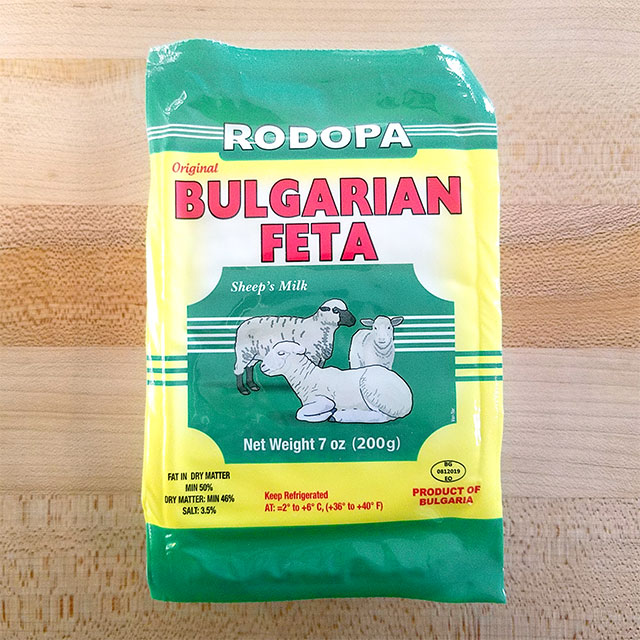
Thus, instead of ELIAMEP meddling in areas where its members have only theoretical knowledge, it would be advantageous to help Greece defend its economy by successfully competing against Turkey and its exports, such as dry figs, and gain a competitive edge against other countries that sell Feta cheese abroad. However, legally, it is a trademark that can only be used by Greece. I am sick and tired of seeing even in Greek-American-owned stores, FETA cheese produced in Israel, and in some places in the United States, like Wisconsin. Even Bulgaria and Serbia sell FETA cheese as "White Cheese" in English. However, in Arabic and Farsi, they state on that very same label that the cheese is FETA.

I care about Greece more than its "benevolent" politicians and ELIAMEP, and I am not alone in doing so. Millions of Greeks and those of Greek descent want to see the country thriving. It is about time for those in charge to prove that they care about the country, not what their benefactors wish, nor their own benefits. Perceived blood continuity or a shared name does not make one Greek; the heart does.

The worst of all the above does not pertain to a specific political party. To quote a very old friend who lived in Kalamariá, "Marko, we do not know whom to vote for; they are all the same."


_____

​
About Marcus A. Templar
Professor Marcus A. Templar is a former U.S. Army Cryptologic Linguist (Language Analyst), Signal Intelligence and All-Source Intelligence Analyst. During his career as a U.S. Intelligence Officer, besides organizational duties, he discharged the responsibilities of a U.S. Army Observer/Controller, Instructor of Intelligence Courses specializing in Deconstruction of Strategies, Foreign Disclosures Officer, and Translator Interpreter of Serbo-Croatian. He is the Macedonian League's National Security Advisor.

About the Macedonian League
We are an international professional Hellenic advocacy group. Our primary purpose is to advance our interests to informed and responsive governments on issues concerning Greece's national security and territorial integrity. As of 12 February 2019, the Macedonian League's main focus is on the “Prespes Agreement", as this Agreement is a serious national security issue for Greece and the wider Balkan region. The Macedonian League also focuses on exposing and combating anti-Hellenism and analyzing political developments in Skopje.

For more information, follow us on: Website, Facebook, Twitter
0 Comments

The Macedonian League vehemently objects and protests the drafting of the "Thracian Hellenism Day" decree

4/10/2025

0 Comments

 
PictureThracian Hellenism Day decree
Click to enlarge
(Ελληνικά παρακάτω)
The Macedonian League vehemently objects and protests the drafting of the Presidential Decree of 24 December 2024 (which was published in the Greek Government Gazette on 14 January 2025) that established in a very vague manner April 6 as “Thracian Hellenism Day” without reference to the term GENOCIDE.

At a global conference of Thracian Greeks at Didymóteicho in June 2006, [the date] April 6 was assigned as the day of remembrance for the genocide of the Greeks of Eastern Thrace because it was on this day during Easter of 1914 that the persecution of Greeks in the region intensified. The Greeks of Eastern Thrace refer to this day as Black Easter (GGRC, 2025).

As such, without referring to GENOCIDE in the text, the Presidential Decree downgrades an already important day of remembrance changing it from a GENOCIDE to a simple annual event, to once again appease the Turks. When a government orders the systematic killing of innocent civilians, it is not just a simple event, nor is it just a random massacre; it is a GENOCIDE!


It is shameful and downright treason for a government to deny justice to the whole nation.

Although the National Anthem of Greece does not pay tribute to the Sultan of Turkey (as is the case in the Dutch National Anthem in which the Prince of Orange pays tribute to the King of Spain) the Greek government has established an unfortunate tradition of bending its knees before the Sultan of Turkey or a Sultan wannabe as a gesture of appeasement. They repeated the same actions when Inonu forced Venizelos to not only sign a one-sided Greco-Turkish Agreement in 1930, but to force Venizelos to submit Ataturk’s name for the Nobel Peace Prize and to simultaneously make the genocide a taboo subject in Greece. They repeated the same actions in the state-sponsored Pogrom in Constantinople in 1955, in the illegal Turkish invasion of Cyprus in 1974, and in the Imia Crisis of 1996.

Appeasement of a tyrant was never an effective solution. Good neighborly relations must be reciprocal, not one-sided.

The Macedonian League demands a correction to this Presidential Decree via the addition of the word GENOCIDE in the text.


​///

​​

Η Μακεδονική Αμφικτυονία (Macedonian League) διαμαρτύρεται έντονα για τη σύνταξη του Προεδρικού Διατάγματος για την «Ημέρα Θρακικού Ελληνισμού»

Η Μακεδονική Αμφικτυονία (Macedonian League) αντιτίθεται και διαμαρτύρεται έντονα για τη σύνταξη του Προεδρικού Διατάγματος της 24ης Δεκεμβρίου 2024 (το οποίο δημοσιεύτηκε στην Εφημερίδα της Ελληνικής Κυβέρνησης στις 14 Ιανουαρίου 2025) που καθιέρωσε με πολύ αόριστο τρόπο την 6η Απριλίου ως «Ημέρα Θρακικού Ελληνισμού» χωρίς αναφορά στον όρο ΓΕΝΟΚΤΟΝΙΑ.

Σε παγκόσμιο συνέδριο των Ελλήνων της Θράκης στο Διδυμότειχο τον Ιούνιο του 2006, ορίστηκε η 6η Απριλίου ως ημέρα μνήμης της γενοκτονίας των Ελλήνων της Ανατολικής Θράκης γιατί ήταν αυτή η ημέρα του Πάσχα του 1914 που εντάθηκαν οι διωγμοί των Ελλήνων σ’ αυτήν την περιοχή. Οι Έλληνες της Ανατολικής Θράκης αναφέρονται στη ημέρα αυτή ως Μαύρο Πάσχα (GGRC, 2025).

Ως εκ τούτου, χωρίς να αναφέρεται ο όρος ΓΕΝΟΚΤΟΝΙΑ στο κείμενο, το Προεδρικό Διάταγμα υποβαθμίζει μια ήδη σημαντική ημέρα μνήμης μετατρέποντάς την από ΓΕΝΟΚΤΟΝΙΑ σε απλή ετήσια εκδήλωση, για να κατευνάσει για άλλη μια φορά τους Τούρκους. Όταν μια κυβέρνηση διατάζει τη συστηματική δολοφονία αθώων πολιτών, δεν είναι απλώς ένα απλό γεγονός, ούτε είναι απλώς μια τυχαία σφαγή. Eίναι ΓΕΝΟΚΤΟΝΙΑ!

Είναι επαίσχυντη και καθαρή προδοσία για μια κυβέρνηση να αρνείται τη δικαιοσύνη σε ολόκληρο το έθνος.

Αν και ο Εθνικός Ύμνος της Ελλάδας δεν αποτίει φόρο τιμής στον Σουλτάνο της Τουρκίας (όπως συμβαίνει στον Εθνικό Ύμνο της Ολλανδίας στον οποίο ο Πρίγκιπας της Οράγγης αποτίει φόρο τιμής στον Βασιλιά της Ισπανίας), η ελληνική κυβέρνηση έχει καθιερώσει μια ατυχή παράδοση να σκύβει το κεφάλι της μπροστά στον Σουλτάνο της Τουρκίας ή σε έναν επίδοξο μιμητή Σουλτάνο ως χειρονομία κατευνασμού. Η κυβέρνηση επανέλαβε την ίδια στάση όταν ο Ινονού ανάγκασε τον Βενιζέλο όχι μόνο να υπογράψει μια μονόπλευρη ελληνοτουρκική συμφωνία το 1930, αλλά να αναγκάσει τον Βενιζέλο να υποβάλει το όνομα του Ατατούρκ για το Νόμπελ Ειρήνης και ταυτόχρονα να κάνει τη γενοκτονία θέμα ταμπού στην Ελλάδα. Επίσης, η κυβέρνηση επανέλαβε την ίδια στάση και κατά τη διάρκεια του κρατικού πογκρόμ στην Κωνσταντινούπολη το 1955, και στην παράνομη τουρκική εισβολή στην Κύπρο το 1974, και στην κρίση των Ιμίων το 1996.

Ο κατευνασμός ενός τυράννου δεν ήταν ποτέ αποτελεσματική λύση. Οι σχέσεις καλής γειτονίας πρέπει να είναι αμοιβαίες και όχι μονόπλευρες.


Η Μακεδονική Αμφικτυονία (Macedonian League) απαιτεί διόρθωση του Προεδρικού Διατάγματος με την προσθήκη της λέξης ΓΕΝΟΚΤΟΝΙΑ στο κείμενο.


​
_____
Department of Communications
The Macedonian League


_____
About the Macedonian League
We are an international professional Hellenic advocacy group. Our primary purpose is to advance our interests to informed and responsive governments on issues concerning Greece's national security and territorial integrity. The Macedonian League also focuses on exposing and combating anti-Hellenism and analyzing political developments in Skopje.

For more information, follow us on: Website, Facebook, Twitter​
0 Comments

The 2024 Macedonian League Annual Assessment with National Security Advisor Marcus A. Templar

12/16/2024

0 Comments

 
Picture
​In the 2024 Macedonian League Annual Assessment, we talk with National Security Advisor, Marcus A. Templar, for an in-depth analysis of some of the most pressing questions from our audience, including among others: China's role in Greece, regional players, the Greek Diaspora, and the Greek political establishment.


​QUESTION 1:

After China secured control of the Greek port at Piraeus in 2016, many Chinese state-controlled Facebook pages suddenly popped up, showcasing a considerable push in China for the Greek language and culture being taught to Chinese citizens. On the outside, many may consider this a beautiful gesture and love for Greek culture. However, from an intelligence perspective, this may be very dangerous. Should Greeks be worried?

China's influence campaign in Greece has evolved over the past few years, focusing on "softer" forms of cooperation such as culture and education, local twinning, and cultivating ties with Greek media. However, its impact has been limited due to its modest media and social media presence. Chinese pressure is usually visible when Beijing pushes back on specific issues that it perceives as detrimental to China's national image and interests. Influenced by China's probably financial pressure, Greece has rejected a European Union declaration at the United Nations criticizing China's human rights record, which undermines attempts to combat Beijing's crackdown on activists and dissidents. Remember that whatever China does is influenced by its ulterior political and economic motives as dictated by its strategic goals. They aim for world hegemony in any way possible.


​
​QUESTION 2:
Greek organizations in the Diaspora often have various opportunities to engage with their governments regarding Greek national interests. However, the messages received by politicians are not always diplomatic. If you could teach a class in diplomacy geared toward Greek organizations in the Diaspora, what would that look like?

In the first place, diplomacy is not for everyone. People must know their limits in all and any ways possible. Having come in contact with some Greek American organizations and SAE, I understand the frustration of the leadership of Diaspora organizations. Diplomacy can be positive and negative.

Positive diplomacy is crucial in negotiations and requests, providing several benefits that improve communication effectiveness. It creates an atmosphere of mutual respect and understanding, fostering trust between parties. This trust allows for open dialogue without fear of backlash. Active listening, a key component of positive diplomacy, helps negotiators understand each other's perspectives, leading to creative solutions. Diplomacy also promotes patience and restraint, reducing conflicts and promoting collaboration to reach sustainable agreements. Preparation is essential in positive diplomatic engagements to address challenges and achieve favorable outcomes with minimal misunderstandings.

Hostile diplomacy involves governmental actors of the Ministry of Foreign Affairs (MFA), not only in an official capacity but also as individuals to "assist" the situation, interfering with organizations' lobbying efforts because they do not like the elected board. I have seen it in SAE.

We had an elected board, and within six months, the government of Greece forced out the elected head of the board and appointed a Greek American politician from California. I left SAE altogether. If a government does not like the existence of an elected board, why do elections occur? BTW, such an act was illegal because the Constitution of Greece at the time and the statute in existence were obvious. Legally, the Diaspora passes any needs it has to the government of Greece and not vice versa.


QUESTION 3:
It is getting harder and harder for certain ethnic groups to post on Facebook due to posts being deemed a violation of the Facebook community standards. Such a matter is especially true for Greeks, Cypriot Greeks, Armenians, and others with a long history of Ottoman oppression. However, on the flip side, Facebook is chock-full of anti- Greek pages and racist posts, and we often hear people telling us that those posts always come back as "not violating" Facebook's rules when reported. Is there something that can be done, and by whom?

Let me start with Goethe's reaction to nonsense: "There is no more terrible sight than ignorance in action (Goethe, 1908)."[1]

What concerns me is that various individuals offer their opinions based on their educational level or historical biases. As the American physicist Richard Freyman correctly stated, "Never confuse education with intelligence. You can have a PhD and still be an idiot."

On an established basis, they disseminate public disinformation. I suspect that their mother countries' governments are actively involved in how they write. It is the manifestation of the dynamics of willful ignorance that social media assists. In the case of Albanian social media: the participants of such discussions use canned "facts" given to them by a coordinated Albanian government effort to establish a history that never existed, so their responses are fake.

I read a few Wikipedia entries on Albanians posted by Albanians. Perhaps Rama and his cronies are content about it. However, they failed to connect the present Albanian ethnos to any other ethnos of the south Balkans, including "Illyria" before the 3rd century AD. The fact that Ptolemy, the historian, mentioned Albani as one of the Illyrian tribes it does not mean that the present-day Albanians are descendants of those people (Prolemy's Geography, par. 23, chapter 3, Book 2 – geographical location: 46°00' - 41°05'.

Turks, for instance, are not locals in Turkey, and Hungarians invaded the location they live today. The difference is that we have a clear recorded history because of the time they migrated. The fact that we do not know the specifics of the Shqiptarët arriving in their present location does not mean they are locals. One must never forget that Albania was also in the Caucasus, and Iberia was next to Albania.

In 1928, Ernst Brugger wrote the essay Almain and Ermonie as Tristan's Home, published in Modern Philology, Vol. 26, No. 1 (August 1928), pp. 1-12 by the University of Chicago Press. The Chronicles of the Picts, Chronicles of the Scots, edited by William F. Skene, LL.D., H.M. General Register House, Edinburgh. 1867, states the same. It was about Scotland being called Albania in the Middle Ages for about 500 years. A scholarly term for Britain is Albion. Recorded in Old English, the word comes from Latin and is related to Latin albus, 'white,' in inference to the white cliffs of Dover. Rubric in the Chronicle of the Canons of Huntingdon, in Р. & Ѕ., 209, states:
​
​"Аѕ we find in our chronicles, the Scots [have possessed] Scotland, which was at first called Albania, for 456 years from Alpin, the first monarch of the whole island; and from him in direct line of succession the hereditary right has descended correctly, аѕ is shown below, to Malcolm III, [king of Scotland,) who received St Margaret in marriage." 456 years added to the year 834 (the date of the union given in this chronicle) would give 1290, the year of queen Margaret's death.

Regarding the term Illyrian, I must remind all those "Illyrians" that the Slavic people in southern Balkans inhabit the lands of the so-called Illyrians. Albanians are not the only inhabitants, and neither are locals.

In 1796, a grain merchant from Karlovac, Croatia, named Josip Šipuš, called for a common language for business purposes to no avail.[2] During his tenure along the northern Adriatic, the Napoleonic governor of the "United Illyrian Provinces" between 1809 and 1813 tried but failed to impose a single language on the Slovenes and Croats.[3] A few years later, such a union occurred with the Illyrian Movement. Here is how it started.

A group of young intellectuals initiated the Croatian national revival. They called it the Illyrian Movement, a cultural and political movement during the first half of the 19th century, around 1835–1849. The title "Illyrian" symbolized a modern movement, not the ancient tribes).[4]

In their early years, the undisputed leader of the Illyrian Movement was Ljudevit Gaj (1809-1872), a lawyer, publisher, and linguist.[5] This movement aimed to create a Croatian national establishment within the Austro-Hungarian Empire through linguistic and ethnic unity among South Slavs. Even though Gaj explicitly rejected the forcible imposition of any single dialect on all South Slavs, he rejected the notion of forging a literary language from all the existing dialects.[6]

Whether Albanians are locals or not is explained by Emperor Julian, the Apostate, who wrote the book "The Caesars" in Greek, stating that Trajan said, "the Getae I expelled, removed." The translated text in English that has it as subdued is wrong.

The verb ἐξαιρέω > ἐξαιρῶ is irregular. Its second aorist, ἐξεῖλον, which Emperor Julian used, means "removed" (See Lexicon Liddel Scott Jones below). The original text states: τὸ Γετῶν ἔθνος ἐξεῖλον, which means, "I expelled/removed the nation of Getae." Bear in mind that Greeks called the tribe Getae and the Romans called them Dacians. They were the same people.
​
Picture
                Look at note III. 2. above.

Yes, Trajan expelled them, and the only place they could go was south to Moesia, which is today Serbia and Bulgaria. Then, the Slavs came down and partially pushed them to the location of present-day Kosovo and Albania. Byzantium was too strong for them.


QUESTION 4:
Staying on this subject, ever since AI and ChatGPT have become normalized in everyday use, Greece's enemies from two western Balkan countries have flooded social media and the internet with fake history in which both groups now claim ancient and modern Greek history as their own and the Greeks wiped out of a given historical event. As such, this is causing mass confusion for outsiders since people who want to research something are bombarded with "manipulated" history that purports to be factual on social media and certain staged websites. Should not this issue be carefully monitored and countered by Greece's intelligence and cybercrime communities?

George Bernard Shaw stated, "Beware of false knowledge; it is more dangerous than ignorance." Social media is like a gossip page. I have avoided using it extensively for the same reason. I have accounts on some but have not used them for a long time.

Social media participants often share opinions based on half-truths and wishful thinking, which is inaccurate from a historical standpoint. They are not experts in anything besides horse manure, and their actions are hazardous from a national security perspective. Previous dictatorial governments have invented the history of countries like Albania and Skopje to keep their people united under the dream of racial superiority. They have mistranslated and misunderstood facts of ancient Greece, primarily historical literature.

Greece's politicians are unconcerned onlookers as they invest in Western European financial institutions. The regimes aimed to develop a chauvinistic and nationalistic background for imperialistic territorial purposes, accusing others of the same crimes they had or aim to commit.

Greece might want to implement what India and other countries have done. India, for instance, enacted the Ministry of Electronics and Information Technology. The United States, besides the National Security Agency/Central Security Service, has recently enacted the Cybersecurity and Infrastructure Security Agency (CISA), two pivotal entities in the U.S. responsible for maintaining the nation's security and resilience against cyber threats. Greece needs such a functional agency or ministry.


​
​QUESTION 5:
Minister of Defense Nikos Dendias has really stepped up to the plate in his current role. He often speaks as a statesman both in Greece and abroad. Do you foresee him playing an even larger role in the future of Greek politics?

I know of Mr. Dendias only from what I have read about him. I understand that he is an attorney and has previously had ministerial positions as Minister of Justice, Minister of Public Order and Citizen Protection, Minister of Development and Competitiveness, Minister of National Defense, and Minister of Foreign Affairs. I understand he holds the Minister of National Defense position for a second time. He has experience in his present post. I recently read an interview he gave Kathemerini on October 13, 2024.[2]

For the good of the country, I wish him well. However, he would need the cooperation of all political ideologies and parties, especially those of his own, and there is the problem. Greece has problems because its politicians cared about their re-election instead of enacting and implementing sound election laws. If one represents the first district of the Florina Prefecture, one MUST live in the specific location instead of owning a house in Kyfisia and living permanently there.


QUESTION 6:
When Skopje's new President, Gordana Siljanovska-Davkova, took the oath of office, she did so as the President of "Macedonia" dropping the term "North" from her oath. Greece's response on the MFA website was feeble, with two lines discussing the need for maintaining good neighborly relations. What, if anything, could Greece have done very differently in that scenario?

I wish I could say that it is funny, but it is not at all. About a month ago, I read an academic paper by someone from NORTH Macedonia about the issue of good neighborly relations, charging Greece with non-compliance. He somehow missed the point that such a relationship is reciprocal. It is a severe violation of international law, but if people expect ANY judicial move on behalf of the Greek political establishment, I hope they do not hold their breath. The 2018 Agreement clearly states that the history of the "Macedonian" Slavs and the real Macedonian Greeks do not share the same history. They are two different ethnicities. Article 7 of the 2018 Ohrid Agreement is CLEAR.

There is nothing wrong with a government trying a diplomatic approach to solve problems a neighboring government creates. However, what happens with Skopje, Albania, and Turkey has become a constant harassment. A government cannot allow other governments to jerk the country around for their political purposes. One can turn the other cheek once, even twice; beyond that, it gives the impression of being afraid to respond to bullies.

According to their mentality, Greeks are pushovers, and everyone knows it. Some Greeks are pseudo-cultured. One does not have to do anything more than look at their behavior on various TV talk shows and see how they yell and scream against each other, ready to beat each other about things that have nothing to do with the subject and a lot to do with ego. It is after all what intelligence agencies are for. ELIAMEP does not get it. They only employ people whose understanding of intelligence issues is limited IF it exists. They are all theory and no practice.

Turks jerk them around for years regarding the Aegean. Has anyone in the Greek government taken Turkey to the International Court of Justice (ICJ or World Court)? We saw what the Greeks did in the case of Ocalan or even before that with the case of Imia. Or should I remind people about the case of Cyprus? They blame people who had nothing to do with anything, or they were victims themselves. Nevertheless, not one points the finger at the families that govern today. It is take it or leave it. I know more than I can tell. The devil is in the details.


QUESTION 7:
A case in point to what you just stated, the treatment of the Greek Minority in Albania: The ethnic Greek minority politician Fredi Beleri was released from Albanian prison after 16 months on what were trumped-up charges concocted by Albanian Prime Minister Edi Rama. How could Greece even allow this to go on for so long, and what actions should Greece have taken on the day that Beleri was jailed?

Again, I blame the political establishment of Greece. That is a matter of SAE. Greece should have taken Albania to the ICJ or the relevant European Court. They chose to do nothing. Greece's government should have stopped all Albanian remittances from Greece. Then, we would see how fast Rama would be compliant. It was an issue of protecting the Greek minority in Albania and human rights.

Nevertheless, the excuse for that mentality was given to me by a Greek diplomat in 2010 who told me, "Eh, what can we do? We are a small country!" I answered, "I did not know Skopje was bigger than Greece!" But the election of Fredi Beleri to the Group of the European People's Party (Christian Democrats) is a victory for Democracy.


QUESTION 8:
Turkey's President stood up at the 79th UNGA, pointing fingers at Israel concerning the war against Hamas; however, everything he accused Israel of doing against the Palestinians, the Turkish state has done and still does against every country on its borders and internally against those they categorize as "terrorists." As it specifically pertains to the Kurds, as Turkey was pointing fingers at Israel, throughout 2024 the Turkish military bombarded Kurdish areas in northern Iraq over 1,000 times, according to Kurdish lobbies in Washington and in an article in the newspaper Turkish Minute. Aside from Al Jazeera keeping silent on Turkish atrocities while amplifying every Israeli action, how does Turkey get away with their actions without anyone holding them to account, not even the United Nations?

The same people who scream in favor of the Palestinians find themselves trapped in their own philosophy. Al-Jazeera (The Peninsula) is a Qatari- established, stationed, and funded TV network serving the interests of its Arab Muslim billionaire rulers. It cares less about the rights of people while they have a twisted understanding of right and wrong. It is the same Emirate that sanctioned the leadership of Hamas (Ḥarakah al- Muqāwamah al-ʾIslāmiyyah / حركة المقاومة الإسلامية), allowing millions of U.S. dollars from various sources to fill their coffers. At the same time, the people in Gaza suffer the consequences of their callousness. The word Muqāwamah changed its meaning from resistance to harassment. In the words of Lieutenant-General Sir Alexander Galloway (November 3, 1895 –January 28, 1977), then the director of UNRWA in Jordan, in 1952:
​
It is perfectly clear that Arab nations do not want to solve the Arab refugee problem. They want to keep it as an open sore, as an affront against the United Nations, and as a weapon against Israel. Arab leaders don't give a damn whether the refugees live or die.[8]

It is abhorrent for people to suffer the consequences of egotistic right or left dictators to create such conditions. Unfortunately, always the victims of wars were, are, and always will be innocent civilians. The difference is that today, the means of communication and transmission are different. The scope of the subject matter can become very biased, showing only what the network owner wants people to see. The same is true with social media.

The question that I have is simple. What was the status of the strip of Gaza and the West Side of Jordan under the sovereignty of Egypt and the Kingdom of Jordan? When one answers these questions, one understands where the problem lies.

Also, it is noted that books issued by UNRWA for the pupils and students are reportedly inimical to Israel, and in addition, UNRWA's definition of a Palestinian refugee is inconsistent with other international classifications, including the United Nations High Commissioner for Refugees (UNHCR) and the U.S. Immigration and Nationality Act. Congress introduced a bill to ensure the U.S. policy is consistent with the definition of a refugee in the Immigration and Nationality Act.

UNRWA's definition of a Palestinian refugee endlessly perpetuates from generation to generation regardless of where the person holds a new citizenship or is born. However, such a definition applies ONLY to the Palestinians. For all others, their refugee status discontinues once they obtain new citizenship. Their posterity is no longer refugees.

If UNRWA applies the exact definition of refugee to Greece and the Greek refugees of Asia Minors the "special" definition of refugees of UNRWA as applied to Palestinians only, then not only those Greek Orthodox refugees that left Asia Minor should receive food and monetary assistance from UNRWA, but also their children and their children's children and so on to the upcoming centuries. So why is it that only the Palestinians are treated in this manner and not the Greeks? Are the Greeks fools? Greeks should start thinking of their own situation before showing compassion for others. After all, Hamas, a duly elected political party by the Palestinians, brought the disaster to themselves by attacking Israel. Israel is not going anywhere. Bear in mind that Hamas is an offshoot of the same organization behind the assassination of President Anwar as-Sadat of Egypt, the Muslim Brotherhood.

Or what about the Assyrians, the Kurds, and other oppressed people of the Earth? Because Greeks, Assyrians, and Kurds are not Arabs.

Of course, I must admit that in Turkey, the opposition and some progressive media are against Erdogan's rhetoric and deeds, but they are too weak to be heard, let alone do something about it.

​I do remind the Greeks that if they support Palestinians because of the myth that they emigrated to Palestine from Crete and that makes them "Greeks," they had better read the Harris Papyrus and the Canopus Decree to learn something. BTW, Kaft-ur = great kaft in Kemetic (ancient Egyptian language) means the land where the phoenix grows,i.e., Phoenicia. However, does anyone think the Phoenicians would allow outside sea-faring people to travel freely in their domain and occupy the land they considered theirs? Let us be serious. Ai-kaft means the curved sea-coast, which is a fitting name for the land of the various mouths of Nile at its delta as the geology was at that time, before the natural aggradations.
________________
[1] Johann Wolfgang von Goethe, Collected Works -The Maxims and Reflections,
Translated by Thomas Bailey Saunders, Pub. Macm Illan And Co., Limited St. Martin's
Street, London, 1908.

[2] Leksikografski Zavod 1955a, 339.

[3] Despalatović, Elinor Murray. “Ljudevit Gaj and the Illyrian Movement.” New York: East European
Quarterly, 1975, 22.

[4] Despalatović, Elinor Murray. “Ljudevit Gaj and the Illyrian Movement.” New York: East European
Quarterly, 1975.

[5] Mitchell Young, “Language And Nation: An Analysis of Croatian Linguistic Nationalism,” A Master of
Arts Political Science Thesis presented to the Faculty of San Diego State University, Spring 2011.

​[6] Ivo Banac, The National Question in Yugoslavia: Origins, History, Politics (Ithaca: Cornell, 1988),
78-79.

[7] https://www.mod.mil.gr/synenteyxi-yetha-nikoy-dendia-stin-efimerida-kathimerini-tis-kyriakis-ton/
fbclid=IwY2xjawF5XU5leHRuA2FlbQIxMQABHS7WZP9zsYLbeyCWXyaG3HEaYjppPc86EuNeMNMt04KGU99uKyPEKxiQfA_aem_h0gf4qpnft3sbkYSeS-BKQ&sfnsn=mo

[8] Jay Sekulow, UNRWA Has Changed the Definition of Refugee
The U.N.'s agency for Palestinians should stop playing word games and do its job,
August 17, 2018.
https://foreignpolicy.com/2018/08/17/unrwa-has-changed-the-definition-of-refugee/
_______________
​About Marcus A. Templar
Professor Marcus A. Templar is a former U.S. Army Cryptologic Linguist (Language Analyst), Signal Intelligence and All-Source Intelligence Analyst. During his career as a U.S. Intelligence Officer, besides organizational duties, he discharged the responsibilities of a U.S. Army Observer/Controller, Instructor of Intelligence Courses specializing in Deconstruction of Strategies, Foreign Disclosures Officer, and Translator Interpreter of Serbo-Croatian. He is the Macedonian League's National Security Advisor.

About the Macedonian League
We are an international professional Hellenic advocacy group. Our primary purpose is to advance our interests to informed and responsive governments on issues concerning Greece's national security and territorial integrity. As of 12 February 2019, the Macedonian League's main focus is on the “Prespes Agreement", as this Agreement is a serious national security issue for Greece and the wider Balkan region. The Macedonian League also focuses on exposing and combating anti-Hellenism and analyzing political developments in Skopje.

For more information, follow us on: Website, Facebook, Twitter
0 Comments

Collaborators or Innovators? Examining the Roles of Copyists, Translators, and Editors in Textual Production

5/9/2024

0 Comments

 
PictureMarcus A. Templar
National Security Advisor
Macedonian League
Living languages keep developing in vocabulary, definitions, syntax, or word order. Investigating the effects of copyists, editors, and translators on ancient documents is crucial to understanding and interpreting historical texts. These individuals play a pivotal role in preserving, disseminating, and interpreting ancient texts that form the basis of our knowledge of various civilizations, cultures, and historical events. This essay will delve into the historical context, key figures, impact, and future developments related to investigating the effects of copyists, editors, and translators on ancient documents.

In ancient times, the transmission of knowledge and information relied heavily on manuscripts copied by scribes and scholars. These copyists played a vital role in preserving and disseminating texts from one generation to another. However, the process of copying manuscripts is not infallible, and errors might occur owing to various factors, including human error, a lack of attention to detail, and the deterioration of the original text. Copyists often unintentionally add or omit words, phrases, or sentences, leading to text inaccuracies.

Conversely, editors reviewed and revised texts to ensure accuracy, coherence, and consistency. They corrected errors introduced by copyists, standardized spelling and grammar, and sometimes even added explanatory notes or commentary to clarify ambiguous passages. Editors had an essential part in creating the final version of a document that they would distribute to readers. They meticulously reviewed, corrected, and suggested improvements to the content, ensuring its accuracy and readability. Their expertise and a keen eye for detail were instrumental in transforming the initial drafts into polished, comprehensive documents ready for distribution.

Interventions of numerous people for plentiful reasons have significantly impacted the interpretation and reception of a text.

Translators were another group of individuals who played a crucial role in making ancient texts accessible to a broader audience by rendering them into different languages. Translating ancient texts posed several challenges, including linguistic differences, cultural nuances, and the need to convey the original meaning accurately.

Translators had to handle these issues efficiently to preserve the original text's substance throughout translation. Their work was instrumental in introducing foreign texts to new readerships and facilitating cross-cultural exchanges. Most importantly, a translator should consider the period when a text was written to unravel its meaning and the specific dialect of the time. Occasionally, one should compare the meaning of certain words to identical ones found in other documents of the same period.

The impact of copyists, editors, and translators on ancient documents is multifaceted. On the positive side, their efforts have led to preserving and disseminating valuable texts that provide insights into ancient civilizations' beliefs, practices, and traditions. Without the work of copyists, editors, and translators, many ancient texts would have been lost to history, depriving us of crucial information about our collective past. Their contributions have enriched our understanding of various fields, such as literature, philosophy, religion, and history.

Furthermore, the efforts of copyists, editors, and translators have facilitated the transmission of knowledge across geographical and cultural boundaries. By making ancient texts available in different languages, they have fostered intellectual exchanges and cultural interactions that have shaped the development of human civilization. Disseminating ideas, beliefs, and practices through translated texts has enriched diverse cultures and promoted global understanding and cooperation.

However, it is essential to acknowledge that the work of copyists, editors, and translators has challenges and limitations. Copying errors, editorial interventions, and translation inaccuracies can distort the original meaning of a text, leading to misunderstandings or misinterpretations. The subjective decisions made by editors and translators can influence how readers understand and receive a text, potentially introducing biases or distortions not present in the original version.

Moreover, the process of copying, editing, and translating ancient texts is not always transparent, and the sources of information about the individuals involved in these tasks can be scarce or unreliable. This lack of openness calls into question the validity and dependability of the texts, which have been copied, edited, and translated several times. Scholars and researchers must exercise caution and critically evaluate the textual variants and editorial interventions to accurately reconstruct the original meaning of ancient texts.

In investigating the effects of copyists, editors, and translators on ancient documents, several influential individuals have made significant contributions to studying textual transmission and interpretation. One such figure is Desiderius Erasmus, a renowned humanist and scholar of the Renaissance who produced critical editions of the New Testament that influenced the Reformation. Erasmus's meticulous work as an editor and translator paved the way for a more rigorous and scholarly approach to studying ancient texts. He even created what is known as Erasmian Pronunciation for his convenience, as he stated.

Since the scope of this monograph is about translations, I will not explain Aristeas' work regarding the Greek language and the alphabet.

Notwithstanding, I will explain the flaws of academicians regarding the pronunciation of any of the ancient Greek dialects because they do not differentiate between dialects, regions, or timeframes, consistently using the same pronunciation regardless of the situation.

Classicists insist on using the original pronunciation as they imagine, as if the language never evolved, while additionally, we have no recorded voices of the past. Other scholars argue that using modern Greek pronunciation instead of ancient Greek does not affect the meaning of a text. Modern Greek pronunciation allows for easier comprehension and communication, making texts more accessible to a broader audience.

​Furthermore, the essence of a text lies in its content and message, not in the specific sounds used to convey it. The meaning of words and sentences remains unchanged regardless of how they are pronounced. Modern Greek pronunciation can enhance understanding by aligning with contemporary linguistic norms.

Ultimately, studying ancient texts aims to gain insight into their themes and ideas, not to adhere strictly to historical phonetics. Embracing modern Greek pronunciation can make these texts more approachable and relevant today.

I explained some details on ancient Greek dialectal, orthographical intricacies, and pronunciation during his presentation at the 9th International Conference of Greek Linguistics with the title "The Course of the Greek Language throughout the Centuries, approaches to its Study and Analysis" held at Chicago University from October 29, 2009, to October 31, 2009.

Another influential figure in this field is Johann Lorenz von Mosheim, a German historian and theologian who wrote extensively on the history of Christianity and the transmission of biblical texts. Mosheim's works on textual criticism and the history of the Christian Church laid the foundation for modern scholarly approaches to investigating the authenticity and reliability of ancient documents. His emphasis on carefully examining copies, editions, and translations contributed significantly to developing critical methodologies in studying ancient texts.

Furthermore, the contributions of figures such as Sir Thomas Bodley, who founded the Bodleian Library at the University of Oxford, have been instrumental in preserving and disseminating ancient texts to scholars and researchers. The Bodleian Library houses a vast collection of manuscripts, editions, and translations of ancient texts that form the basis of scholarly research in various disciplines. Bodley's vision of a comprehensive library providing access to a wide range of texts has had a lasting impact on investigating the effects of copyists, editors, and translators on ancient documents.

Here are some examples:


                                                              The Canary Islands


Most people know of the Canary Islands. Very few people understand that the name Canary has nothing to do with the yellow bird. Pliny the Elder explains the real meaning of the names of the islands. In his Natural History, book 6, chapter 37, paragraph 205, the author states in Latin:
​

Proximam ei [insulam] canariam vocari a multitudine canum ingentis magnitudinis — ex quibus perducti sunt Iubae duo —; apparere ibi vestigia aedificiorum. cum omnes autem copia pomorum et avium omnis generis abundent, hanc et palmetis caryotas ferentibus ac nuce pinea abundare; esse copiam et mellis, papyrum quoque et siluros in amnibus gigni. infestari eas belvis, quae expellantur adsidue, putrescentibus.

Its translation in English follows:
​
The one next to it is [the island] of dogs; it contains vast multitudes of dogs of enormous size, two of which were brought home to [satrap] Yuba: some traces of buildings are to be seen here. While all these islands abound in fruit and birds of every kind, this one produces the date palm, which bears the Caryota and pine nuts in great numbers. Honey abounds here, and papyrus and the fish called silurus are found in the rivers. These islands, however, are greatly annoyed by the putrefying bodies of monsters, which are constantly thrown up by the sea.[1]

Then, how did we end up calling the islands Canary? It is the result of a translation error. Canis in Latin means dog, and canaria is the feminine adjectival form that describes the noun "insula," meaning island. English speakers know the meaning of K9, such as dog or police dog. Without getting into details of Latin grammar, the original text is in singular accusative case following the rules of Latin grammar. One must remember that Latin is a Subject-Object-Verb (SOV) language with nouns preceding adjectives.

I think the Coat of Arms of the Islands and the statues of dogs explain a few things.
Picture
Picture
                                                           

                                                                The Sixth Commandment


An explanation regarding the first translation of the Torah from Hebrew to Greek is deemed necessary because the Septuagint has many translation errors.

Language Background of the Region

Although the belief that the 72 (Greek OB' – Latin LXXII) Hebrew-speaking rabbis translated the Tanakh, i.e., Torah, Nevi'im, Khetuvim, which comprise the Christian Old Testament, facts disprove the above belief.

Cyrus the Great controlled a large empire by appointing regional governors to satrap specific provinces. When Darius the Great became king in 522 BCE, he implemented a standardized monetary system and made Aramaic the empire's official language.

Historical names for the region known as Palestine include Canaan, the Promised Land, the Land of Israel, and the Holy Land.
The first written references to Palestine appear in the 12th century BC, 20th Dynasty of Egypt, using the term Peleshet to refer to neighboring peoples or lands.

As back as the 8th century BC and the conquest of Palestine by the Aramaic-speaking Neo-Assyrian Empire, the Jews of Palestine underwent a process of intergenerational linguistic assimilation as a result of ultimately geographic, demographic, familial, and socio-economic factors by the 3rd century BC. That is true for ALL region inhabitants, regardless of ethnicity, religion, or language, not just the Judeans and Samarians. The language pattern continued beyond the period of Jesus; Hebrew had been established as a sacred language, not for the common folk.

Ptolemy I Soter (Greek: Πτολεμαῖος Σωτήρ or Ptolemy the Savior") was a Macedonian Greek general of Alexander the Great who became ruler of Egypt (323–285 BC). He became a thriving bastion of Hellenistic civilization and Alexandria, a great seat of Greek culture. During the Greek reign of Egypt, I assume the language of the palace at that time was Attic Greek since it was the language of the Macedonian palace in Pella.

Ptolemy's son succeeded his father to the throne as Ptolemy II the Philadelphus from 284 to 246 BC. One year later, he commissioned the Athenian Grammarian Aristeas to codify a new dialect that all Greeks could easily communicate. It took Aristeas (Aristeus) a few years to complete his fine work.

In 263 BC, according to some sources, Ptolemy II had a series of dreams, which he interpreted as God wanting him to contact the Jewish High Priest for guidance. Ptolemy wrote to the High Priest of the Jews, who sent six elders out of every tribe, i.e., 72, and those most skillful in God's laws.

However, the elders, like every Jew then, spoke Aramaic as their first language and were not proficient in Hebrew or Greek. One must remember the means of communication, education, and people's interaction of the times.

Killing versus Murdering in the Bible

Genesis 4:8 But then it was, when they were out in the field, that Cain rose against Abel, his brother, and murdered him.
בראשית ד:ח וַיֹּאמֶר קַיִן אֶל הֶבֶל אָחִיו וַיְהִי בִּהְיוֹתָם בַּשָּׂדֶה וַיָּקָם קַיִן אֶל הֶבֶל אָחִיו וַיַּהַרְגֵ
The explanation, according to the Merriam-Webster Dictionary:

KILL merely states the fact of death caused by an agency in any manner.
SLAY is a chiefly literary term implying deliberateness and violence but not necessarily motive.
MURDER specifically implies stealth, motive, premeditation, and, therefore, full moral responsibility.

In English, God's command to Moses is not "You shall not kill" but "Do not murder."

Although Christians are taught that the Sixth Commandment states, "Thou shall not kill, the Torah does not state, "Thou shalt not kill," which would be in Hebrew Lo Taharog. The Hebrew root for the word "to kill" is harog, spelled hey-reish-gimel or hrg if one follows the three-letter root verb.

Instead, the Torah says in the Sixth Commandment: Lo Tirtzakh, (לא תרצח) which means "Do not murder" (see Shemot or Exodus 20:13 and Devarim or Deuteronomy 5:17). Here is an explanation of the difference between killing and murder. Starting with Exodus 21:14, "But if anyone schemes and kills someone deliberately, that person is to be taken from my altar and put to death."

Killing is unintentional, coincidental, in self-defense, or war. Murder is killing with guile; it presupposes deliberation and only refers to killing as murder when it is unlawful. However, if a person kills lawfully, she/he does not violate the commandment. Therefore, a difference between הריגה (harog or "killing") and רציחה (tirtzakh, "murder") exists.

Consequently, the correct translation of the verse is: "Thou shalt not murder." After all, one finds numerous wars and killings in the Tanakh (Old Testament). For example, David killed Goliath, but he murdered by proxy Uriah the Hittite. Following Uriah's death, David took Bathsheba, Uriah's wife, as his eighth wife <https://tjpnews.com/torah-makes-distinction-between-murder-killing/>.


                                                                     The Lord's Prayer

Give us today our daily bread vs. Give us today our needful bread.

Ἐπιούσιον = needful, necessary, substantial, NOT daily.

Another mistranslation comes to us from the Lord's Prayer. The Lord's Prayer was written in the Koinē, or Common dialect of Greek, and then translated into Latin. The Greek Church recites the Prayer as it was given to us, using ἐπιούσιον without any explanation. Those Orthodox Churches who translated the New Testament directly from Greek use words such as needful and necessary.

To verify the translation of the word epiousios, I checked with Serbian and Russian Bibles, both translated from the original Greek based on the Old Church Slavonic насѫщьныи or necessary (Codex Zographensis, Codex Marianus, Codex Assemanius, Book of Sava).

In addition, one finds
in the Serbian Bible nasushni or насушни (necessary)
in the Russian Bible nasushchniy насущный (necessary)
in the Ukrainian Bible nasushchniy насущний (necessary)
in the Bulgarian Bible, nas'shhiya нacъшния (vital),
in Arabic Bible, is الجوهري al-jawhariu (essential) translated from the Greek.

Nevertheless, the book of Proverbs 30:8 explains it better. The text states: "Put falsehood and lying far from me, give me neither poverty nor riches; provide me only with the food I need." All the above have the meaning of "necessary," "needful," "vital' or "substantial" in correspondence with the original meaning of the Greek Koinē.

On the other hand, bibles derived their context directly or indirectly from Latin, like the Czech states dnevni and Croatian svagdasnji, both meaning daily.

I must stress that two Greek brothers, Cyril and Methodius, from the Greek city of Thessaloniki, the innovators of the Cyrillic alphabet, are credited with translating the Bible from the original Greek into the Old Church Slavonic.

Per Lexicon Liddell–Scott–Jones (LSJ), the word ἐπιούσιος did not exist in any of the Hellenic dialects but only in the Lord's Prayer. The word was devised under the model of περιούσιος instead of the Greek κληρονόμος or heir. Such an explanation comes from the book of Origen De Oratione or On Prayer.

Origen (Greek: Ὠριγένης), whose full name was Origen Αdamantios (Ὠριγένης Ἀδαμάντιος), was one of the most important figures of early Christianity. He was probably born in Alexandria in about AD 185 and died in Caesarea (present-day Kayseri, Turkey) in about AD 251.

In his book On Prayer > De Oratione, Origen breaks down each sentence of the Lord's Prayer into eight chapters, from Chapter XII to Chapter XIX. The specific sentence in Chapter XVII, "Give Us Today Our Needful Bread," explains everything.

Here is the Greek text:
http://khazarzar.skeptik.net/pgm/PG_Migne/Origenes_PG%2011-17/De%20oratione.pdf

Here is the English translation of the same: https://www.ntslibrary.com/PDF%20Books/Origen%20on%20Prayer.pdf

Below are the two different meanings of the word epiousion considering the grammatical mood structure of the verb "to give" and the word "needful" in Matthew 6: 5-15 and in Like 11 for comparison.

Matthew 6:11: Give us today our daily bread
Although the text is translated directly from Greek, it is: > Please give us today our needful bread.

In Luke 11:3: Give us each day our daily bread
However, translated directly from Greek, it is: > Give us each day our needful bread.

Here I must explain that the text in Matthew grammatically uses the Imperative mood of the Second Aorist δὸς of the verb δίδωμι, which connotes petition or request. Nevertheless, the text in Luke uses the Imperative mood of present tense δίδου of the same verb, which denotes command. Mortals have no power to demand anything from the Almighty.

Christian theology adopted the word ousia or substance from ancient Greek philosophy as a philosophical and theological concept. Numerous ancient Greek philosophers, such as Plato and Aristotle, utilized it as a significant identifier for philosophical conceptions of essence or substance.

Returning to the Lord's Prayer, we must explain that Jesus spoke in the Aramaic language, the language the people of Palestine spoke at the time. Aramaic is, one could say, the basis of modern Assyrian or Neo-Aramaic of the North-East. We are unaware of the language of the original prayer. However, the one we have in Koinē Greek is what the evangelists Matthew and Luke gave us. We do not know what the original word was that the evangelists chose the word ἐπιούσιον (epiousion is grammatically accusative case; nominative case is ἐπιούσιος).

If the evangelists thought that the original word translated as daily, they would refer to it as ἡμερήσιον, an adjective from the noun ἡμέρα. That would have produced the sentence τὸν ἂρτον ἡμῶν τὸν ἡμερήσιον, which translates to our daily bread. Nevertheless, the Lord's Prayer in the original Greek includes the word ἐπιούσιον. Ἐπιούσιον is a word that is composed of two words: the preposition epi (ἐπί) = on, above, over, on to, super, hyper, and the adjective of the noun ousia (οὐσία) = substance, essence).

We encounter such an adjective in the original Greek in "The Symbol of Faith" or "Σύμβολον τῆς Πίστεως." Article 3 states that Jesus Christ is «ὁμοούσιος τῷ πατρί» or "of one essence with the Father."

A useful explanation comes to us on the Advent website.

The most conspicuous difficulty in the original text of Our Father concerns the interpretation of the words artos epiousios, which in accordance with the Vulgate in St. Luke, we translate "our daily bread", St. Jerome, by a strange inconsistency, changed the pre-existing [Latin] word quotidianum into supersubstantialem[ii]

[= supersubstantial] in St. Matthew but left quotidianum in St. Luke. The opinion of modern scholars upon the point is sufficiently indicated by the fact that the Revised Version still prints "daily" in the text but suggests in the margin "our bread for the coming day." At the same time, the American Committee wished to add "our needful bread."
(https://www.newadvent.org/cathen/09356a.htm)

​The matter has nothing to do with doctrine but much to do with lexicon. It indicates that ancient scholars strived to interpret the new word (epiousion) to its correct equivalent.

An explanation of some grammatical rules of the Koinē Greek is necessary. When a preposition precedes a noun or adjective, the preposition emphasizes the meaning of the noun or adjective according to the importance of the preposition. Following the above rule, the word epiousios means more than "necessary," "needful," or "substantial." The emphasis of the preposition changes the meaning to "very substantial" or "supersubstantial," or in Greek, "ὑπερουσιώδης" as St. Jerome put it.

I have published my arguments in the monthly magazine "New Church Life" (Volume CXXI, April 2001, No. 4, pages 153-159).

Here is the online version of the above, with all fathers of the Church over the years in regards to the issue at hand (Thesaurus Linguae Graecae (TLG®) https://stephanus.tlg.uci.edu/Iris/demo/tsearch.jsp#s=1


                                                                      CONCLUSION

Investigating the effects of copyists, editors, and translators on ancient documents is crucial for understanding and interpreting historical texts. These individuals play a pivotal role in preserving, disseminating, and interpreting ancient texts, enriching our understanding of civilizations, cultures, and historical events.

Influential figures such as Desiderius Erasmus, Johann Lorenz von Mosheim, and Sir Thomas Bodley have significantly contributed to studying textual transmission and interpretation.

However, their interventions can also introduce errors, biases, and distortions, highlighting the need for critical evaluation and careful reconstruction of the original meaning. The problem is that people do not realize the difference between reading and translating a text from reading into the text, interpreting, and concluding their choice of meaning, which the text does not explicitly indicate.

We know that Greek had four main dialects (Ionic, Attic, Aeolic, Doric), and if we add the Koine or Common dialect, there were five, and according to Aristotle, 204 subdialects. The ONLY way that one can speak the way ancient Greek speakers pronounced their particular speech is if we had a voice recorded at specific times since the pronunciation kept changing from time to time but also from subdialect to subdialect to dialect. We know about it because we have documented evidence of different spellings of identical words. The only dialect that was officially standardized was the Koine dialect.
https://www.helleniccomserve.com/pdf/KatadesmosFinalProduct31.pdf

___________________________

Endnotes:
[i] https://www.perseus.tufts.edu/hopper/text?doc=Perseus%3Atext%3A1999.02.0138%3Abook
%3D6%3Achapter%3D61

[ii] Supersubstantial, or in Greek, ὑπερουσιώδης

_____
About Marcus A. Templar

Professor Marcus A. Templar is a former U.S. Army Cryptologic Linguist (Language Analyst), Signal Intelligence and All-Source Intelligence Analyst. During his career as a U.S. Intelligence Officer, besides organizational duties, he discharged the responsibilities of a U.S. Army Observer/Controller, Instructor of Intelligence Courses specializing in Deconstruction of Strategies, Foreign Disclosures Officer, and Translator Interpreter of Serbo-Croatian. He is the Macedonian League's National Security Advisor.

​_____
About the Macedonian League
We are an international professional Hellenic advocacy group. Our primary purpose is to advance our interests to informed and responsive governments on issues concerning Greece's national security and territorial integrity. As of 12 February 2019, the Macedonian League's main focus is on the “Prespes Agreement", as this Agreement is a serious national security issue for Greece and the wider Balkan region. The Macedonian League also focuses on exposing and combating anti-Hellenism and analyzing political developments in Skopje.

For more information, follow us on: Website, Facebook, Twitter
0 Comments

The 2023 Macedonian League Annual Assessment with National Security Advisor Marcus A. Templar

12/19/2023

0 Comments

 
Picture

​In the 2023 Macedonian League Annual Assessment, we talk with National Security Advisor, Marcus A. Templar, for an in-depth analysis of some of the most pressing questions from our audience, including among others: Ouranio Tokso's Centre for Macedonian Language, Skopje, Albania, the Greek minority in Albania, Turkey, Bulgaria and Greek politics.

Question:
What does it say about the Greek political system that allowed for the creation of a "Centre for the Macedonian Language" by well-known Ouranio Tokso separatist agitators?
Unfortunately, Article 15.4 of the 2018 Prespa Agreement allows such cultural centers. It states that the parties "shall place special emphasis on the development of cultural relations between the two States, their societies, and their social groups, having particular regard to arts, dance, cinematography, music, and theatre."

​I would not have any problem with the above text and its implementation if I knew that it is in practice, reciprocal, and in good faith. I do not see it happening. It is basically unfair because the Greek minority in the republic of Skopje is effectively nonexistent.

​Question:

​In continuation to the previous point, why did the Greek government not foresee that the Centre for the Macedonian Language is not just a typical "language center" but also attempts to act like a "lobby" organization?  For example, one of their main pillars is the "re-Macedonization" of Greek city and town names in Macedonia.  Another pillar of the center is keeping a list of "anti-Macedonian" incidents in Greece.
I say this:  Either the EYP (Greece's intelligence agency) exists only on paper, or its members are untrained, or their little training is for the birds. Of course, it can be that politicians do not read, or disregard reports issued by EYP's analysts, basing their decisions in accordance with those of the foreign policy think tank ELIAMEP.  If I had to decide between those two, I would choose the EYP, but the people of Greece are responsible for the politicians they choose, not I. Of course, it depends on the meaning of "Macedonization."  Macedonia is already Macedonized, i.e., Greek. It goes back to ancient times. Strabo states (Book 7. 9. 1), "Macedonia, of course, is a part of Greece." I was born in Thessaloniki and studied in Central Macedonia.  I know Macedonia, and it was and is Greek.

​Question:

​How do you feel about Albanian claims over Greek territories?
Athenians rule Greece since 1830. My question is simple: would they negotiate their own personal property in a way that would seriously hurt their pockets, like they have negotiated the issue of Macedonia and are negotiating issues of "autonomous" Northern Epirus and the Aegean islands? I greatly doubt it.

I saw them backing down after a domestic court in Albania, with NO jurisdiction over International Law and the Law of the Sea, decided against the EEZ agreement between Albania and Greece.

I have no idea what happened to Socratic utterance about one's homeland:

«Μητρὸς τε καὶ πατρὸς καὶ τῶν ἄλλων προγόνων ἁπάντων τιμιώτερον ἐστὶ ἡ Πατρὶς καὶ σεμνότερον καὶ Ἁγιότερον ἐν μείζονι μοῖρᾳ καὶ παρὰ Θεοῖς καὶ παρ' ἀνθρώποις, τοῖς νοῦν ἔχουσιν».

Here is the whole text in English:
​
your country is more precious and more to be revered and is holier and in higher esteem among the gods and among men of understanding than your mother and your father and all your ancestors, and that you ought to show to her more reverence and obedience and humility when she is angry than to your father, and ought either to convince her by persuasion or to do whatever she commands, and to suffer, if she commands you to suffer, in silence, and if she orders you to be scourged or imprisoned or if she leads you to war to be wounded or slain, her will is to be done, and this is right, and you must not give way or draw back or leave your post, but in war and in court and everywhere, you must do whatever the state, your country, commands, or must show her by persuasion what is really right, but that it is impious to use violence against either your father or your mother, and much more impious to use it against your country?" What shall we reply to this, Crito, that the laws speak the truth or not? (Plato, Crito, 51.a-c)[1]

The sad part is that modern high school students and even some teachers do not know about this. I had experience in a Greek school in a northern suburb of Chicago a few years ago. Even the teacher who boasted to me that she had graduated from the Kapodistrian University of Athens was as irrelevant to this as her students. Yes, indeed! The class, including the supposedly Greek teacher, was ignorant of what was behind the Macedonian issue, but they were the first to opine.

Countries do not fall from outside dangers but from domestic corrosion. I just finished translating from Romanian to English an academic paper. During my research, I could not help but remember the roots of the demise and the gradual development that ended the existence of the Roman Empire.

Athenians are apathetic, hiding behind a pseudo-sophistication; not only do they not know the neighbors of Greece, but they do not even know Greece. Greece is much more than Attica, the Peloponnese, or even Crete.

As a Greek soldier, I proudly served as a simple private in Polykastron, Macedonia, for 24 months. While I was a student in Montreal, I volunteered to return to Greece and fight against the Turks in 1974; I can prove it; I still have the receipt from Council General of Greece in Montreal. That is patriotism. Waving the flag and making speeches boasting about yourself is garbage.
Blood does not make anyone Greek; the heart does.

​Question:

In recent years, the Turkish government has been promoting the odd position that Greece is responsible and should be made to pay reparations for the Tripolitsa Massacre of 1821. The Turkish MFA publicly commemorates that day as a "genocide" and the conservative Islamist Yeni Shafak newspaper recently stated that Greece should be taken to an international court. However, there are two main problems - one, that there was no Greek government in 1821, and two, that the Ottoman Empire was an imperialist power that colonized foreign lands. Why does the Turkish government put forth such preposterous positions? Do they do it just for kicks?
Before I start, I would like to explain the meaning of the newspaper's title. It is Yeni Şafak (Yeni Shafak) and means New Dawn. The paper has been accused of using hate speech to attack minorities and opposition as reported in 2014 by the BBC, AI Monitor and Hrant Dink Foundation.

Evidently, the author of such a "legal" opinion is unaware of what constitutes "genocide."  Probably, he tried to please his boss, Erdoğan, from the former Greek village of the Pontic "Potamya." The Siege of Tripolitsa (Greek: Ἅλωσις τῆς Τριπολιτσάς]), also known in Turkish as "Tripoliçe katliamı" occurred in the spring and summer of 1821 during the early days of the Greek War of Independence against the Ottoman Empire, which had started earlier that year, which resulted in an early triumph for the revolutionary Greek forces.

Tripolitsa was a crucial target since it served as the Ottoman Empire's administrative hub in the Peloponnese. Once Greek revolutionary forces took it over, they massacred the Turkish inhabitants of the city. The frustration of the Greek fighters was so high after 400 years of boorish enslavement that nothing and nobody could stop them. But let us see some massacres committed by the Ottoman Turks.

The following is a partial list of Turkish massacres from 1822 up until 1909:
​
1822
​1823
​1826
​1850
​1860
1876
​1877
​1879
​1881
​1892
​1894
​1894-96
​​1896
​1896
​1903-04
​1904
​1909
Chios
Messolongi
Constantinople
Mosul
Lebanon
Bulgaria
Bayazid
Alashkert
Alexandria
Mosul
Samsun
Armenia
Constantinople
Van
Krushevo
Samsun
​Adana
Greeks
Greeks
Janissaries
Assyrians
Maronites
Bulgarians
Armenians
Armenians
Christians
Yazidies
Armenians
Armenians
Armenians
Armenians
Vlach-speaking Greeks [2]
Armenians
Armenians                             
TOTAL
50,000
​8,750
​25,000
​10,000
​12,000
​14,700
​1,400
1,250
​2,000
3,500
​12,000
​150,000
​9,570
​8,000
​14,667 [3]
​5,640
​30,000
​_________
358,477 [4]
Returning to the term genocide:

The difference between genocide and massacre reflects more or less the difference between killing and murdering. Genocide, like murder, requires premeditation and ulterior motive. The purposely en masse killing of Muslims in Bosnia was a genocide, as was the killing of Serbians by Nazi Croatian forces under Artuković during WWII. The Genocide Convention requires two elements to conclude a group killing as genocide:

  1. A mental element: the "intent to destroy, in whole or in part, a national, ethnical, racial or religious group, as such";

    AND

  2. A physical element, which includes the following five acts, enumerated exhaustively:

    a) Killing members of the group.

    b) Causing serious bodily or mental harm to members of the group.

    c) Deliberately inflicting on the group conditions of life calculated to bring about its physical destruction in whole or in part.

    d) Imposing measures intended to prevent births within the group.

    e) Forcibly transferring children of the group to another group.
One may not consider #2, i.e., the physical element, because one likes it without #1, i.e., the mental element. Intent or premeditation is essential. Furthermore, the intent originates from an authority like the Executive officer of a country or the local government representative, either directly with a specific purpose or through a silent "understanding" based on previous orders or behavior of the same or equally similar authority higher of the combatants.

Killing without intent is just a killing, e.g., accident, war, etc. Killing with intent or guile is murder. Suicide is also murder because it presupposes one's own intent. That is why suicide spiritually is wrong.

Although the massacres inflicted by the Turks against their Ottoman subjects could be considered genocides because they presume intent, the killings at Tripolitsa were a spontaneous act of four centuries-suppressed slavery.

The massacre of Tripolitsa does not come even close to being a genocide. Massacre it was, but genocide, no. It is not even close. I suggest the editor of Yeni Shafak think who was in the government of Tripolitsa at that time. He will get the answer to his effort. Is he ready to admit that the more than 400 years of harsh Ottoman misrule was the reason for the frustrated enslaved rayas's (lower class subjects) disgruntlement?

​Question:

When Greece was negotiating the Prespes Agreement, specific issues seemed not well thought out. One major issue was the language issue. Whereas the Greek negotiators allowed for the language to be categorized as "Macedonian," it seems that Bulgaria will eventually force a change to that clause to categorize the language as Bulgarian or at least a Bulgarian dialect. Perhaps they may do something similar regarding their shared historical figures. What does it say about the Greek negotiating team?
As I said above, Athenians have to better know themselves at first and then Greece's neighbors, not just the neighbors of Athens who are Greeks.

The absolute appeasement due to inactivity, Athenians allowed the Skopje Slavs since 1952 to taint the world with their "Macedonism."

I used to watch television programs from Skopje, seeking programs with historical content for a reason. Very often, more often than I expected, Skopje TV projected Macedonian history as the way Skopjan historiography always connected with Hunza Valley, its people, and their lives. Such "history" was launched so often that it seemed to me that they had a permanent TV crew in that region of Pakistan. The worst of all was that, in Skopje's view, the people of Hunza had nothing to do with the Greeks. In the meantime, Afghanistan is full of cities with prominent ancient Greek architectural structures. I am talking about today. I still have my καυσία/kausia from Afghanistan.

You won't believe how many times I had contacted Greek diplomats on the subject; their answer was, "We do not have the problem, Skopje has the problem." In 2010, when I was in Perth, Western Australia, sitting in the lobby of Holiday Inn, the consul tried to justify Greece's position on the matter; I gave her a piece of my mind in front of her fiancé or spouse, who had a smirk on his face. She did not know that I knew the issue since I was born. She was surprised by how many things she had no idea about.

Greece could have solved the issue while it was Yugoslavia. Never mind the excuse that since Skopje was part of Yugoslavia, Greece could not do anything about it. But here is what the geniuses of humanity in Athens (MFA) were doing. They did not even know that Yugoslavia was NOT a typical federation. It was a federative republic, not a federal one.

The title of Yugoslavia was Socijalistička Federativna Republika Jugoslavija. As one sees, it was not Federalna, which would mean federal. Although it was the same for the MFA of Greece, nobody told Kardelj who was behind the country's functioning. By the way, the term Yugoslavia was a title; as such, it was in nominative case, not genitive. The Titoic Yugoslavia was essentially a Commonwealth, not a federation.

To understand the difference, one must read:
​
  • Two Treatises of Government by John Locke;
  • Reminiscences: The Struggle for Recognition and Independence the New Yugoslavia, 1944-1957 by Edvard Kardelj
  • Frustrated Nationalism in Yugoslavia: from Liberal to Communist Solution, an article by Dušan Bataković.    

I am describing below how top political appointees of the Greek MFA made decisions regarding the issue of Skopje's name. It seems that it is the modus operandi of the MFA. In that case, you understand why Greece must reboot its foreign policy.

In a conference room, they split into two groups. They designed one group as a Greek negotiating team and the other as a Skopjan team. They started the "negotiations". The Greek side offered what Greece wanted. The so-called Skopjan team proposed what the Skopjans wanted. They finally agreed! Yay! Kum bay ya!!! But their decisions had nothing to do with reality.

The problem was that nobody asked the real Skopjans what they wanted, what counter-proposals they might offer, and whether they agreed with the Greek side. It reminds me of the girl's games my sister played in Greece when she was little, along with her friends, κυρά-κουμπάρα.

In Intelligence Analysis, the above mentality is called Mirror Image. Mirror-imaging leads to dangerous assumptions because people in other cultures do not think like we do. US Adm. David Jeremiah said the Mirror Image is an "everybody thinks like us" mentality. Such a mentality is dangerous.

I still remember an article in a Greek newspaper where the author claimed to be an expert on Turkey and cornered himself to something like, "They have no other alternative; what else can they do?" I laughed at his naivete. He was not a Turk; how did he know what a Turk would think?

It always depends on the angle at which one sees the issue. The CIA analyst Richards J. Heuer, Jr.[5] wrote an excellent book, Psychology of In Intelligence Analysis. In the Introduction of the same book, Jack Davis, who served with the Directorate of Intelligence (DI), the National Intelligence Council, and the Office of Training during his CIA career, wrote.​
​
Intelligence leaders and policymakers should, in recognition of the cognitive impediments to sound analysis, establish ground rules that enable analysts, after doing their best to clarify an issue, to express doubts more openly. They should be encouraged to list gaps in information and other obstacles to confident judgment. Such conclusions as "We do not know" or "There are several potentially valid ways to assess this issue" should be regarded as badges of sound analysis, not as dereliction of analytic duty.

"History is, by and large, a record of what people did, not what they failed to do." [6]

The above is directed toward all ministerial aides who do whatever possible to either please the boss or make points about their ability, knowledge, or ingenuity, all at the expense of Greece. Greece's Ostrich Syndrome helped the Skopjans receive anything they wanted, even essentially the country's name. According to a Greek diplomat, the tremendous success of the Skopjans was that they kept the nationality of "Macedonian." At the same time, the Greeks got what they were pushing for in the History of Macedonia (see Prespa Agreement, Article 7.2).

It happens when people think with their heart alone. The History of Macedonia, of course, is essential; I have always advocated it. However, the country's name was equally crucial, but mostly the nationality of its citizens. By nationality, I do not mean ethnicity; I mean the legal loose term for citizenship, as citizenship and nationality are different. A citizen of a country is its national, but the national of a country is not necessarily its citizen.

Because of the above, Slav people from Skopje are known worldwide as "Macedonians," but the Macedonian Greeks are known simply as Greeks.

Even if Bulgaria corners the Skopjan Slavs to accept their language as a Bulgarian dialect, because it is, the government of Skopje will maintain the title of the language as Macedonian. The title of a language is a political issue, not a linguistic one, never mind what some linguists-turned-political activists advocate.  

​Question:

During the Albanian elections of 2023, the ethnic Greek minority politician Fredi Beleri was imprisoned under false pretenses. Once again, it seems there was no united push to make this front and centre internationally by Greek organizations that claim to be working as lobbies, both in Greece and the Diaspora, save for a few minor discussions. Outside of some Greek and Albanian circles, very few people know that this politician is still in jail. What will it take for Greeks, both in Greece and the Diaspora, to take these types of issues with more seriousness?
What keeps happening in Albania reflects the failure of Athens to study, understand, and react to what the Albanian mentality considers strength. Since Athenians are at the country's helm, it is their failure, although, unfortunately, the Northern Epirotan Greeks in southern Albania pay for the failure of Greece's leadership. Leadership is a constant decision-making process. Any success or failure reflects the type of leadership. Depending on the issue, one may decide on the short- or long-term outcome.

History has many examples of what had happened to missionaries in regions inhabited by primitive people. They made an excellent human soup after machete-like knives chopped them off. Or should I remind the ELIAMEP and the Greek diplomacy of the British policy of appeasement toward Hitler and Nazi Germany?

Leonidas could have done the same but told the Persians, "Come and get it." ELIAMEP says the same, but the meaning is, "Whatever is mine is yours" or "make yourself at home."

Pacification may be a political technique that includes making concessions to a forceful, aggressive government to dodge war. It is most commonly related to British Prime Serve Neville Chamberlain, who was in office from 1937 to 1940. Within the 1930s, the British government sought an arrangement of submission to Nazi Germany, which did not stop Hitler to consider Chamberlain a coward. Nowadays, pacification is, as a rule, respected as a disappointment since it did not anticipate World War II.
​
Arriving home, Chamberlain proudly displayed Hitler's signature on the Munich Agreement, exclaiming to adoring crowds, "I believe it is peace for our time. … And now I recommend you to go home and sleep quietly in your beds."

But after listening to Chamberlain's nice nonsense, Hitler remarked to his generals about a week later, "Our enemies are little worms, I saw them at Munich." War followed in about a year. [7]

Even if the Albanian ministers understand the issue, they must reflect their people's voices to stay in politics or even alive.

The problem lies mainly with the Albanians of Italy, aka Albanese, who keep feeding racial and patrimonial poppycock to those in their mother country. These Albanese provide the Shqiptars with an absurd history of Illyrian mythology, which somehow is connected to the Pelasgians and even the Jews. Albanians are descendants of the Dacians, as the Romans called them, or Getae, as the Greeks called them.[8] Emperor Trajan banished them to what was called Moesia (modern eastern Serbia and Bulgaria),[9] and the Slavic and Turkic-originated Bulgar tribes pushed them to where they are now and to Calabria.

On April 12, 1939, the Albanian parliament voted to depose Zog and unite the nation with Italy "in personal union" by offering the Albanian crown to Italy's King Victor Emmanuel III. [10]

They are behind Mussolini and Albania's declaration of political unity with Italy, which helped Mussolini invade Greece in the early hours of October 20, 1940.

​Question:

Even after being often seemingly forgotten by Greece, the Greek minority in Albania still has hopes and believes in the Greek government. Recently, the ethnic Greek minority Albanian MP, Vangel Dules, stated that eventually, the Albanian government would hear the voice of the Greeks of southern Albania and would hear the voice of Athens regarding the Beleri issue. Why, in turn, does it seem that Greece does not act like the Israeli government concerning Jews worldwide? Why does it seem that the Greeks in southern Albania are essentially on their own?
The greatest problem that NATO and the EU have is the consensus decision-making, which means that there is no voting at NATO or the EU. Consultations take place until a decision that is acceptable to all is reached. Such a decision-making process is great among civilized cultures. When an organization includes countries with primitive cultural backgrounds, the consensus decision-making process becomes a problem. Knowing better, a vote of 2/3s majority of the country-members creates other problems; however, one must decide which is best of the two evils. However, it makes more sense than consensus decision-making. Just think that Turkey and its accolade Albania attack Greece from all sides. Greece being in defense, asks for NATO assistance, but the answer is "nothing can be done because Turkey and Albania, both country-members of NATO do not consent." Say, what? 

First, Greece should NOT have consented to Albania's membership in NATO without tangible guarantees, not just on paper. Diplomats know extremely well what such guarantees are. There are ways of doing it, like money or sound foreign policy. Only then will Greece be respected. Greece can do MANY things against the Albanian mentality, but Greece's politicians have NO SPINE. 

Regarding Dules's statement, I will say that it means nothing since "eventually" can mean tomorrow or 100 years from now. The State of Israel does not have wishy-washy politicians; they have statesmen who care about Israel, but the Israeli government has the Jewish LOBBY behind it. Accordingly, the Israelis might not always be right, but they are never wrong.

We have nothing but people who are the first to wave the flag in parades, make pompous speeches, and boast a lot. We do not have organized, independent lobby groups because only certain hand-picked groups (selected by the Greek MFA) receive monthly funds (US $ 30,000-40,000 monthly) from Greek governments under the disguise of "advertisement" or because, following the line of the Greeks, they expect "advertisement" considerations. These groups try to "act" like lobby groups, but lobby groups they are not. All other groups that dare to form a pressure group or lobby are always immediately sidelined and sabotaged.

The hand-selected groups love to brag about their miserable achievements. I wonder how many of them have served in the Greek military. I saw them in 1974.

The Balkan mentality is to rule a country, not to govern. In Greece, governing applies to Attica, and ruling applies to the periphery, as the Athenians refer to the rest of the country.

Regarding the Diaspora, it always depends on the political climate between Greece and countries of Europe, the United States, or Canada. The Greek Diaspora in countries that used to be part of the Ottoman Empire or the USSR have almost disappeared. On the other hand, instead of embracing people like the Pomak minority of Western Thrace, Athenians conveniently reject them as "Turks," let alone the fact that Pomaks are more Greeks than the Greeks themselves.

​Question:

Since you have been touching on the topic of politicians and of Athens, what do you think is the main problem with the representation of the people of Greece in the Greek Parliament?
The source of pain for Greece lies with Athens, and its remedy depends on Athens because Athens is the problem. Here are some solutions, but I would not hold my breath:

  1. Change the election laws so that Representatives of the Parliament representing their districts actually live in their districts, renting apartments in Athens. The new regulations must NOT offer any exceptions, like, the leader of the party may be chosen from any district of the country. If one lives in Patra, then one may represent Patra. If one lives in Athens, one must represent a district around his residence in Athens, not Karpenisi, because one originates from Karpenisi.

  2. Educate Athens about Greece's neighbors by kicking out the know-it-alls and pseudo-cultured scions of "good" old Athenian families and by hiring people for what they truly know, not for whom they know; then and only then will one see an actual change for the better.

  3. Instead of beefing up ELIAMEP, Greece's government must encourage other institutions with opposing views on international relations. The same applies to all similar organizations outside of Greece, such as the one's that the government of Greece subsidizes.

Dialogue is a must in democracy. Only then will Greeks have a NEW respectable country that neither Turkey, Albania, or Skopje would dare play like she is a Stradivarius.

Question:

In the aftermath of the October 7, 2023, terrorist attack in Israel, the President of Turkey, Erdogan, sided with Hamas against Israel, calling the Hamas a "liberation Army". Do you think that he is right?
The Hamas organization does the same and, more openly, the same thing that the Kurds do or are trying to do in Turkey. Yet, Erdogan considers the Kurds terrorists. In the meantime, Erdogan supports Azerbaijan militarily and politically against Armenia, helping his friend Aliyev to violate the Law of War. Let us not forget the issue of Cyprus, ongoing since 1974. Erdogan is the last person to talk about Israel and her defense.


Endnotes
[1] μητρός τε καὶ πατρὸς καὶ τῶν ἄλλων προγόνων ἁπάντων τιμιώτερόν ἐστιν πατρὶς καὶ σεμνότερον καὶ ἁγιώτερον καὶ ἐν μείζονι μοίρᾳ καὶ παρὰ θεοῖς καὶ παρ᾽ ἀνθρώποις τοῖς νοῦν ἔχουσι καὶ σέβεσθαι δεῖ καὶ μᾶλλον ὑπείκειν καὶ θωπεύειν πατρίδα χαλεπαίνουσαν ἢ πατέρα, καὶ ἢ πείθειν ἢ ποιεῖν ἃ ἂν κελεύῃ, καὶ πάσχειν ἐάν τι προστάττῃ παθεῖν ἡσυχίαν ἄγοντα, ἐάντε τύπτεσθαι ἐάντε δεῖσθαι, ἐάντε εἰς πόλεμον ἄγῃ τρωθησόμενον ἢ ἀποθανούμενον, ποιητέον ταῦτα, καὶ τὸ δίκαιον οὕτως ἔχει, καὶ οὐχὶ ὑπεικτέον οὐδὲ ἀναχωρητέον οὐδὲ λειπτέον τὴν τάξιν, ἀλλὰ καὶ ἐν πολέμῳ καὶ ἐν δικαστηρίῳ καὶ πανταχοῦ ποιητέον ἃ ἂν κελεύῃ ἡ πόλις καὶ ἡ πατρίς, ἢ πείθειν αὐτὴν ᾗ τὸ δίκαιον πέφυκε: βιάζεσθαι δὲ οὐχ ὅσιον οὔτε μητέρα οὔτε πατέρα, πολὺ δὲ τούτων ἔτι ἧττον τὴν πατρίδα;’ τί φήσομεν πρὸς ταῦτα, ὦ Κρίτων; ἀληθῆ λέγειν τοὺς νόμους ἢ οὔ;

[2] Although the actual dead were 46, those alive had their lives ruined by Bulgarian revolutionary socialists and the Turkish Troops of Hilmi Pasha.

[3] Nikola Kirov –  Majski (Никола Киров-Майски), Крушово и Борбите му за Свобода (София: Стопанско Развитие, 1935), 18.

[4] George Horton, The Blight of Asia (Indianapolis: Bobbs-Merrill, 1926), 6-7. The population that Horton refers in the massacre of Macedonia is “Macedonians”.  However, Bulgarian and Greek sources of that period clearly state that the victims were Greeks. Macedonians according to Misirkov were all inhabitants of the geographic area of Macedonia regardless of ethnicity, faith or gender.

[5] Richards J. Heuer, Jr. (July 15, 1927 – August 21, 2018) was a CIA veteran of 45 years and is most known for his work on the Analysis of Competing Hypotheses and his book, Psychology of Intelligence Analysis.  The former provides a methodology for overcoming intelligence biases, while the latter outlines how mental models and natural biases impede clear thinking and analysis. Throughout his career, he worked in Collection operations, counterintelligence, intelligence analysis, and personnel security. In 2010, he co-authored a book with Randolph (Randy) H. Pherson titled Structured Analytic Techniques for Intelligence Analysis. 

​[6] E. H. Carr, What is History? (London: Macmillan, 1961), p. 126, cited by Fischhof, op. cit.

[7] The Columbus Dispatch, published 12;01 a.m. ET July 2, 2010 and updated 10:11 a.m. ET July 2, 2010.

[8] (Pliny The Elder, Natural History, § 4.25.1

[9] Julian: The Caesars. 327.d: (Trajan) – Julian used the verb ἐξεῖλον, which grammatically is the Second Past Perfect Tense of the irregular prepositional verb ἐξαιρῶ (ἐξ+ αἱρέω > ἐξαιρῶ).  The Lexicon Liddell-Scott-Jones explains that when this verb is used to apply to inanimate objects, its meaning is “to subjugate” or “to conquer.”  However, when the verb applies to animate objects, it means “to expel” or “to drive out” (Ioannis Rossis, Lexicon of Irregular Verbs, 1960, p. 11 and p. 24-25. This is one of my high school books. I treasure them.

[10] ​Fischer 1999 (C. Hurst ed.), p. 36.

​_____

About Marcus A. Templar

Professor Marcus A. Templar is a former U.S. Army Cryptologic Linguist (Language Analyst), Signal Intelligence and All-Source Intelligence Analyst. During his career as a U.S. Intelligence Officer, besides organizational duties, he discharged the responsibilities of a U.S. Army Observer/Controller, Instructor of Intelligence Courses specializing in Deconstruction of Strategies, Foreign Disclosures Officer, and Translator Interpreter of Serbo-Croatian. He is the Macedonian League's National Security Advisor.

​_____
About the Macedonian League
We are an international professional Hellenic advocacy group. Our primary purpose is to advance our interests to informed and responsive governments on issues concerning Greece's national security and territorial integrity. As of 12 February 2019, the Macedonian League's main focus is on the “Prespes Agreement", as this Agreement is a serious national security issue for Greece and the wider Balkan region. The Macedonian League also focuses on exposing and combating anti-Hellenism and analyzing political developments in Skopje.

For more information, follow us on: Website, Facebook, Twitter
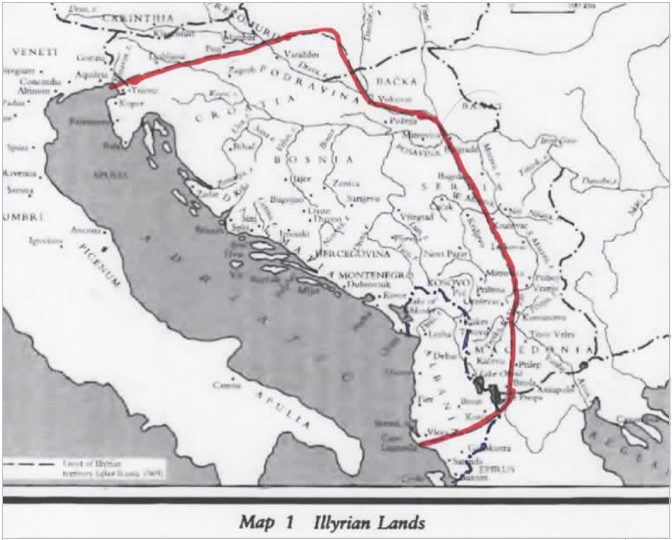
0 Comments

Who are the Albanians?

10/28/2023

0 Comments

 
Bogdan Petriceicu Haşdeu

Introduction - Τranslation - Εditing
By Marcus A. Templar – October 10, 2023
​

PictureMarcus A. Templar
National Security Advisor
Macedonian League
When I decided to translate the Academic paper by the Romanian scholar Bogdan Petriceicu Hasdeu (Annals of the Romanian Academy Series II - Tom, XXIII, pages 103-113 in 1901), I knew that I would find specific difficulties familiar to professional translators.

One issue is that the centennial document uses contemporary to its time vocabulary. Another predicament is primarily mechanical, depending on the quality of the product because of the scanning setup. Not only do diacritics exist in Romanian and not in Albanian and vice versa, e.g., diacritics like ä appear as ā or ă in the other, but also occasionally, the scanned text does not do justice to even Latin. In contrast, all Greek texts have been butchered. I tried to improve the original text by not adding my information but correcting the garbled text.

In the case of Latin and Greek, I was forced to research the sources and then add the corrected texts for the reader's benefit. If the author introduced text in other than Romanian languages, I attempted to translate it into English.

Here is the Greek text as a result of scanning:
(71, 12, 1: «την των Κοστουβώκων χώραν τοίς δπλοις κτησόμενοι, νικήσαντες δε εκείνους και την Δακίαν ουδέν ήττον έλίπουν.»)

And here is the original text in (Dio Cassius, Roman History, book 71, 12, 1)
«τὴν τῶν Κοστουβώκων χώραν τοῖς ὅπλοις κτησόμενοι, νικήσαντες δὲ ἐκείνους καὶ τὴν Δακίαν οὐδὲν ἧττον ἐλύπουν»

I entered most of the translated text in brackets, as one or two words, or as endnotes, depending on the length of the text and the situation. However, I faithfully tried to keep the text intact.

Regarding the Illyrian descent of the Albanians, it is only a myth. Here are some facts.

Appian, Illyrian Wars, chap. 1 states: The Greeks call those people Illyrians who occupy the region beyond Macedonia and Thrace from Chaonia and Thesprotia to the river Ister (Danube).

Pliny the Elder, Natural History, book 3, 22 (144); and Pomponius Mela, book 2, 55-57 explicitly state that the Illyrians were a small tribe just south of the of the Lake Scodra and the Greeks generalized the name for all tribes of the area.
​

The first account of Illyrian peoples dates back to the 6th century BC, in the works of the ancient Greek writer Hecataeus of Miletus. The name "Illyrians," as applied by the ancient Greeks to their northern neighbors, may have referred to a broad, ill-defined group of peoples. The Illyrian tribes never collectively identified as "Illyrians," and it is unlikely that they used any collective nomenclature at all.
(Editors: Joseph Roisman, Ian Worthington, A Companion to Ancient Macedonia, John Wiley & Sons, Inc., October 12, 2010).

I want to stress the connection between Romania-Moldova and Albania. "Pe-al nostru steag e scris Unire" (transl. "Unity is written on our flag") is a Romanian patriotic song dedicated to the United Principalities of Moldavia and Wallachia, established in 1859. ​Andrei Bârseanu wrote the lyrics, and Ciprian Porumbescu composed the music in 1880.

When the Austro-Hungarian Empire and Italy aggressively assisted the independence of Albania, the new Albanian government chose the music of the Patriotic Song of the United Principalities of Moldavia and Wallachia. The Albanian poet Aleksandër Stavre Drenova wrote the lyrics into the Albanian language, following closely the original Romanian lyrics. The original title of the Albanian version was "Betimi mbi Flamur" (The Pledge on the Flag). [1] The title of the present Albanian National Anthem is Himni i Flamurit.

Here is the Patriotic Song of the United Principalities of Moldavia and Wallachia https://www.youtube.com/watch?v=f8gMhgRVdzw

Here is the National Anthem of Albania
https://www.youtube.com/watch?v=SaQbBoPlGaE

Regarding the various endonyms Albanians have used in the past, one must read National Fog (Medieval tribes of Albania and Montenegro; and Serbs and Albanians (Their Symbiosis in the Middle Ages), 1925. The
same author, Milan Šuflay, wrote both books. [2]

​
Picture
Bogdan Petriceicu Haşdeu (1838-1907)
Romanian Writer and Philologist

-----...-----

WHO ARE THE ALBANIANS

Bogdan Petriceicu Haşdeu

from the Annals of the Romanian Academy

Series II - Tom. XXIII, page 103-113 in 1901


It has been ten years since I started studying, and I will not stop following the significant problem of the genealogy of the Balkan peoples. In my study "Layer and substrate," I obtained two capital solutions:

  1. In the 7th century, there were still two compact Latin elements south of the Danube: Meso-Romanians in present-day Bulgaria and Illyro-Romanians in Serbia, especially in Dalmatia, whom the Bulgarians, on the one hand, and the Serbs on the other;

  2. The so-called Macedo-Romanians and Istrian-Romanians today are Daco-Romanians. They were driven in the 9th century from Pannonia by the Magyars, from where other Daco-Romanians took refuge in Moravia and glorified themselves. These two solutions, peremptory in my opinion, will be completed and definitively demonstrated in successive subsequent conferences before the Romanian Academy; first: "Who are Bulgarians and Serbs?" and the second: "Who are the Daco-Romanians and the Pannono-Romanians?"

However, I am concerned with another solution, which I have not discussed in the past. It is the most important because it is the starting point for all the others.

Who are Albanians? Some historians and philologists, including Tomaschek [Wilhelm Tomaschek,1841-1901], believe it to be the posterity of the ancient Illyrians, who remained unmoved from time immemorial. Others, including Benlöw, go up to the Pelasgian ante-historians, and Reinhold does not shy away from naming a booklet about the Albanian language "Noctes pelasgicæ" [Pelasgic Nights]

  1. Blau tries deciphering the Lycian inscriptions from Asia Minor through the Albanians. At the same time, Moratti also uses them for the Messapian inscriptions from Italy. Girolamo de Rada, an Albanian himself, does not let himself be the least bit lower, assuring us that: "Gli albanesi, popolo
    semitico disperso intorno al 1900 a.C. al tempo degli Hyckshos, andarono in Grecia, in Italia e in altri luoghi del Mediterraneo"
     [The Albanians, a Semitic people dispersed around 1900 BC. in the time of the Hyksos, they went to Greece, Italy and other places in the Mediterranean]. My illustrious friend Ascoli speaks seriously about opinions of this kind. Still, he does not take them seriously and does it well.

Nevertheless, let us ask ourselves once again: Who are the Albanians? What should their true provenance and relations be, especially with the Romanians? When and where did they come to settle in Epirus? Here is the only question, which I still lack to prove to the last certainty the persistence of the Romanian element in Trajan's Dacia. If the Albanians were autochthonous where they live today, then willy-nilly, we would be forced to admit that the Romanian nationality was explicitly formed in Illyria and not North of the Danube. Only through a community of origin and through an intimate old cohabitation at the same time can the primordial organic nature of the links between the Romanian and Albanian languages be explained. In addition, when I say this, I am not referring to any formal similarity, no matter how surprising, but the background and only the background of Romanian speech.
​
brad,
buză,
codru,
ghimpe,
mal,
bucur,
ghiuj în Moldova, vîj în Ardeal;
grumaz,
năpârcă
bunget,
​barză,
stăpân,
viezure,
gata,
sat,
vatră,
moș,
mire,
pârîu,
văpae, etc. etc

The number of such words, essentially Albanian in our native language, i.e., from the mouths of the peasants, is quite large, most unknown until now, some being preserved only as prehistoric remnants in a corner in a district, in each locality. I will give a sample of the many. In everyday speech, the synonyms snail and culbec mean "limacon."

For culbec, the old form is cubelc to the metropolitan of Dosoftei. The combination of snail and cubelc in children's games also features an extended form: in Munteni codomelc, in Transylvania codobelc, with
random variants, as noted by Professor Crețu. Snail is a separate word with the same meaning in the Celts: in Celtic dialects, snails are "limagon." Codobelc is a consonant accommodation from codomelc. Cubelc is a contraction of codobelc.

Finally, codomelc is a compound of two words, as is the French colimaçon from "cochilas + limax" [from Greek: κοχλίας + λίμαξ]. Among the Romanians, however, codomelc lives on together with snail and cubelc, although among Albanians, only the composition has survived: cadmili "limacon," where there are many variants, all corrupted, while the primitive Romanian form is intact, preserved only in children in their traditional games, an admirable "Ueberlebsel in Kinderspiel." (Dr. Ploss, Das Kind, vol. II, p. 308.)

Very few Albanian words among the Romanians could be disputed as terms that crossed over to us through a non-Albanian channel, perhaps through the Bulgars or Serbs or directly or indirectly through the Celts; the others are exclusively Albanian. However, the Albanian-Romanian lexical identity is secondary, in my opinion, compared to the grammatical identity. Especially characteristic are the meetings between Romanians and Albanians not through vocabulary but through phonetic, morphological, and syntactical peculiarities, which under no circumstances can be borrowed from foreigners, cannot be grafted over time, but date from the language's very origin.

For example, on the phonetic field, the transition of the consonant n to r between vowels, e.g., window from fenestra, does not exist among the Celts, nor the Neo-Latins, nor the Germans, nor the Slavs, nor the Greeks, but only among the Romanians and the Albanians, even under the same secondary conditions. Among Albanians in the Tosk dialect, the phenomenon is general; in the Ghegh dialect, it is more partial; likewise, with Romanian in the Istrian-Romanian dialect, it is broad and more partisan in the other dialects. Still, it is found in all of them. In Romanian, as in Albanian, past n in r can return to the primitive n. In Moldova, r from n is more often in the old language, in the Cazania of Metropolitan Varlam, in the Romanian glosses from the Slavic documents from Ștefan-cel-Mare, everywhere in the text of the Scheiane Psalter. In Transylvania, r from n, common even today in Moți, appears to be fully developed in the Măhăcene textures near Turda from around 1600: lura = moon, cire = who, oa meri = oam eni, măra = hand, and so forth. Through this phonetic, most Latin words sound slightly Albanian to us.

In the same way, a purely Latin word among Romanian becomes a true Albanianism through a change of meaning, through a logical process, through another idea instead of the Latin one. An example: a small fleshy extension that hangs at the end of the roof of the mouth in the neck [aka uvula], is called luette in French, in old French l'uvetíe, which is diminutive of the Latin uva, which means grape. It is called omușor in Romanian; however, the word om is a diminutive of the word "homo" in Latin or man. Among the French, the association of thought is Latin, just as the vocabulary is Latin. The same particle of the body [i.e., uvula] among the ancient Romans, and in Pliny in particular, it is called uva or "grape." Which language is Romanian thought associated with? It is Latin but also Albanian, depending on the word. In Albanian, the word for man is njeri, the diminutive of njeri or njerith, which is "small man/dwarf" or uvula; Thus njerith, which means small man or dwarf to the Albanians, simultaneously means that part of the body in the roof of the mouth, also known as uvula.

Semasiological engagement between Romanian and Albanian is significant, as it is not found elsewhere. In other peoples, as we see, for instance, in the Italian, in the French, ugola, uvola "grape"; in Spanish campanilla "bell"; in German Zäpflein, Zächen "stopper"; in Russian jazyčok (язычок), and Polish jezyczek "little tongue" and so on. There is no inkling of a uvula being similar except solely among Romanian and Albanian.

Finally, the morphological and syntactical structure identity in Romanian and Albanian, entirely in opposition to Latin and the other Romance languages, hit the top. Some phenomena have long been observed in passing by Kopitar, Miklosich, and Ascoli. I extensively followed a small part of this vast sphere in my study under the title: "A page from the Romanian-Albanian syntax" in "Words of the Elderly." I limit myself to drawing attention to it. There, you will see the two definite articles: one post-positive substantive and the other prepositive adjectival; duplicating, tripling, and even quadrupling both articles; the same rule in the construction of the noun with the adjective; same adjective-adverbial and genitive-dative form; the same genitive use of the prepositional definite article, and so on.

Based on the syntax, one might say that from the very beginning of the formation of a national language, the Romanian limited itself to placing the Latin material over the Albanian background. However, by the irreversible and unshaken crux, the Romanian language is Albanian, as the French is Celtic. Celtic in the French is not visible to the common eye, yet through analysis, Celticism is discovered everywhere. Germanic elements in the French are very numerous and palpable, just like the Slavic elements in the
Romanian. As Slavisms among the Romanian language, like Germanisms among the French, being accidental, almost all of them could be banished without thereby shaking the edifice of the national language. Notwithstanding, Celticisms among the French and Albanianisms among the Romanian cannot be achieved without a total catastrophe.

According to the above premises, the mind is afraid of consequences, consequences "in the manner of  Dr. Réthy Làszló" from Budapest, who concludes his argumentation with the sentence: "L'Académie de Bucharest ne pourra jamais décerner à qui que ce soit le prix of 20,000 francs fondé par le prince Couza" [The Academy of Bucharest will never be able to award anyone the prize of 20,000 francs founded by Prince Couza]; the mind is frightened by the Hungarian threat, and asks for a pause to wonder what to do next. I, for one, will not seek to facilitate my transition with many words and sideways. However, instead, I will cut Gordian's knot.

​Thus, I ask bluntly:
Is it possible that the current Albanians are the posterity of some Dacians, transported across the Danube in the era of Emperor Aurelian, that is, 150 years after the conquest of Dacia? Is it possible?

Answer:
It is not only possible, but the historical data fully confirm the linguistic data. After the fall of Decebalus, part of the Dacians submitted to Trajan. It began to amalgamate slowly with the Roman colonies, giving birth to the Daco-Roman ethnicity. Other Dacians, however, retreating higher into the Carpathians or further east of the Traian Province, maintained their individuality under various ethnic names, especially three Dacian peoples completely unsubordinated to Rome, namely the Costoboci, the Carpii, and the Bessi.

Almost a century and a half after Trajan, when the tamed Dacians could be and were already Romanized, the rebellious Dacians took advantage of the great movement of the Germans, known in history under the term "bellum Marcomannicum," and became dangerous for the peasant Romanians. Then, under the emperor Antoninus the Philosopher, perhaps even a little earlier, we see a very pronounced imperial tactic of moving over the Danube and settling there, on a long-secured territory, entire Dacian tribes and peoples, since they were defeated. The free Dacians, i.e., the non-Romanized ones, willingly or unwillingly had to move to Moesia and beyond.

The first ones, it seems, were the Costoboci. They enjoyed a very independent regime, even having their own kings, two of whom are known to us from Roman epigraphy. My friend Tocilescu mentioned one the other day: "Pieporus rex Coisstobocensis," who was captured by the Romans and taken to Rome with his entire family. The other, who escaped from the sight of our historians, appears in an even more interesting inscription from Rome: "Sabituus rex Ostabocesis Dacus."

In the same period, before the emperor Aurelian, under Marcus Aurelius, Dio Cassius says that the Astingian Germans invaded and succeeded in capturing the land of the Costoboci (Dio Cassius, 71, 12: "καὶ τὴν τῶν Κοστουβώκων χώραν τοῖς ὅπλοις κτησόμενοι, νικήσαντες δὲ ἐκείνους καὶ τὴν Δακίαν, οὐδὲν ἧττον ἐλύπουν"). [3] In this way, Rome had to do one of two things: let all the Costoboci settle in Traian Dacia above the provincials or move them across the Danube. Nevertheless, they were taken to Moesia and then pushed as far as Epirus, where, even there, they did not cease to harry. Indeed, the contemporary Pausanias (Paus. 10.34.5), after AD 150, complains that the Costoboci raided far into Hellas: “τὸ δὲ
Κοστοβώκων τε τῶν λῃστικῶν τὸ κατ᾽ ἐμὲ τὴν Ἑλλάδα ἐπιδραμὸν ἀφίκετο καὶ ἐπὶ τὴν Ἐλάτειαν”. [4]

Here is the powerful Dacian tribe of the Costoboci on the coast of Greece, near Fokida, exactly where the Tuscan branch of the Albanian race lives today. The very current name of these Albanian Tosks is just a simple metathesis from Costo, such metatheses being common among Albanians, e.g. ιχνάρε = χιλνάρε, φελτόνjε = λεφτόνjε, etc., as observed by Camarda: "Le metatesi, sia di consonan t i sia di voweli, o di syllablebe intiere, sono tra le affezioni, che molto spesso si manifestano nei vocaboli albanici" [see
conclusion note 1]. [5]

The second great migration of the Dacians, towards the same territorial point as the Costoboci or somewhat higher, but in any case in the vicinity, were the Carpi Dacians or Carpiani or Carpodaci, "Κάρποι, Καρπιανοὶ, Καρποδάκαι," as the Greek authors call them. About Carpi, as about Costoboci, the contemporary text is very clear. Aurelius Victor speaks of the emperor Diocletian: "caesi Marcomanni, Carporumque natio translata omnis in nostrum solum, cujus fere pars jam tum ab Aureliano erat". [6]
Therefore, Diocletian moved the whole nation of the Carpi, "natio omnis," across the Danube after Aurelian had already moved it in part.

And since we are talking about the emperor Aurelian, here is the place to understand the famous passage from Flavius ​​Vopiscus, quoted in one and not understood until now: "Quum vastatum Illyricum ac Moesiam deperditam videret, provinciam trans Danubium Daciam a Trajano constitutam sublato exercitu et provincialibus reliquit, desperans eam posse retineri: ab-ductosque ex ea populos, in Moesiam collocavit, appellavitque suam Daciam…" [7]  About this text, Nisard rightly says: "tout ce passage est un peu obscur dans notre auteur [8]." One could even say: "trés obscur" in all the usual editions, which blindly reproduce Puttmann's one from 1774. However, the passage is very clear in the old edition, which I find in Wolfgang Lazius, Reipublicae Romanae commentariorum libri duodecim, Francofurti 1598, p.34: "Quum vastatum Illyricum ac Moesiam deperditam videret, provinciam trans Danubium Daciam, a Traiano constitutam, sublato exercitu provincialibus reliquit, desperans eam posse retineri. Abductosque ex ea populos, in Moesiam collacavit, appellavitque suam Daciam".[9] In the Lazius edition, correct punctuation has been introduced, and above all, the absurd et between "exercitu" and "provincialibus" has been abolished, the meaning becomes as clear as possible, namely: considering that the army is no longer able to defend the Traian Province, where the provincials, i.e. the Roman colonies and the Romanized Dacians, were exposed not only to attacks from outside but also to the peoples the disobedient Dacians, Aurelian withdrew the army
from there and removed from Dacia the Dacians who were dangerous for the province, especially since Illyria and Moesia needed inhabitants, being deserted. The words: "provincialibus reliquit Daciam" in front of "populos abduxit ex Dacia" clarify everything perfectly. Among the Dacians who were moved in the passage from Vopiscus [10], there is also that "part of Carpi," "pars nationis Carporum," in the passage from Aurelius Victor precisely about Aurelian. One supplements the other (Aurelian, Scriptores Historiae Augustae, III. 39).

So essentially, the text renders: When he saw the province of the Illyricum devastated, and Moesia destroyed, he left Dacia, the province beyond the Danube established by Trajan with the provincial army,
hopeless of being able to retain it. Moreover, he settled the people he had taken from Dacia and settled them into Moesia and called it his own Dacia. Among the Dacians, the Carpi were always the most implacable enemies of Rome, "qui saepe Romanis investi sunt," [frequently hostile to the Romans] as Jordaness says.

The inscription from AlbaIulia in Transylvania is remarkable, where a Roman, Gaius Valerius Serapides, thanks the gods for having escaped easily from the hands of the Carpi: "a Carpis liberatus" [freed from Carpi], precisely because of the extreme energy of the Carpi, "Carporuni natio omnis" Et interea caesi Marcoinanui Carporuimpie natio omnis ui solum Komanum transjata est [And in the meantime the nation of Marcoinanus Carporuimpie was slain, and all the people who lived there were crossed over to the Komans alone] from Aurelius Victor (Epitome De Caesaribus) cannot be taken in a literal sense. However, we must understand that most were taken out of Dacia, but not all. A certain number remained in the inaccessible shelter of the mountains. It reappeared in Zossimus (New History, IV, 34 [11]) in the age of the Huns in alliance with other barbarians. However, most of the Carpathians once crossed the Danube; they never returned, walking towards Illyria in the footsteps of their Costoboci brothers, next to whom they formed the northern branch of the Albanians: the Gheghi.

The name Karp means "vulture" in Albanian. This word has remained almost intact to this day: karbă
"eagle, (French:) aigle, (German:) Adler" [(Greek:) chrysaetos] in folk songs of Culuriotis. This name of "vultures or eagles," birds of prey, was very appropriate for a mountain tribe, the cruelest and most unbridled of the Dacians. It is worth noting that even with the current Albanians, with the Gheghi in particular, their common name Şkiipetar comes from şkiipa, "eagle." Şkipetar is simply a synonym for "Karp": "die Skipetaren als das Adlervolk erscheinen," [the Skipetars appear as the eagle people] says the Albanian Stier.

It is important to note that the Gheghi, the posterity of the Carpi, do not themselves bear the name of Ghegă, which the Tosks give with a kind of contempt, as Hahn tells us: "diese Benennung wird eigentlich nur von dem Sudalbanesen gebraucht, der Gege halt sie fuer unehrenhaft und nennt sicii selbst Skipetar". [12] But the old name of Gheghi is only "vulture," either Carp or Schipetar, two forms for the same meaning. The term karp "eagle" is becoming rare in speech. The Gheghi did nothing but replace it with the
widespread synonym šiciipa "eagle," the background remains the same.

First, the Costoboci, then the Carpi, two distinct dialects already in the Dacian era, settled in Illyria, establishing the new nation of the Albanians in both branches: Tosci and Gheghi, already before AD 300. A third Dacian tribe had left Dacia at about the same time as the emperor Aurelian. However, he lingered longer on the southern shore of the Danube, and later he stopped in the Rhodope Mountains. These were the so-called Bessi, who were pure Dacians; therefore, they should not be confused with the previous Bessi, described in Herodotus: Thracians and those, but not Dacians. In Caesar's time, the Dacians constituted a mighty empire in the Carpathian region, so there were also the Bessi Dacians among them, while at that time - according to the contemporary Strabo ([Book 7. Chapter 12) - The Bessi Thracians lived far from the Danube in the Balkans, where the geographer explains very precisely their borders.

Mr. Tomaschek commits a serious error in not distinguishing the Bessi Dacians from the Bessi Thracians; better to say, the eminent professor from Vienna commits here one of the fundamental errors, of which there are quite a few in his successive studies about Bessi. Nevertheless, I note right from the start, that in the present case, we are dealing only with the Bessi Dacians, whom Ptolemy places not only in the Carpathians: "εἶτα Πιενγῖται καὶ Βίεσσοι παρὰ τὸν Καρπάτην τὸ ὄρος," [Book 3, Δακίας θέσις θ] whom therefore Trajan had found among the Dacians, and who also among the Dacians we see appearing in the era of the Marcomannic war at Capitolinus, as Mr. Tomaschek himself testifies in passing.

The name of these Bessi from Dacia immediately recalls the Albanian word bessă , which means "faith" and constantly circulates in Albanians' mouths as their most familiar oath. The late Ioan Nenițescu, in his journey through Turkey (p. 478), tells us: "The foreign traveler, when he walks through the parts of Northern Albania, takes as his guide an Albanian, who, after giving him his word: bessa-bess, must die defending it."

As a Dacian, the Bessa word with the same sense of faith, with the same sense of oath, was preserved among the Romanians as a popular provincialism. In the precious Romanian-Banățian dictionary, written near Lugoș or Caransebeș around 1670, the word abesh appears without explanation. Researching, I was able to verify that until today it is heard very often in the eastern part of Banat. Banat resident Sofronie Ljuba from Maidan wrote to me: "Abeș is used in speech as an affirmative adverb. For example, I hate that I call people stupid and do not call them in vain. Also, when one says something, the other affirms the word, saying: abeş!"

Therefore, abeș means: before the law, on honor, on faith, "ma foi, en vérité," exactly the Albanian affirmative adverb: bessa-bess! besa për besa! By omission, I said in Etymologicum Magnum that bessa is
preserved among Albanians only in the Tosk dialect. It's not like that. The word is also widespread in the Ghegh dialect, common to Albanians. Romanians adding the preposition a (=lat. ad), the Banatian Abeş will literally say: "ad fidem," while the Albanian pár bess = "per fidem".

After crossing the Danube, the Bessians were in no hurry to move away. For some time, they remained close to the great river. In the 6th century, Jordanes knew from an earlier well that the language of the
Bessians could explain the name of the Danube: "Danuvius qui lingua Bessorum Hister vocatur" XXXVII. [13]

This word is of extreme importance. It was not the Bessians who called it the Ister, which has existed since prehistoric times through the age of the Argonauts. However, Jordanes tells us that in the language of the Bessi, there is the word Ister with a meaning applicable to this river. In truth, Albanian i-sterhă is an articulated adjective, which means "very black," (Germ:) "tiefschwarz," or "deep" concerning water, as in Greek, a deep water was called "black" or "μέλαν ὓδωρ." In Ister in Bessi we see not only the Albanian adjective stēr, but even the adjectival prepositional article i of today's Albanian: I-stër = the deep one. The passage in Jordanes sheds light on the linguistic identity between the Bessi and the Albanians. Instead of the Ister in Albanian, Mr. Tomaschek ran with the Bessian word to the Ossetians from the Caucasus!

Jordanes also speaks about the emperor Leon the Thracian from the middle of the fifth century: "Leo Bessica ortus progenie," meaning "Leo, the offspring of Bessi" (Jordanes Romanorum, Chapter 14, 105).

D. Tomaschek also adds that the Byzantine Malala [§ 14.369] also calls Emperor Leo Bess: "ὁ Βῆσσος" [After the reign of Marcian, the most godlike Leo the great, Bessos]. However, in this regard, the most important source is forgotten, namely Candidus Isauricus, a historian contemporary with the emperor Leo himself, who tells us that he was a Dacian from Illyria: "ὃς ἧν ἐκ Δακίας τῆς ἐν Ἰλλιυρίοις," not from the Balkans, nor Rhodope. This Bess of Illyria was Albanian, like the Costoboci and the Carpodacii. The Bessians were then no longer near the Danube, but in the direction of the Adriatic Sea. [14]

All that can interest us from Mr. Tomaschek's research on Bessi is only the collection of data relative to the Christianization of this people, from which the Belgian Jesuit Van den Gheyn then reproduced them. Both, however, always avoid emphasizing that these Bessi were Dacians who came explicitly from Trajan's Dacia.

At the time of Herodotus, the Dacians and Daco-Bessians could not live in the Carpathians because a heterogeneous race of the Agatirsi lived there. They were still south of the Danube, but under what kind of name among the other Thracian peoples? If we admit that in that period of their history they were "καὶ Θρᾳκῶν τῶν μαχαιροφόρων τοῦ Διακοῦ γένους ἐς τὰς Ἀθήνας" according to Thucydides (VII, 27), who distinguishes them among the Thracians as "καὶ μαχαιροφόρων, οἳ Δῖοι καλοῦνται" (II, 96), i.e., "bearers of swords," such a characteristic weapon of the Dacians on the Trajan Column, in this hypothesis, we will also admit the Daco-Bessi under the name of Diobessi (=Dio-Bessi) in Pliny, where even there they are not confused with the Bessi proper. Be that as it may, Mr. Tomaschek's pan-Bessian theory is destroyed by a robust and rigorous line of demarcation between the Traco-Bessi and the Daco-Bessi.

The Arnauts (medieval term for Albanians), strong and brave as always, are mentioned under the name of Bessi more than once, either as isolated soldiers or as numerous bands, in the Byzantine writers until the middle of the 6th century, as a completely different nationality from the other ethnicities of the Balkan Peninsula, and even as a separate ethnicity from the other Thracians, namely in Theophanes [Chronicles] 145, 17-20: στρατιὰ Γότθων τε καὶ Βέσσων καὶ ἑτέρων Θρακίων ἐθνῶν. In the year AD 539, the name of Bessi disappears. Over five centuries, in 1079, the name of Arnăuti (Arnaut) appears in Byzantine history: Ἀρβανῖται.

Here is the entire genesis of the Albanians: three Dacian peoples — Costoboci, Carpi, and Bessi, wandered from the Carpathians in the era of Emperor Aurelian. First, over 150 years, they had already collaborated here in Traian Dacia to form the Romanian ethnicity. From the year AD 300 to the great Scanderbeg, the national hero of the Arnauts, almost 1200 years had passed. In such a dozen centuries, standing still in the same place in Illyria, it is not surprising that the posterity of the Dacians came to
believe that they were autochthonous on the shores of the Adriatic so that Scanderbeg wrote to an Italian prince: "You do not know my Albanians! We descend from those Macedonians, who conquered India with our Alexander." [15] Today, history disproves the Arnauts' Macedonianism but still recognizes their no less illustrious lineage. A new Scanderbeg might say to them: "We bear the name of Decebalus, who had made the Roman empire tributary and had scared Trajan himself!"

I stop here. I will return in my later study: "Who are the Serbs and Bulgarians?" especially in the conference: "Romanians from Pannonia," where we will analyze the new confirmatory text of the Byzantine Kekaumenos.

The Albanians, however, are not just related to us, the Romanians. However, they are our good brothers from the same Dacian blood. The Albanians are to us what the Celts are to the French.

In closing, I will draw two topical conclusions:

1°. Any Romanian philologist, no matter how serious or how methodical, will go completely astray, especially in terms of grammar, if he does not first study the Albanian language in all its dialects, as well as Albanian folklore;

2°. The Romanian nation owes a brotherly support to the Albanians, as it supports the Macedonian-Romanians, who, the Macedonian-Romanians and the Albanians, have always loved each other and could together very well, "If they were revived" form one day a beautiful neo-Dacian kingdom of 3-4 million, joined the current neo-Hellenic kingdom.
______________________________
[1] Vasil Tole, "Edhe një herë rreth himnit tonë kombëtar".

[2] 
Nacijonalne Maglice. Sredovječna plemena Albanije i Crne Gore, AND Srbi I Arbanasi (Njihova Simbioza u Srednjem Vijeku), 1925.

[3] 
Original text and translation Dio Cassius
ὅτι Ἄστιγγοι, ὧν Ῥᾶός τε καὶ Ῥάπτος ἡγοῦντο, ἦλθον μὲν ἐς τὴν Δακίαν οἰκῆσαι ἐλπίδι τοῦ καὶ χρήματα καὶ χώραν ἐπὶ συμμαχίᾳ λήψεσθαι, μὴ τυχόντες δὲ αὐτῶν παρακατέθεντο τὰς γυναῖκας καὶ τοὺς παῖδας τῷ Κλήμεντι ὡς καὶ τὴν τῶν Κοστουβώκων χώραν τοῖς ὅπλοις κτησόμενοι, νικήσαντες δὲ ἐκείνους καὶ τὴν Δακίαν οὐδὲν ἧττον ἐλύπουν.

The Astingi, led by their chieftains Ratis and Raptus, came into Dacia with their entire households, hoping to secure money and land in return for their alliance. But failing of their purpose, they left their wives and children under the protection of Clemens until they should acquire the land of the Costoboci by their arms. However, upon conquering those people, they proceeded to damage Dacia no less than before.

[4] 
Original text and translation Pausanias
10,34,5 (Phocis and Ozolian Locri)] τὸ δὲ Κοστοβώκων τε τῶν λῃστικῶν τὸ κατ᾽ ἐμὲ τὴν Ἑλλάδα ἐπιδραμὸν ἀφίκετο καὶ ἐπὶ τὴν Ἐλάτειαν: ἔνθα δὴ ἀνὴρ Μνησίβουλος λόχον τε περὶ αὑτὸν ἀνδρῶν συνέστησε καὶ καταφονεύσας πολλοὺς τῶν βαρβάρων ἔπεσεν ἐν τῇ μάχῃ. οὗτος ὁ Μνησίβουλος δρόμου νίκας καὶ ἄλλας ἀνείλετο καὶ Ὀλυμπιάδι πέμπτῃ πρὸς ταῖς τριάκοντά τε καὶ διακοσίαις σταδίου καὶ τοῦ σὺν τῇ ἀσπίδι διαύλου: ἐν Ἐλατείᾳ δὲ κατὰ τὴν ὁδὸν τοῦ δρομέως Μνησιβούλου χαλκοῦς ἕστηκεν ἀνδριάς.

[10,34,5] An army of bandits called the Costoboes, who overran Greece in my day, visited, among other cities, Elateia. A certain Mnesibulus gathered a company of men around him and put many of the barbarians to the sword, but he fell in the fighting. This Mnesibulus won several prizes for running, including prizes for the foot race and the double race with shield, at the two hundred and thirty-fifth Olympic festival. In the running at Elateia, there stands a bronze statue of Mnesibulus.

[5] Metathesis, both of consonants and of vowels, or of whole syllables, are among the terms of endearment which very often manifest themselves in Albanian words

[6] 
The Marcomanni were slain, and the whole nation of the Carpi was transferred to our soil, almost a part of which had already been taken by Aurelian.

[7] 
When he saw Illyricum devastated and Moesia destroyed, he left the province across the Danube, Dacia, established by Trajan, with a raised army and provincials, despairing of being able to retain it: and having taken the people from it, he placed it in Moesia, and called it his own Dacia..."

[8] This whole passage is a little obscure for our author

[9] 
Twelve books of commentaries on the Roman Republic, Frankfurt 1598, p.34: "When he saw the Illyricum devastated and Moesia destroyed, he left Dacia, a province across the Danube, established by Trajan, with an army of provincials, despairing of being able to retain it. He placed the people abducted from it in Moesia, and called it his Dacia."

[10] 
Vopiscus is a Roman praenomen, signifying a twin child born safe, while the other twin died before birth. (Plin. Nat. 7.8. s. 10; Solin. 1.; Val. Max. Epit. De Nominum Ratione, pp. 878, 879, ed. Torrenius.) Like many other ancient Roman praenomens, it was afterward used as a cognomen.

[11] Zosimus (Greek Ζώσιμος): Early Byzantine, pagan author of a history of the Roman Empire, published in the first quarter of the sixth century CE.

[12] This name is really used only by the South Albanians, who consider it dishonorable and call it Skipetar themselves

[13] The whole sentence is:
The Danube in the language of the Bessi is called Ister, and it has profound waters in its channel to a depth of quite two hundred feet or 60 meters.

[14] Leo I, also known as "the Thracian," was the Roman emperor of the Eastern Roman Empire from AD 457 to 474. He was a native of Dacia Aureliana near historic Thrace.

[15] 
Alexander the Great, whose name is frequently abbreviated to Leka in Albanian, inspired the name of the lek. The face of the 1-lek coin featured a portrait of Alexander, and the reverse featured him mounted on a horse.
_____
About Marcus A. Templar
Professor Marcus A. Templar is a former U.S. Army Cryptologic Linguist (Language Analyst), Signal Intelligence and All-Source Intelligence Analyst. During his career as a U.S. Intelligence Officer, besides organizational duties, he discharged the responsibilities of a U.S. Army Observer/Controller, Instructor of Intelligence Courses specializing in Deconstruction of Strategies, Foreign Disclosures Officer, and Translator Interpreter of Serbo-Croatian. He is the Macedonian League's National Security Advisor.

​_____
About the Macedonian League
We are an international professional Hellenic advocacy group. Our primary purpose is to advance our interests to informed and responsive governments on issues concerning Greece's national security and territorial integrity. As of 12 February 2019, the Macedonian League's main focus is on the “Prespes Agreement", as this Agreement is a serious national security issue for Greece and the wider Balkan region. The Macedonian League also focuses on exposing and combating anti-Hellenism and analyzing political developments in Skopje.

For more information, follow us on: Website, Facebook, Twitter
0 Comments

The 2022 Macedonian League Annual Assessment with National Security Advisor Marcus A. Templar

10/13/2022

0 Comments

 
Picture
In the 2022 Macedonian League Annual Assessment, we talk with Marcus A. Templar for an in-depth analysis of some of the most pressing questions from our audience, including among others: the Turkish government; Russia; the Greek Genocide; the Greek political establishment, and much more.
​


"The Turkish MİT and the Russian SVR are "excellently" sending Greece to its demise one piece at a time. In this manner, Greece will disintegrate piecemeal and become easier to be manipulated to its demise. I know how both operate, and this is a warning."
                                  -- Marcus A. Templar

Question:
There has been an uptick of the blurring of the term "Rum
" this year from primarily Turkish sources. Can you explain what the term "Rum" is and Turkish misinterpretation of said term within Turkey.
PictureMarcus A. Templar
National Security Advisor
Macedonian League
Let us start with the term Rum, which puzzles many people. Its origin is found in the Quran. It is the source of the term. "The Romans" is the title of the 30th chapter (sūrah) of the Quran, consisting of 60 verses (āyāt). The term Rūm originates in the word Roman existing during the time of the Islamic prophet Muhammad. It is referred to as the Eastern Roman Empire, aka Byzantium. The title, Roman, is sometimes translated as "Greeks" or "Byzantines," essentially an officially Greek state.

Muslims believe the above was a prophecy fulfilled by the Byzantine Emperor Heraclius, who launched a campaign in AD 622 against the Sassanid Persians in Asia Minor. The campaign started as a Byzantine military counter-offensive resulting in a crushing defeat for the Persians. Muslims cite the above as an example of the miraculous nature of the Quran. (Geisler; Saleeb 2002, 107 and Shanker, 1992, 129).[1][2]

Perversely, the Turks based on a continuous regression line of reasoning starting with the Quran, they made anything Byzantine, i.e., Christian Greek items, institutions, and buildings, became Rum, and anything Rum, built by pagan Greeks remained Rum translated into Roman. Even Greeks under the Ottoman Great State started calling themselves Rum, or in Greek, Ρωμιοί (Romioi), but unfortunately continues even today in the modern Turkish Republic.

The phrase «ἐγῶ Ῥωμιὸς γεννήθηκα, Ῥωμιὸς θὲ νὰ πεθάνω» pertains to the under Ottoman yoke Greeks. Yet it exists even today in their mind. For instance, my father, born within the Ottoman Great State, was a Rum, or Roman, but since I was born in Greece, I am Yunanlı or Greek. This was the explanation I received from one of my teachers from Adana.

However, let us not forget the term Rumeli, "the land of the Rum"; of course, it was a term when Greece was under Ottoman rule, but I have heard many Greeks of the present referring to Sterea Hellas (Central Greece) as "Rumeli." That tells me that the Ottoman thought is still in the minds of some Greeks in modern Greece itself.

To recap, under such Turkish logic, EVERYTHING built, say, between 1500 BCE and today by Greeks (Ionian, Dorians, Aeolian) in areas controlled by Turkey falls under the category of Rum.

So when one visits Ephesus, a city built around 1000 BCE by Greeks, according to the Turks one visits a Roman city. The fact is that the Romans appeared in the area in 129 BC. In that year, King Attalus of Pergamum ceded Ephesus to the Roman Empire in his will, and so Ephesus became the seat of the Roman provincial governor. It is similar to how many ignorant "experts" state "ancient Turkey," as absurd as it is. Nevertheless, the absurdity continues.
​

Question:
It seems that Turkey is working very closely with Facebook to censor certain content. It is now common to see posts that deal with Turkish national security issues, posts discussing genocide, especially when Turkish perpetrators are named like Topal Osman, or posts that compare Atatürk to Hitler in any way are always removed by Facebook or hidden from an audience.
Something positive could happen when people leave their social or political prejudices and everything their grandparents told them about the Turks and Turkey.

However, people must know that Turks work as ONE TEAM for the benefit of Turkey regardless of political views. It is okay for people to enjoy the views of those Turks who want to change Turkey. However, they must keep their eyes on the ball. The MİT (Turkey's National Intelligence Organization) does not employ cub scouts.

Their network is beyond the understanding of ordinary people. Propaganda, bullying, extortion, and a few other ways of persuasion are means employed in the name of Turkism. Nobody is spared. They work like the spy systems of the GESTAPO and NKVD/KGB, but now they go after those who use the Internet.

Turks reward journalists and

  1. social media like Facebook, Instagram, Twitter, Reddit;
  2. social question-and-answers website like Quora and The Onion;
  3. non-academic reference source like Wikipedia and all other Wikis-type social media

with all kinds of bribes and payments maintaining fake accounts managed and staffed by the MİT.

Albanians are slightly different but aim toward the same goal: establishing excuses and propaganda exalting the state, the language, and "race."

​One can easily find who is employed by the MİT by the arguments they present against Greece and in favor of Turkey. Never mind what names and credentials they present online. I had fun with a man with an Anglo-Saxon name who was supposedly born in New Jersey and attended Tufts University with a Master's degree while he attacked Greece using very bad English. Another one was supposedly from Zimbabwe, protecting the might of Turkey until I gave him some facts he could not respond to.

​Turks always have or find excuses to justify any crime the Ottoman Great State and/or the Turkish Republic committed in the name of Pan-Turkism. 
​
Question:
Tell us about the proactive nature of the Turkish MFA via their Embassies and Consulates where Turks abroad are encouraged to call in even the slightest anti-Turkish position they read or hear, whereas the Greek MFA could not be bothered to do the same abroad.
Turks, Skopjans, Bulgarians, Albanians, and Serbs have very proactive foreign policies. They do anything to show the flag. On the other hand, Greeks are very reactive only if they are pressed to do something. They have a mentality of a follower, not a leader. 

When the Turks left Greece, they took away everything good Greece had to offer. Greeks stayed back with the mentality the aghas had imposed on them during the 500-year occupation. “Σφάξε μὲ ἀγᾶ μου γιὰ ν' ἁγιάσω, δὲ βαριέσαι, ὅλοι ἀδέλφια εἴμαστε” are only part of the remnants of Ottoman misrule. It has little to do with Islam. It has everything to do with Pan-Turkism.

A few months ago, Greece delivered humanitarian aid to Odessa. Nobody heard about it, not even the Greeks. If Turkey had done it, the whole world would know about it. Turks know whom to lobby, how to lobby and encourage their lobbyists to do the job they are paying for. When it comes to Turkey, there is no such a thing as wishy-washy partisan politics followed by the Ottoman, "μὰ τί θὰ πεὶ ὁ κόσμος"?

Part of how Turks work is the example of celebrity Dr. Mehmet Öz. He was born in Cleveland, OH, on June 11, 1960. In 1980, he went to Turkey to serve the Turkish Land Forces (Türk Kara Kuvvetleri) as an officer to keep his dual nationality. He was quoted as saying,

"The great thing about America is that you can hold on to whatever heritage you come from," he explains. "We celebrate the different cultures, so I had the privilege, as the son of immigrant parents, to grow up American while staying deeply in touch with my Turkish roots. I have a great deal of family back in Turkey, I lived there for a period as a boy, and I served in the Turkish military, which is compulsory for dual citizenship." (Akman, Terri. "Dr. Oz: On A Mission, The New Wizard of Oz." SJMagazine, December 2011).

Although Dr. Oz's allies blast his critics as "racist and pushing dog whistles," Dr. Oz dodges to answer the question of the Armenian Genocide, and one could easily assume he will do the same regarding the Greek and Assyrian genocides. After all, the Turkish culture has molded him under the doctrine, "Turkey might not always be right; but she is never wrong."

Of course, it is nothing wrong with him serving his home country for whatever reason, except that the reason he gave means that it is crucial to him to owe allegiance to two countries. That holds true for many people except those elected to make laws based on often highly classified information, civil servants, and the military required by law to hold office, necessitating clearance to handle classified information.

These individuals fill out the Standard Form 86, or SF-86, which is nothing less than a whopping 127 pages long. It is packed with questions requiring a very high level of transparency and honesty. Any answers that the investigators consider murky have to be clarified to the satisfaction not only of the investigators but, most importantly, by granting the clearance authority.

According to the late Senator Patrick Moynihan, elected officials automatically receive a clearance because their voters trust them. I do not remember the highest level of clearance they receive based on such a trust. However, those in Congress who participate in select committees must be cleared by the FBI, or perhaps now by the Office of Personnel Management (OPM), to handle Top Secret clearance with access to Sensitive Compartmented Information clearance that is not available to the public.

Because of it, the matter has further implications since it constitutes a national security risk. Dual nationality is a forbidden indulgence for military personnel and civil servants assigned to jobs requiring a security clearance, much more for those in Congress and their aids. After all, these people determine highly classified information and enact laws that directly involve and affect issues about the national security and interests of the United States.

Holding dual nationality, Dr. Oz is a threat to the national interests and security of the United States. He can be easily extorted through his relatives by the very proactive Turkish government and its MİT.

The idea behind one's clearance is based on the level of trust the government has in the person regarding the lifestyle for which he or she might be susceptible to blackmail or coercion. Furthermore, there is the issue with Dr. Oz's dual nationality and celebrity status.

Nevertheless, another question that arises is Dr. Oz's residence. Since he lives in New York, how can he run from Pennsylvania?
​
Question:
How serious is EO 14033 and how can one find themselves on the wrong side of this Executive Order?
Unfortunately, some people have not gotten the memo. Especially those who live abroad although they post their residence in the Balkans. Although the Skopjans are not as active as they used to be, the Albanian diaspora has started their bravado attitude. Most of them live either in Kosovo or Albania.

I remember one Albanian tried to push the Greek name Εὐνίκη (Eunice) as Albanian. After I explained a few things to him, he asked me what I had against Albanians. I responded, "I have nothing against Albanians, but I hate poppycock garnished with malarkey regardless of their source and ethnicity. Give me facts. Do not convey your beliefs as facts to me." But the way he wrote his texts, vocabulary, and grammar made it evident to me that he lived in Australia. So, I asked him how the weather was in Australia. He never responded.

Over the years, several scholars have studied Albanians' genetics, focusing on historical and linguistic facts. However, very few of them did proper research. The argument of Albanians that they are descendants of Illyrians because they live on an Illyrian territory is, at best, childish.
Picture
John Wilkes, The Illyrians, Cambridge, MA, Blackwell (1996, xx)
One may easily assume that everyone in the former Illyrian territory can now claim Illyrian heritage by looking at a map of the regions where the former Illyrian tribes once existed.

One of the best books on the ancient Thracian language group and its relationship to Greek, Dacian, Moesian, and Illyrian is the book written by Vladimir Georgiev (Владимир И. Георгиев, Траките и техният език, Издателство на Българската Академия на Науките, София, 1977).[3] The problem is that Georgiev's 348-page book is in Bulgarian with only one French version. However, he wrote a short academic monograph published "The Genesis of the Balkan Peoples." The Slavonic and East European Review 44, no. 103 (1966): 285–97.

One can read Georgiev's book summary in Kroraina <http://www.kroraina.com/vg/vg.html> or one may access it in JSTOR <https://www.jstor.org/stable/4205776>.

I am offering two paragraphs of Georgiev's monographs for the reader's convenience. They both regard the relationship between Albanian on the one hand and the Dacian, Moesian, and Romanian languages on the other.
​
But many linguists and historians, e.g., H. Hirt, V. Pârvan, Th. Capidan, A. Philippide, N. Jokl, G. Weigand, P. Skok, D. Detschew, H. Baric', I. Siadbei, etc. have put forward very important considerations indicating that the Albanians cannot be autochthonous in the Albania of today, that their original home was the eastern part of Mysia Superior or approximately Dardania and Dacia Mediterranea, i.e. the northern central zone of the Balkan Peninsula, and part of Dacia.

​And after he explains facts on the issues in seven points, he concludes,
​
In this way, it has been definitively proved that Albanian is descended from Daco-Mysian. Therefore the primitive home of Albanian is a Daco-Mysian region, probably Mysia Superior (Dardania, Dacia Mediterranea) or western Dacia. This fact enables us to explain the numerous typical agreements between Albanian and Rumanian. Rumanian and Albanian took shape in the Daco-Mysian region; Rumanian represents a completely Romanised Daco-Mysian, and Albanian a semi-Romanised Daco-Mysian.

It seems that the Romans, especially Emperor Trajan, are behind the forced migration of Dacians and Moesians to the lower Balkans along the Adriatic Sea and their partial transfer to the Italian Calabria and parts of Adriatic Italy like Abruzzo. Their descendants are today's Albanians or Arbëreshë (Albanese) in Italy. For the Romans, the defeated enslaved people were a force of cheap labor.

Albanian nationalism started with the Austro-Hungarian Empire's national interests.

Certain Western scholars studying the origins of the Albanians advanced the now discredited hypothesis that the Albanians descended from the ancient Pelasgians. One of them, Austrian linguist Johann Georg von Hahn, in his Albanesische Studien (Albanian Studies) published in 1854, hypothesized that the Pelasgians were the first Proto-Albanians and that the languages ​​of the Pelasgians, Illyrians, Epirotians and ancient Macedonians were closely related. It is beyond my comprehension why a linguist got mixed up with mythology. It would be most appropriate for a historian to do so only to attempt to explain certain historical events or locations. Then, a linguist would compare the phonemes of Albanian speakers to other Balkan people, possibly using various historical events as migrations.

Another event in which Austria silently pushed the existence of Albania was the acceptance of Albanian delegates in the 1878 Council of Berlin.

All this started in the19th century nationalism (Albanian Rilindja), which resulted in the Italian invasion of Greece in the early hours of October 28, 1940, after the Albanian Parliament declared the union of Albania with Fascist Italy.

Albanian nationalism continued under Enver Hoxha and his Yugoslav friends, who deprived Greece of Northern Epirus. When the PM and MFA of Greece Tsaldaris went to Paris in 1947 for the Peace Treaty, he suggested to the Yugoslavian delegation to split Albania. Unfortunately, he went unprepared and was a victim of his ignorance and clumsiness. Before one engages with an opponent, whether on the negotiating table or the battlefield, one must know one's opponent and oneself.

Some "academics" using Kling-Klang etymology and imaginary history went beyond that. Recently, Elena Kocaqi wrote a book in which the Trojan war was a civil war between two Illyrian tribes, essentially making both Greeks and Trojans, Illyrians. The Albanian government supports and indirectly sponsors such extremism under the banner of academic freedom.

Under the title "Austrian Scholars Leave Albania Lost for Words", Besar Likmeta published in Balkan Insight on March 25, 2011, a very caustic article regarding the findings of two Austrian Academics.

"Like a couple of detectives searching for clues, Stefan Schumacher and Joachim Matzinger are out to reconstruct the origins of Albanian – a language whose history and development has received remarkably little attention outside the world of Albanian scholars."[4]

Of course, the issue is not whether Albanians should have a country or not. The point is that Albanian ultra-nationalists using cockamamie ancestry, false linguistic derivation, and invented historical continuity keep shaking the regional stability of the southern Balkans.

We must, therefore, attract the attention of the White House on this; it needs to apply EO 14033.

People investigate phonemes comparing Armenian to Albanian without paying attention to whether they evaluate Albanian of the Caucasus, i.e., Aghwank and Aluank, or Albanian of the Balkans, i.e., Shqip.

Albanians play the whole world like a Stradivarius violin. One advocate and troublemaker is Joseph John DioGuardi, an American certified public accountant and a Republican politician. DioGuardi served in the House of Representatives, representing the 20th Congressional district of New York from 1985 to 1989. He was the first Albanian American voting member of Congress. The family traces its roots to the Arbëreshë (Albanese) minority in Italy, officially established by Mussolini. A former member of Congress had and has ample access to visit and lobby for Albanian causes. He had a lot to do with the bombing of Serbia and the independence of Kosovo.

The importance of Emperor Trajan in the formation of Romania is depicted in the second stanza of the Romanian National Anthem: 
​
Acum ori niciodată să dăm dovezi la lume
Că-n aste mâni mai curge un sânge de roman,
Și că-n a noastre piepturi păstrăm cu fală-un nume
Triumfător în lupte, un nume de Traian.

.------------------------------------------------.

Now or never, let us show the world
That through these arms, Roman blood still flows;
And that in our chests we still proudly bear a name
​Triumphant in battles, the name of Trajan! 

The Roman emperor Trajan conquered Dacia, a land that covers roughly the same territory as modern Romania. As a result, Romania became the land where Roman veteran soldiers could move in and live by getting their homesteads. The Dacians fought the Roman tooth and nail but succumbed to the Roman might in the end.

Trajan and his successors forced the migration of the Dacians and or part of the Mysians (Moesians) to the locations where present-day Albania is and also to Calabria and the Adriatic coast of Italy. To the Romans, it was a case of cheap slave labor.

I am thinking of writing something on the issue.

As I have mentioned before, I was born in a family in which each branch spoke different languages.  Greek was our lingual franca. Thus, I appreciate the existence of all languages. I feel very sad when I find out that a language is extinct. Thank God, Tsakonika is being taught in some schools.

I must stress that live languages develop. Latin itself is a dead language, but it survives in its derivative languages like Italian, Spanish, Romansh, and so on.  What I cannot stand is the falsification of a language's origins as a tool for a nation's false origin and vice versa.
​
Question:
What can be stated about the Russian push for an Exarchy in Africa?
Russia in the 1920's eyed the transfer of the title of the Ecumenical Patriarch from Constantinople to Moscow. So, what Russians do is nothing new. They will succeed because they have on their side the Slavic populations regardless of assurances and the help of a good number of Greeks, especially abroad.

When one researches a matter, asking the wrong questions, surveying the wrong people, using an exclusive collection method, and misinterpreting data results could easily create problems.

Also, one must keep in mind that, at that time, people had limited resources. The standards the Fathers of the Church had placed were as high as they should.

The New Testament had to be God-inspired and canonical, i.e., apostolic origin, have universal acceptance, liturgical use, and consistent message. They took the Old Testament as it was in Judaism. To Christians, the Old Testament constitutes an educator in Christ.

Now returning to the political side of it, Turkey will not let the title go, not because its politicians are in love with Christianity, but because it is a matter of prestige for Turkey. It will never give up the title of Ecumenical out of its soil unless the Greeks, especially of the diaspora, help.

But like all documents written in the past, one must consider the culture of each nation and time. I remember one man could not understand why it took the Apostle Paul six months to travel from the area of Troy to Kavala or Neapolis. I was tempted to respond that he could find an earlier flight. But, no, it is not funny. Such logic creates problems in interpreting older events and deeds.
​
Question:
At the start of the Russian war in Ukraine, Greek and Cypriot politicians made the very bizarre gaffe that the invasion of Ukraine was the first invasion in Europe since WWII. How could that have happened?

As President Biden said, "ignorance has no bounds." Attending classes and receiving degrees do not mean anything unless you can put the knowledge you get into practice. Unfortunately, sheer logic is not something that comes to one's head through schooling. They would be right if they admitted that Cyprus was not a European country at the time or that the Turkish invasion had never happened.

On the other hand, I remember the invasions of the USSR on Hungary on November 4, 1956, and Czechoslovakia on August 21, 1968. So, I put their multi-annual occupation aside. I could add some more, but since the starting point is WWII, it is a matter of opinion whether the starting dates should be in 1945, 1946, 1947, and so on. Of course, the other reason could be quasi-medical; it is called Politically Induced Dementia (PID). Some people would call it cowardice!
​
Question:
What can be said about the outright lack of professionalism within Greek organizations in the diaspora?
Greek organizations are member-driven instead of staff-driven, which encourages false choices.

I happened to have a little experience on the matter, so, I slowly withdrew in early 2000. What annoyed me the most were the unscrupulous demagogues who found fools and told them what they wanted to hear. Also, the businesspeople thought because they run successful businesses, they could succeed in running organizations the same way.

You won't believe how many and how often people take ego trips. Things might work out in Greece but dealing with foreign-based organizations that follow their constitutions and laws may not be as easy or good as politicians hope. In general, people do not know their cognitive limits. Because today it is easy to find something online, everyone has become an "expert" until they face a real expert. Then although they should listen to experts, they argue with them, agitating a reaction that would help them learn something new. Then, they use the information they received from the experts, presenting it as their own. When I face know-it-alls, I do not argue with them. Instead, I let them unveil their unconscious incompetence on a specific subject matter. In English, they are called dumbasses! In Greek, κουτοπόνηροι!

The other problem is that political aides try to please the bosses who run the government of Greece in a transactional manner.

Organizations that take it upon themselves to solve Greece's "national issues" do not have the resources (human resources, financial resources, physical resources, and information resources) to weigh the potential consequences of each decision, including unintended consequences (sometimes unanticipated or unforeseen) of a purposeful action that are not intended or foreseen.

Worse, since politicians of Greece use transactional relationships with the diaspora, they hold the reins on how any such organization would effectively move. They always consider at home voters connected to the organization. Greece has a lot of politicians who care only about the next elections. So, they sacrifice what is good for them and their political party than for the national interests and security of the country. I am slightly paraphrasing Aesop's statement, "after all is said and done, a lot is said, but nothing is done." Greece needs STATESMEN. It has a lot of politicians.

In an organization, one does not manage people; one manages affairs. One leads people, and leading people is not easy.

​The first thing I learned in Political Science and fully agree with is that one cannot run a government of any kind as one runs one's business. But on the other hand, an organization is a government.
​
Question:
​What can be said about the Greek political establishment and their tight Athens-centric grip on the country?
I think the answer I gave above touched on a few things. First, however, let me go to the core of the matter. Greece must change its election laws. I find it appalling and inconceivable that people who live in Athens have the right to be elected in a region where their family descends.

Almost half the country's population lives in the basin of Attica because everything is going on there. Most companies exist, and consequently, most jobs and other opportunities exist in the basin of Attica. So, people from all over the country move to Attica.

Who is behind all this? The same people who have lived in Athens all their lives. Still, they supposedly represent Patras, Euritaneia, Thessaloniki, Chania, Kozani, and what have you. It is why they own houses in Athens.

I know only of one who actually rented during his tenure in government. He was renting a place in Athens. Even his boss was after him because he was working for the people who had placed him in the Parliament. He did what everyone else did not do. He WORKED for the people whom he represented.

A movement had started to transfer the Capital of Greece to Lamia, demographically, a great idea because Lamia is in the center of the mainland. However, I wonder why it has died out. The hydrocephalus of Athens is killing it.
​
Question:
Will Bulgaria and Skopje ever align their modern historical past?
It is hard to tell, but I cannot see this charade continuing. North Macedonia is a simple geographical name turned into a political entity by the communists. Ethnicity is one thing, and allegiance is another. But this now. Then it was a different story. However, this is the Balkans, so "when the legend becomes fact, print the legend" from director John Ford's Western, The Man Who Shot Liberty Valance (1962). It is precisely what the Skopjans do. But I also falter the Bulgarians. They do not tell their people that their language is divided into Eastern and Western dialects. A few months ago, I was talking with a Bulgarian who had no idea about it. She did not know that it took the Parliament of Bulgaria 25 years to decide which would be the official language. In the end, they chose the Eastern dialect in 1899. The Western dialect is still spoken; somehow, Bulgarians call it "Macedonian" as if it is not their language.

At first, these two speeches are the closest languages to the Old Church Slavonic. Western Bulgarian is actually the language that the Thessalonian Brothers Cyril and Methodius using the alphabet they had invented, translated the Bible from Greek to the then Slavic language of Macedonia.

Bulgarians living under Ottoman rule never expressed an individual ethnic conscience in any form. Slowly, however, things changed, and while Bulgaria was independent, those within the Skopjan state were under Serbian linguistic influence until the breakup of Yugoslavia. On the other hand, easterners also had stronger ties with Russia. As a result, their dialect was considered the purest dissociated from a non-Slavic foreign influence. Over and above, Bulgaria had short but firm periods of autonomy and absolute independence on October 5 [O.S. September 22] 1908.

Now, coming to the language. Standard or colloquial Bulgarian does reflect some western features, even though it is primarily based on the eastern dialect. One would contend that it happens due to the notoriety of Veliko Târnovo as the old capital of Bulgaria. Also, the geographical structure has more dynamic financial advancement on both sides of the Stara Planina or Balkan Mountains compared to the Western half of the linguistic domain.

After the communist takeover, the Skopjan language was codified and slowly Serbianized;  in the early 1960s Cyrillic alphabet was established according to the Serbian version of the Cyrillic alphabet.

On the other hand, Bulgaria made a few changes in its alphabet, it could come into an understanding with Skopje to find common ground in revising both alphabets to the point that they could serve both dialects.

Grammatically, the differences between both languages are almost non-existent. But, of course, one cannot stop the nationalists of both sides from telling you otherwise. So, whether the two countries will unite one day, my answer is maybe, but I do not expect the union to be like the one between West and East Germany. I think it will be gradual.

At the beginning of the last century, people's communication was rather impossible. First, we had the telegraph, then the telephone came, and now we have reached the point of not even thinking about reaching someone on the other side of the Earth. I can say the same thing about transportation, as well. Lack of communication and meager transportation made diasporas live in a time warp. Today, such a thing is hardly true.

The reason I mention it is that people from both countries are going to get closer and closer. Since the language will no longer be a barrier, it will help assimilation. The time is here of essence.
​
Question:
Many groups in Greece are now finally calling for one national date for the commemoration of the Greek Genocide. However Greek political establishment is still pushing for an international Pontian Genocide recognition. How do you see this call for a unified NEUTRAL date and what we can learn from the Jews and Armenians in this regard.
At first, the Turkish MİT and the Russian SVR are "excellently" sending Greece to its demise one piece at a time. In this manner, Greece will disintegrate piecemeal and become easier to be manipulated to its demise. I know how both operate, and this is a warning.

It will be a blessing if those who descend from Pontus of Anatolia dispose of the underhanded provocations separating themselves from the rest of the Greeks. In case they have missed it, Pontians are Greeks. There is no parallel to Greek ethnicity. Either they are Greeks, or they are not.

Even people who are not Greeks in origin are proud to say that they are Greeks since they were born in Greece.

As for the date, the Greek government has established September 14 as the date of the Greek Genocide in Asia Minor, and it looks okay to me. The exit of the Greeks from Smyrna took place on September 13; the next day, September 14, is the commemorative date of the Elevation of the Venerable and Life-Giving Cross. Therefore, the government of Greece combined these two days into one.

It will be a blessing if the Pontians who claim to be Greeks learn the etymology and the meaning of the word GENOCIDE and think about it.

GENOCIDE is the deliberate killing of a large number of people from a particular nation or ethnic group with the aim of destroying that nation or group.

In other words, GENOCIDE is an internationally recognized crime where acts are committed with the intent to destroy, in whole or in part, a national, ethnic, racial, or religious group.

I do wonder in what way the Pontians differ from the other Greeks and why the promotion of a separate Pontian-specific genocide?

Incidentally, a friend sent me this very interesting documentary on Vimeo entitled "Lethal Nationalism: Genocide of the Greeks 1913-1923" https://vimeo.com/ondemand/lethalnationalism/​
Picture
Mr. George Mavropoulos, Director of the Asia Minor and Pontos Hellenic Research Center (AMPHRC), located at 801 W Adams St, Chicago, IL 60607, phone: (312) 964-5120 and the members of the board would be delighted to discuss issues of the Greek Genocide. https://hellenicresearchcenter.org/#AboutTheAMPHRC ​
​
Bibliography
Keyes, Nelson Beecher. Story of the bible World in Map, Word and Picture, . New York: C. S. Hammond, 
     1959.
Ptolemy, Claudius. Geography . Edited by J. Lennart & al Berggren. Princeton: Princeton University Press, 
     2001.
Suvorov, Viktor. Inside the Soviet Army. New York: MacMillan, 1982. "The Great Patriotic War of 1941-45."
     Российская военная энциклопедия (Koutchkovo Polje) III (2012).
Георгиев, Владимир И. Траките И Техният Език. София: Институт За Български Език, Издателство
​     На Българската Академия На Науките, 1977.

Endnotes
[1] Norman Geisler; Abdul Saleeb (2002). Answering Islam: The Crescent in Light of the Cross (revised ed.). Baker Books. p. 107.

​[2] Uday Shanker (1992). Internal Unity of All Religions. Enkay Publishers. p. 129.

​[3] Владимир И. Георгиев; ​Траките и техният език (1977 В Георгиев) - [PDF Document] (cupdf.com)

​
[4] ​https://balkaninsight.com/2011/03/25/austrian-scholars-leave-albania-lost-for-words/
_____
About Marcus A. Templar
Professor Marcus A. Templar is a former U.S. Army Cryptologic Linguist (Language Analyst), Signal Intelligence and All-Source Intelligence Analyst. During his career as a U.S. Intelligence Officer, besides organizational duties, he discharged the responsibilities of a U.S. Army Observer/Controller, Instructor of Intelligence Courses specializing in Deconstruction of Strategies, Foreign Disclosures Officer, and Translator Interpreter of Serbo-Croatian. He is the Macedonian League's National Security Advisor.

​_____
About the Macedonian League
We are an international professional Hellenic advocacy group. Our primary purpose is to advance our interests to informed and responsive governments on issues concerning Greece's national security and territorial integrity. As of 12 February 2019, the Macedonian League's main focus is on the “Prespes Agreement", as this Agreement is a serious national security issue for Greece and the wider Balkan region. The Macedonian League also focuses on exposing and combating anti-Hellenism and analyzing political developments in Skopje.

For more information, follow us on: Website, Facebook, Twitter
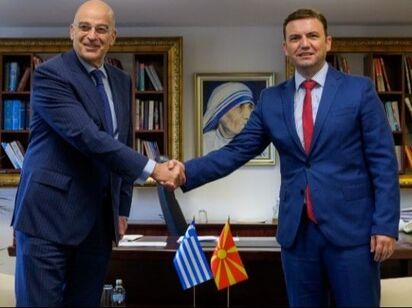
0 Comments

Dendias: Greece remains calm in the face of challenges in the Eastern Mediterranean

5/26/2022

0 Comments

 
PictureMeeting between Foreign Ministers Nikos Dendias (L) and Bujar Osmani (R) in Skopje
SKOPJE (ANA/ N. Fragopoulos) - Greece remains calm in the face of the challenges it has to contend with in the Eastern Mediterranean, Foreign Minister Nikos Dendias said in statements late on Wednesday, following a meeting with North Macedonia's [sic] Foreign Minister Bujar Osmani in Skopje.
 

"We will not succumb to the temptation to reply to these provocations in the way way. We have a position that is very central: that international law and the Law of the Sea demand respect from every side. This is the fundamental rule of the Alliance to which we belong, of NATO," he added.

He repeated that Greece desires and is working feverishly to establish peace, security and stability in the region and believes that the only path to achieving these goals in the clear and full support of the European prospects of the Western Balkans.

"We are absolutely convinced that the EU should immediately begin accession negotiations with Albania and North Macedonia [sic]. This is the message that we are constantly relaying to our European partners," he said.

With respect to North Macedonia [sic], in particular, he noted that Greece's support was contingent on the full implementation of the Prespa Agreement in good faith and on maintaining good neighbour relations.

Dendias said that the Prespa Agreement was discussed in his meeting with Osmani, who assured him that North Macedonia [sic] was "moving in the direction". They also examined ways to strengthen bilateral relations, especially in terms of interconnecting the electricity grids in the two countries.

Osmani said the two sides expressed a readiness to further promote a strategic partnership relationship via specific forms of cooperation and commitments, creating a stronger connection between the two countries which would act as a model for the entire region on how to successfully resolve differences between neighbouring countries.

Source: ANA-MPA

0 Comments

Prime Minister Kyriakos Mitsotakis’ address to the Joint Session of the U.S. Congress

5/17/2022

0 Comments

 
Picture
Madam Speaker,
Madam Vice President,
Honorable Members of the United States Congress,
Ladies and Gentlemen,

There is no greater honor for the elected leader of the people who created democracy than to address the elected representatives of the people who founded their country on the Greek model and have promoted and defended democratic values ever since.

I am conscious as I stand before you today of the deep ties that bind our two nations together.
​
They are a reason for celebration and thanks but they are also a reminder, I believe, of our shared values and beliefs at a time when these are once again being tested. Our shared belief in freedom over tyranny, in democracy over authoritarianism, in the fundamental importance of respect for the rule of law over war and anarchy.
​
It is an added honor, and a great pleasure, for me to address a joint session of the US Congress under female leadership, Speaker Nancy Pelosi and, of course, Vice President Kamala Harris.
For it was a Greek, and a Greek man at that, who first advocated equal rights for women. In “The Republic” Plato proposed that women should share all levels of power and take on all challenges, including military service.

Any state that does not employ the talents of its women, Plato made clear, is wasting half of its resources. And as the son, husband, sibling and father of strong, creative women, I couldn’t agree more.

Like all Greeks, every time I come to Washington I feel as if I’m coming home, because everything I see around me, the architecture, the art, the ideas carved into marble throughout the city, is so familiar.

Walking into the Lincoln Memorial is like walking into the Parthenon when it was still intact, before Lord Elgin’s art collecting hobby defaced it, because it was modeled on the earlier monument. Driving by the Supreme Court and seeing above the entrance its motto and mission, “Equal Justice Under Law,” we remember that it is a concept that our Greek ancestors first conceived and articulated in a single word, “Isonomia.”

Of course, it was not only Washington’s buildings and culture that were immeasurably influenced by Greece but also the city’s main business, democratic politics, were founded in Athens as well. In fact, to be brutally frank, we all owe our jobs to our noble ancestors. But I come here not to seek appreciation from you or praise for them.

I come before you to celebrate a miracle that all free peoples cherish but that binds Greeks and Americans in a unique way. That miracle, the Greek idea that would forever change the world, is that society functions best if all of its citizens are equal and have the right to share in running their state. In a word, democracy.

It is hard for us today to realize how radical the idea of individual freedom was 25 centuries ago when a small community of Greeks dared to entrust equal political and legal rights to all its citizens. Women and slaves were excluded, but it was still such an extraordinary departure from what had gone before that it remains the most profound leap of faith in human history.
​
No society before the Greeks dared to believe that order and freedom were compatible. All societies before them were a succession of tyrannies that relied on a strong ruler, a king, a pharaoh, an emperor, to keep them functioning.

The lesson was not lost on the founders of the United States who shaped the American Constitution on the Athenian model but they were wise enough to insert checks and balances to avoid the excesses that eventually undermined Athenian democracy.

The birth of democracy in ancient Athens brought about an explosion of the creative spirit in Greece that produced the architecture, the art, the drama and the philosophy that have shaped western civilization ever since.

The establishment of democracy in the United States has brought about the greatest expansion of human freedom and human progress the world has ever known.

Ladies and gentlemen,

Last year Greece celebrated 200 years since the beginning of our war of independence. And in a very strange but interesting twist of historical fate, it was the Greek people who were inspired by the foundation of American democracy when they rose against their oppressor to fight for their own freedom.

What Americans had shown us by their example was that liberty can be fought for and, even when against the odds, won. We understood the founding of your republic to be a watershed in the history of the world, a model for the oppressed nations of Europe, a hope for our own future.

Right from the start, therefore, our forefathers looked across the Atlantic for support. From the distant Peloponnese, the leaders of the Greek revolution sent an appeal in the spring of 1821 to the American people, their ‘friends, fellow-citizens and brethren’.

They spoke of the ‘natural sympathy’ the Greeks felt for Americans, the thirst for freedom that they had both derived from the ancients. ‘In imitating you,’ they wrote, ‘we imitate our own ancestors. We shall show ourselves worthy of them in proportion as we resemble you.’

The founding fathers of your Republic were moved and impressed. ‘Light and liberty are in steady advance,’ wrote Thomas Jefferson on learning of the news from Greece. ‘The flames kindled on 4th July 1776 have spread over too much of the globe to be extinguished by the feeble engines of despotism.’

Exactly 200 years ago, in 1822, revolutionary Greeks assembled at Epidavros, debated and drew up our first Constitution. And with this document they introduced into the newly liberated Greek lands the new language of rights. Above all of the right of a nation to throw off the shackles of tyranny in order to live under the rule of law. In the words of our Declaration of Independence:

Have we something lesser than other nations, that we remain deprived of these rights, or are we of a nature lower or less civilized, that we should view ourselves as unworthy to enjoy them and instead be condemned to an eternal slavery, subjected, like automata or beasts of burden, to the absurd caprices of a cruel tyrant.

These are rights which within Greece we have never ceased to defend by arms when times and circumstances have permitted.”

A shocking reality: Replace the word Greece with Ukraine and the similarities to today’s turbulent world are harrowing.

Two years later, in a little town in Western Greece called Mesolonghi, these words were published alongside a translation of the American Constitution. That book, one of the first ever printed on Greek soil, stands testimony to the immense value we Greeks attached from the start to our own future as a liberal and constitutional polity.

That this little book appeared at the height of the war was remarkable. That it was printed in Mesolonghi was simply incredible. Like Mariupol today, Mesolonghi’s outnumbered and emaciated defenders would repeatedly repel wave upon wave of enemy attacks before their final desperate sortie, an act of extraordinary daring. But one that would ultimately cost hundreds of lives, many of whom were women and children.

When we see the same suffering among the outnumbered defenders of Mariupol, a city with a Greek name and deep Greek roots, we are reminded of Mesolonghi and the costs of our own struggle.

Even today we have not forgotten the American volunteers who sailed to fight alongside us. Some of them gave their lives for our freedom. Their names are honored and their graves are still cared for.

Nor have we forgotten others of your countrymen who mounted one of the first public humanitarian efforts in history by sending Greece aid and assistance. Remarkable figures like Samuel Gridley Howe cared for women and children who had been left homeless and destitute, and established hospitals, schools and orphanages that supported us in the difficult years that followed.

The first school for girls in Greece was founded in Athens in 1831, by an American pastor, John Hill. The Hill Memorial School still continues to teach Greek children today in the historic center of Athens.

This long arc of American philanthropy continued through the nineteenth century, spreading across the Near and Middle East. And in times of dire need in the following decades, most notably a century ago, when hundreds of thousands of refugees streamed into Greece from Asia Minor in the catastrophic aftermath of the First World War, American institutions were there to bring aid and relief.

And, of course it was the Marshal plan that helped my country rebuild its infrastructure after the devastating Second World War and the civil war that ensued.

And in its own way, Greece reciprocated. Among the Greek orphans who were brought across the Atlantic into the United States to escape the fighting after 1821 were a future congressman and a commander in the US navy.

Young Greeks saved from the war became American educators and writers. Many of them were dedicated abolitionists, for the eradication of slavery was a cause whose urgent necessity spoke directly to men and women who had once been enslaved themselves.

Over the past two centuries our two countries have always been on the right side of history. We fought side by side in world wars to defend freedom and democracy.

Our democracies have struggled with internal demons. We endured the horrific pains of civil wars and the desperation of economic crises. But we have emerged stronger and more committed to defend the values that our ancestors gave their lives for.

Esteemed members of Congress,

I began today by saying that this bicentennial is more than a moment of celebration. It is also a reminder of the values that bind us together and the tasks we still face.

The world has changed a good deal in the recent months. But the warning signs have been with us for decades.

Following the end of the Cold War we naively believed that Europe, which had twice driven the world into global conflict, had finally found the path to peace.

We believed that international cooperation and a shared commitment to the rule of law now prevailed over guns and armies.

We believed that the deepening of the European Union, a unique experiment designed to further link our countries together, would make war on the «Dark Continent» unthinkable.

We believed that given the tragic and harrowing experiences of the twentieth century, no one would venture to suppress another people’s right to exist or alter its borders by force.

We naively ignored the warning signs flashing red. And we even ignored Russia’s actions in Syria and its annexation of Crimea.

We know now that we were wrong.

Today, like all of you, we Greeks look at what is happening just five hundred miles to our north, and we are horrified and appalled.

We look to Kyiv and to Odessa, the city where our revolution was first conceived, and we look to the tragedy unfolding in eastern Ukraine.

We see Mariupol, a Greek city founded by Catherine the Great in 1778 to resettle Greeks from Crimea fleeing Ottoman rule. And what we see once again is a people who are faced with the necessity of fighting to defend themselves in order to secure their future.

Let me be clear: we have no animus towards the Russian people, with whom we have been bound so closely by faith and history. But we cannot be indifferent to a struggle that reminds us so much of our own.

We too know what it is to be forced to reckon with invasion, to stand up for one’s beliefs and to have to resort to arms to protect our liberty.

We too know about the heroism of the underdog, for whom the first victory comes from not capitulating in the face of overwhelming odds. From simply hanging on and praying that others will come to our aid.

And we understand too the importance of friends, and the power of allies, in the defense of the values that we share.

Without allies the Greeks would not, for all their heroism, have been able to win their independence. And that is why we recognize the importance of taking sides now.

And we took sides. Unequivocally. We stand by Ukraine against Putin’s aggression. We delivered humanitarian aid. We supported the Ukrainians with weapons to help them defend their homeland. And we have welcomed, with open arms, refugees who have fled their homeland in search of safety for themselves and their families.

Mr. Putin is striving to create a world in which power is for the strong state but not the small. A world in which territorial claims are made on the basis of historical fantasies and enforced by aggression, rather than decided by peace treaties. A world in which armies rather than diplomats settle disputes.

He will not succeed. He must not succeed. He must not succeed, not only for the sake of Ukraine but also in order to send a message to all authoritarian leaders that historical revisionism and open acts of aggression that violate international law will not be tolerated by the global community of democratic states. The language of resentment, revisionism and imperial nostalgia shall not prevail.

And speaking of open acts of aggression, I ask you, esteemed members of Congress, not to forget an open wound that has caused Hellenism unending pain over the past 48 years. I am referring to the invasion and subsequent division of Cyprus. This issue has to be resolved in accordance with international law and in line with the relevant decisions of the United Nations Security Council. As I told President Biden yesterday, nobody can and nobody will accept a two- state solution in Cyprus.

The same is true for all other regional disputes. Greece is a peace seeking democracy that always extends a hand of friendship to our neighbors. We are always open to dialogue. But there is only one framework we can use to resolve our differences: international law and the unwritten principles of good neighborly relations.

I want to be absolutely clear. We will not accept open acts of aggression that violate our sovereignty and our territorial rights. These include overflights over Greek islands, which must stop immediately.
Please also note: the last thing that NATO needs at a time when our focus is on helping Ukraine defeat Russia’s aggression is another source of instability on NATO’s Southeastern flank. And I ask you take this into account when you make defense procurement decisions concerning the Eastern Mediterranean.

The United States has, I believe, vital interests in this part of the world. It is very important that you remain engaged and work with partners with whom you share not only common strategic priorities, but also shared values and a shared history.

Ladies and gentlemen,

Last Thursday the Hellenic parliament ratified the new Mutual Defense and Cooperation Agreement between our two countries. Whereas previously it was renewed annually by an act of Parliament, it now has a five-year duration, after which it is automatically renewed, unless one of the parties chooses not to do so.

This Αgreement is a powerful testament of our enduring strategic partnership and our commitment to maintain peace and promote prosperity in the Eastern Mediterranean.

Nowhere is that more obvious than in Souda Bay, which I know many of you have visited. The largest naval base in the Eastern Mediterranean, and the only port that can accommodate aircraft carriers.

But it is also obvious in the city of Alexandroupolis, in Northeastern Greece, which is rapidly becoming an energy hub for the entire region. This is important, as we seek to rapidly diversify away from Russian gas, investing in the necessary infrastructure that will make it possible to import large quantities and liquefied natural gas, this becomes critical. Not just for Greece but also for our Balkan neighbors.

I should tell my colleagues I don’t get so much applause in the Greek Parliament.

And we will interconnect the Greek electricity grids with Cyprus, Israel and Egypt in order to import cheap renewable energy from the Middle East and Africa into the European electricity system.
But the thriving partnership of our two countries is not just limited to security and energy. Pfizer has set up a big data analytics center in Thessaloniki. Microsoft is building state of the art data centers on the outskirts of Athens. JP Morgan has invested in one of our leading Greek fintech companies.

What American companies see in Greece is not just a country endowed with an advantageous geographical position, and blessed with natural beauty that makes it a magnet for visitors from all over the world. They also see a dynamic economy that has overcome the difficulties, the pathogenies of the past and is supporting entrepreneurship and private investment.

And a workforce of young, talented, well-educated Greeks who, after a decade of crisis, choose to remain in their homeland rather than emigrating. Or for those who have actually left the country, choose to return to Greece now. And, I am convinced they will be the protagonists of Greece’s bright future.

Esteemed members of Congress,

I have spoken about the joint paths that our two great democracies have chartered over the past two centuries. We have every reason today to celebrate our achievements. But it would be foolish to remain complacent.

The United States has a crucial role to play today in our even more complicated world. From addressing climate change to standing up against authoritarian regimes, from countering fake news and disinformation to preparing for the next pandemic, the world looks to the strongest and most prosperous democracy for leadership. You simply cannot afford to sit on the sidelines.

Multilateralism, in my mind, is not an option but a necessity. Not only for a more stable world order but also for your own self-interest.

But we also need to put our own house in order. Personally, I am more worried about the internal fragmentations of our democracies than I fear the threat of arrogant despots.

We frequently remember the words of President Ronald Reagan “Freedom is never more than a generation away from extinction”.

But let us not forget that Abraham Lincoln referred to the “unfinished business of democracy”. And unfinished it is indeed.

Our democracies are threatened by the sirens of populists who offer easy solutions to complicated problems. Their voices are being heard, primarily because income inequality has increased in our societies and many, justifiably, feel that they are left behind. In Greece we speak from experience. We paid a heavy price for listening to them.

Everywhere in the world, in the United States, in Greece, in Europe, social media is polarizing public debate and transforming the public sphere into a modern-day version of the tower of Babel, where we speak different languages and we only listen to those who share the same views with us.

There are three major forces that collectively bind together successful democracies. Social capital, by that I mean extensive social networks, with high levels of trust, so admired by Alexis de Tocqueville. Strong institutions. And common stories that forge a unified national identity. All three are being eroded.

And at the same time authoritarian regimes are questioning our ability to deliver prosperity for all our citizens. They are offering their people a Faustian deal: trade political freedom and individual rights for high levels of growth and individual economic wellbeing. Many are willing to accept it.

These are some of the challenges we face today. That is why making our democracies more resilient is such an important priority for our generation.

I wish I had the answers to these complicated questions. But I know where to start. We need to strengthen our democratic institutions to address the root causes of our citizens’ anger and distrust. We need to tackle income inequalities without losing the dynamism of our open economies.

We need to reform social media so that it becomes less socially corrosive. And we need to train our young people to seize the opportunities of democratic citizenship in this new age.

And maybe a dive into our shared historical past would be of particular use. James Madison knew that democracies can be threatened by the “turbulency and weakness of unruly passions”.

That is why insulating decision making from the emotion of the moment, while still holding democratic leaders accountable on election day was one of his major preoccupations.

Madison was clearly inspired by Pericles, who knew that democracy had a dark side that, if left unrestrained, could lead to its downfall. Thucydides had Pericles say of Ancient Athens: “We are a free democracy but we obey our laws, more especially those who protect the weak, and the unwritten laws whose transgression bring shame”.

Every time we gaze in wonder at the Parthenon frieze, half of which unfortunately still sits in the British Museum rather than the Acropolis Museum where it belongs, we are reminded of the glory of a thriving democracy. 30 years after the Parthenon was constructed, democracy in Athens was no more.

Reinventing democracy to fit the challenges of the 21st century may sound like a tall order. But this is the mission of our generation and I am certain we will accomplish it.

Esteemed members of Congress,

Let me conclude by making a special reference to the one unshakable bond that will always bind our countries together. The Greek American community.

It is a special moment to see so many of you here with us today.

Over the past 120 years you have warmly welcomed, encouraged and supported the waves of immigrants who came to your country in search of a better life. Not to mention the students like me who spent seven years studying in American universities.

Those who sailed to this country were not philosophers and poets like their noble ancestors. For the most part, they were simple laborers, and they eagerly took any work they could find.

But no matter how uneducated the Greeks or how menial their work, they would typically apply themselves with great determination and embrace any chance to prosper in life and educate their children.

They offered them a brighter future, fulfilling the solemn duty that every generation should be able to live a better life than the previous one. They experienced the American dream, but never forgot where they came from.

Today the Greeks who live in the US and the three million Americans who identify themselves as Greeks include some of the most respected leaders in the arts, science, education, medicine, the judiciary, and, of course, politics.

Modern visionaries like Nikolas Negroponte and Albert Bourla. John Kassavetis and Elia Kazan. Jeffrey Evgenidis and George Pelekanos. Alexander Payne and Tom Hanks. And of course, Yannis Antetokounmpo.

Six of them are in this Congress and one of them, my friend Mike Dukakis, ran for president of the United States.

I think one of the reasons Greeks were accepted in America so readily is the fact that the values of America are Greek values. On of the qualities that Greeks value the most is called “Sophrosene,” a word best translated as self-control, temperance, and harmony.

The ancient Greeks thought arrogance, extremism, and excess the worst threats to democracy. “For man,” Aristotle wrote, “life according to reason is best and most pleasant, since reason more than anything else is man.”


That reason tells me we Greeks and Americans have a lot more to contribute as custodians of democracy. That government of the people, by the people, for the people shall thrive again.

I bring you here today the pledge of the Greek people that we stand together with the people of the United States whenever and wherever necessary to ensure that the hope our ancestors bequeathed to the world 25 centuries ago will endure, and the dream of freedom for every human being on this planet will never die.

Long live the friendship between Greece and the United States of America!

Thank you!
0 Comments

Schismatic church officially recognized as the "Ohrid" Church by Ecumenical Patriarchate

5/9/2022

0 Comments

 
Picture
Metropolitan Stefan, Skopje
Picture
Communiqué (May 9, 2022)
The Holy and Sacred Synod convened today, Monday May 9, 2022, under the chairmanship of His All-Holiness Ecumenical Patriarch Bartholomew, and discussed extensively the ecclesiastical matter of Skopje. Having assessed in its final stage the petition of appeal of that Church to the Mother Church, along with the repeated pleas of the State of North Macedonia, it made the following decisions:

  1. It welcomes into eucharistic communion the Hierarchy, clergy and laity under Archbishop Stefan of this Church, thereby healing the wound of schism and pouring “oil and wine” on the ordeal of our Orthodox brethren in that country. To this end, the appropriate Patriarchal and Synodal Act is issued.

  2. It cedes to the Most Holy Church of Serbia the regulation of the administrative matters between itself and the Church in North Macedonia, in the context of course of the sacred canonical order and church tradition.

  3. It recognizes “Ohrid” as the name of this Church (understood as the region of its jurisdiction solely within the boundaries of the territory of the state of North Macedonia), as also promised in writing to the Ecumenical Patriarchate by its Primate. Thereby excluding the term “Macedonian” and any other derivative of the word “Macedonia.”
    ​
The Ecumenical Patriarchate continues to express interest for the growth, progress and stability of this ecclesiastical entity of Ohrid, just as it has done through the centuries for all the local Orthodox Churches, as “the inn of love, the source of piety of all Orthodox Christians” (Metropolitan Paul of Drama).

At the Patriarchate, on May 9, 2022

From the Chief Secretariat

of the Holy and Sacred Synod

_____
Source: Ecumenical Patriarchate
0 Comments

Public Designation of Former Officials of the Republic of North Macedonia [sic] and Bosnia and Herzegovina

4/12/2022

0 Comments

 
PictureNikola Gruevski, former Prime Minister of North Macedonia [sic]
The U.S. Department of State has publicly designated former Prime Minister of the Republic of North Macedonia [sic] Nikola Gruevski and former Director of the Department for Security and Counterintelligence (UBK) Sasho Mijalkov as well as Gordana Tadić of Bosnia and Herzegovina from the chief prosecutor’s office. We have taken these actions in response to these former officials’ involvement in significant corruption. Their actions undermined the rule of law, democratic institutions, and public processes in both countries and eroded the public’s faith in their governments.

In his official capacity as prime minister, Gruevski was involved in corrupt acts that included using his political influence and official power for personal benefit. Specifically, there is credible information that Gruevski abused the power of his office to solicit and accept bribes in return for government contracts, misappropriated public funds, and interfered in electoral processes to benefit himself and his party politically.

In his official capacity as Director of the UBK, Mijalkov was involved in corrupt acts that included using his political influence and official power for personal benefit. Specifically, there is credible information that Mijalkov abused the power of his office to solicit bribes in return for government contracts and interfered in electoral processes to benefit himself and his party politically.

In her official capacity as chief prosecutor of Bosnia and Herzegovina, Gordana Tadić used her influence to interfere with judicial processes. Specifically, there is credible information that Tadić manipulated cases to protect political patrons from prosecution and failed to assign cases to prosecutors through an automated case distribution system designed to prevent prosecutor assignment decisions based on personal or political reasons.

These designations are made under Section 7031(c) of the Department of State, Foreign Operations, and Related Programs Appropriations Act, 2022. In addition to Gruevski, Mijalkov and Tadić, the Department of State is also designating their immediate family members under 7031(c). This action renders Gruevski, Mijalkov, Tadić and their immediate family members ineligible for entry into the United States.

In addition, the U.S. Department of the Treasury’s Office of Foreign Assets Control (OFAC) has imposed economic sanctions pursuant to Executive Order (E.O.) 14033 on seven individuals and one entity across four countries in the Western Balkans.  As a result of today’s action under E.O. 14033, all property and interests in property of those sanctioned that are in or come within the United States or that are in the possession or control of U.S. persons must be blocked and reported to OFAC. Link here: Treasury Targets Actors for Destabilizing Behavior Throughout the Western Balkans | U.S. Department of the Treasury. 

Together, these designations reaffirm the U.S. commitment to supporting the rule of law and strengthening democratic institutions of the Republic of North Macedonia [sic] and Bosnia and Herzegovina.  The Department will continue to use authorities like this to promote accountability for corrupt actors in this region and globally.

Source: U.S. Department of State

0 Comments

North Macedonia [sic] Census Reveals Big Drop in Population

3/31/2022

0 Comments

 
By Sinisa Jakov Marusic, Skopje | BIRN
Long delayed headcount shows North Macedonia [sic] has lost more than 9 per cent of its population in the last 20 years, a fall that was not unexpected by the experts.
Picture
The official results of the September 2021 national headcount, published on Wednesday, March 30, 2022, show the country’s population has shrunk by 9.2 per cent over two decades since the last census.

The population now stands at 1,836,713, which is 185,834 people less than the number recorded in the previous census conducted in 2002.

Together with 260,606 counted non-residents, whose participation in the census was optional, the number rises to a total of 2,097,319, the State Statistical Office said at a press conference in Skopje.

Results show the average age of the population is just over 40, and 207 settlements in the country, predominantly villages, are now empty of people.

While the population has fallen sharply, as many experts anticipated, the results have shown that the ethnic composition of the population has not shifted that much.

The ethnic ratio has been a matter of much concern over the past two decades, and was the main reason for several postponements, and for scrapping the census of 2011.

The new results show that, of the resident population, 58,44 per cent are ethnic Macedonians [sic] and 24,3 per cent are ethnic Albanians.

Of the rest, 3,86 per cent are ethnic Turks, 2,53 per cent are Roma, 1,3 per cent are Serbs, 0,87 per cent are Bosniaks and 0,47 per cent are Vlachs.

Taking into account the non-resident population as well, the ratio between Macedonians [sic] and Albanians has shifted a little in favour of the latter.

In this case, Macedonians [sic] comprise 54,21 per cent of all counted citizens while Albanians make up 29,52 per cent.

Compared to the previous census from 2002, the number of Albanians in the country has remained largely the same but the number of ethnic Macedonians [sic] has shrunk.

That census showed that 64 per cent of the then population of 2,1 million was Macedonian [sic] and 25 per cent was ethnic Albanian. Same as now, Roma, Turks, Serbs and other minorities made up the rest.

One factor that might explain why there are less ethnic Macedonians [sic] while the Albanian population is unchanged might be that an additional 132,269 people who have refused to take part in the local headcount have been counted in the final number of residents.

Their data has been taken from the existing national data bases but without any ethnicity or religion, since those data are a matter of personal identification, the Statistical Office explained.

After many delays, the country finally conducted a census in September last year.

Although the process was marred by many technical difficulties, and by a call for boycott from one of the opposition parties, called Left, which urged ethnic Macedonians [sic] to abstain, citing suspicions of rigging, the head of the State Statistical Office, Apostol Simovski, insisted that the operation was “successfully and professionally carried out” and that “the results reflect the reality”.

Politicians in their reactions avoided sensationalism.

“The headcount gave us a clearer picture about the number of residents in the country,” the head of the main ethnic Albanian party, the junior ruling Democratic Union for Integration, DUI, Ali Ahmeti, said. The main ruling Social Democrats merely welcomed the success of the operation.

The main opposition right-wing VMRO DPMNE party has yet to comment. In the past, it has objected to the methodology chosen to count the population, complaining of a hidden agenda to exaggerate the number of Albanians in the results.

The results did not reveal a large hidden population of ethnic Bulgarians in North Macedonia [sic], and failed to confirm Bulgarian claims that over 100,000 ethnic Bulgarians live in the country. Only 3,504 people have identified as Bulgarian, up from 1,487 counted in 2002 but still statistically insignificant.

The Sofia government backed its claim about 100,000-plus Bulgarians with the large number of Bulgarian passports it gave to North Macedonia [sic] citizens since it joined the EU in 2007. It has argued that the Bulgarian minority in North Macedonia [sic] has been subjected to repression, which authorities in Skopje deny.

In North Macedonia [sic], it is widely suspected that most people who opt to take out Bulgarian passports do so for purely practical EU-related reasons and for greater ease of travel.

But there are concerns that the small number of ethnic Bulgarians reported in the census may provoke more negative comments from Sofia, which is blocking the start of Skopje’s EU accession talks in a dispute over historical issues – and that this may dampen recent hopes of a breakthrough that would enable North Macedonia [sic] to finally open EU membership talks.

Despite some nostalgia for the old days of the Yugoslav federation, only 344 people in the headcount identified as Yugoslavs, 0.1 per cent of the population.

_____
Source: Balkan Insight

0 Comments

The Effects of Living in a Cave Chained and Facing a Blank Wall All their Lives

3/12/2022

0 Comments

 
By Marcus A. Templar, National Security Advisor | Macedonian League
Adolph Hitler wrote in Mein Kampf (My Struggle),
​ 
​
It is not the purpose of propaganda to create a series of alterations in sentiment to please this blasé gentry. Its chief function is to convince the masses, whose slowness of understanding needs to be given time in order that they may absorb information; and only constant repetition will finally succeed in imprinting an idea on the memory of the crowd (Hitler, Mein Kampf, translated into English by James Murphy, February 1939, p. 159-160). ​
PictureMarcus A. Templar
National Security Advisor
Macedonian League

The bottom line is this: If one keeps repeating a lie, people will believe it is true. The whole thing reminds me of the American Wrestling Association (AWA) case. Although everyone knew that professional wrestling was fake, their fans did not care. They continued to watch it even after the AWA finally admitted it. It is a broken record mentality.

Let me start with a misunderstanding that flows everywhere. Those who know of the manner Julius Caesar died are familiar with the statement, "Et tu Brute". But there is not one ancient author, Roman or Greek, to support such an expression.

It is found only in Shakespeare's play, "Julius Caesar," Act 3, Scene 1, line 85 (FTLN 1238), where
Caesar states: "Et tu, Brutè?—Then fall, [he] dies." The above is repeated on and on to the point that almost everyone believes Julius Caesar cried "Et tu Brute" as he fell to his death.

But according to Suetonius who wrote about Caesar's life, Caesar did not say "et tu Brute"; what he said was in Greek, καὶ σὺ τέκνον; (; = ?), which is a free translation meaning, "even you, my child?"

Here is the original.

Atque ita tribus et viginti plagis confossus est uno modo ad primum ictum gemitu sine voce edito, etsi tradiderunt quidam Marco Bruto irruenti dixisse: καὶ σὺ τέκνον;

And here is the translator's adaptation of the original text.
​
And in this wise, he was stabbed with three and twenty wounds, uttering not a word, but merely a groan at the first stroke, though some have written that when Marcus Brutus rushed at him, he said in Greek, "You too, my child?" (C. Suetonius Tranquillus, The Lives of the Twelve Caesars - The Life of Julius Caesar (Divus Julius) the Loeb Classical Library, 1913).

That Caesar and his environment spoke or wrote in Greek is clearly stated in Plutarch's The Parallel Lives - The Life of Julius Caesar, 46, 2 and 66.7. The keyword is ἑλληνιστὶ in the original or "in Greek" in the English translation.

Politics and Truth

The only truth in Politics is perception. The winner is the side that persuades the public for its version of the story. A constant repetition creates a narrative in which the proponents of special interests in the specific matter take advantage and amplify, like a megaphone, a fabrication to achieve their goals and objectives. One could call it propaganda; after all, propaganda means propagation.


                                                       The infamous Greek lobby

Although the term Greek lobby started as a joke in the offices of the U.S. Congress, wishful thinking became a fact in the minds of the Greeks whether they lived in the United States or abroad, including Greece. We had kind of a lobby when the late Archbishop Iakovos was a functional primate. However, Archbishop Iakovos' power and love for Greek issues bothered a few in Greece, especially the Greek American community, forcing him to resign. The chopped Greek Orthodox primacy in America that followed speaks volumes. No, it was not Turkey nor the Ecumenical Patriarchate behind it. It was Greek Americans who did it. A group of affluent Greek Americans was behind the scheme, which they coordinated with politicians of Greece to protect the earlier interests. Thus now, we have NO voice.

The other day, a good friend of mine admitted to me that he discussed with the editor of a major Toronto-based Greek newspaper the issue of the Greek Genocide. The editor told him that my friend's views about the case of the Greek Genocide are dangerous, and he would lose his advertisement dollars if he dared discuss the Greek Genocide. In all likelihood, he'd probably lose funding 
from the Greek MFA as well. The same Greek newspaper claims they pursue all subjects objectively, except the Genocide. That subject is "untouchable" in Toronto."

I have learned in my 30-year service as a U.S. Army Cryptologic Linguist, Lead Senior All-Source Intelligence Analyst, Foreign Disclosures Officer, and Military Instructor on Strategy:

1. Do Not Discount Discipline
2. Excellence is a Habit
3. There is NO 'I ' in Teamwork
4. Readiness is Responsibility
5. Guarantee that something is being done
6. Results Matter

The so-called Greek "lobby" has met NONE of them. 


                                                        The “Macedonians” of Skopje

We live in the age of information, misinformation, and disinformation through public media and social media. It started with the radio and television, and there is an end in sight.

Greece should have taken advantage of it by spreading facts when Yugoslavia associated the Hunza tribe with its "Macedonians" using ANY means possible and disseminated the newly found "truths" via documentaries in the 1960s and 1970s.

We saw and still see the effectiveness of repetition in the case of the Macedonia name dispute. The issue started in the mid-1940s when Federative Yugoslavia put an indirect claim over the Greek region. To contribute to a successful outcome, Yugoslavia named one of its constituent republics "Macedonia," giving the new name international recognition. However, as time passed, constant, fierce, and unrelentless repetition forced the revised history into school books of various countries, including the United States. Yugoslavia's historical poppycock bore fruit as Greece's unparallel sluggard behavior accompanied it. It was behind the success of Skopje, which forced Greece to sign the Prespa Agreement in 2018.


                                                               Turkey and its Army

The Turkish media and government keep disseminating disinformation about Turkey's baseless position regarding the legality behind the militarization of the islands. Thus far, Greece has assisted the Turks in rallying moral support against the "warmongering" Greeks. There is no question that Greece is legally correct under international law. Still, it seems that media and politicians are either ignorant or indifferent. Repetition on the one hand and silence on the other.

What about the myth that Turks are fierce fighters? The tale started in Korea under very militarily questionable criteria dumped journalists with non-military backgrounds and, through repetition, is still alive.

In 1954, a Turkish film titled Şimal Yıldızı after the Turkish Brigade's name, directed by Aıtf Yımaz Batbeki and starring Ayhan Işk, was released, praising the unit's performance.

Here is some reality:
Certain Turkish patrols consistently reported high losses. In general, they preferred to be on the offensive and handled it quite well. They were not as good at defensive positions and indeed never retreated. The Turks, armed and trained by American military advisers, did better than even they had hoped or expected to do. But that does not mean that they did well. Regardless of the so-called accomplishments of the Turkish Army in Korea, the fact is that they had participated in three battles with a fourth assigned a rear-guard duty.

The total number of Turkish troops was 14,936 men who served in the 1st Brigade from 1950 to 1953, with about 5,455 troops in Korea at one time.

In the U.N. offensive and the Chinese counter-offensive, the 1st Turkish Brigade suffered 3,514 casualties, of which 741 were killed in action, 2,068 wounded, 163 MIA, and 244 taken prisoner, as well as 298 noncombatant casualties. This is an indicator of about a 24% casualty rate.

So, achievement always depends on the standard one sets. If the standards are low, anything above that is an achievement.

But such a bad performance did not stop the friends of Turkey from promoting it. For example, in one of the episodes of M.A.S.H. Turkish soldiers were projected as courageous, who face danger and even death with defiance while simultaneously benevolent. Sergeant Attias was a Turkish army sergeant who made a single appearance in the Season 5 episode of the CBS-TV series M*A*S*H titled "Post Op." The part of Attias was played by Argentinian-born actor Zitto Kazann.

As insignificant as it seems, it remained in viewers' sub-conscientious minds.

Also, the Turkish Army, especially its officer corps, lacked experience since their first actual combat was in World War I and the Greco-Turkish war (1919–1922). In addition, Turkey was neutral during WWII, although unofficially was on the side of the Nazis.

We saw the performance of the Turkish military in the invasion of Cyprus in 1974. Forty thousand men of an army with far superior equipment invaded a small country with lightly armed national guardsmen. The lightly armed National Guard of Cyprus immobilized the invading force in the perimeter of Kyrenia's beaches for ten days. Then, after the U.N.S.C. declared a ceasefire and the Greek Cypriot forces stopped fighting, the Turks advanced to the present-day occupied lands. The Turkish air force lost 19 aircraft against no opposing air force and the navy lost two ships against no existing navy. The Turkish ships had collided with each other; the Israelis had fished the sailors out of the water.

This is the case that the Turkish General Staff and politicians have done an excellent job silencing their military ineptness. Yet, f
or a country that prides itself on its mighty armed forces, it is incomprehensible that its political and military leaders are afraid of their own shadows.  Seeing enemies everywhere is paranoia, but they know they precipitate regional instability. It goes to the heart of Turkey's education system, and by that, I mean formal, informal, and non-formal education.

Regarding the bravado tactics of both Tayyip Erdoğan and Mevlüt Çavuşoğlu against Greece, I must stress that those two should consider the fact that what they think their military can do is not what their military is capable of doing.

Being browbeating creatures habitually cruel, insulting, and threatening their neighbor who, solely in their minds, is vulnerable to their whims, helps neither their country nor themselves. Greece is not Cyprus. Of course, they both know it because if they were confident that the Turkish military would have an easy time taking the Greek armed forces without any political or military cost, they would have already done it. The Aegean islands are LEGALLY Greek territory, and since their militarization was legally accepted in 1936 by Turkey and 1947 by the international community, Turkey has NO legal case.

On the contrary, such actions might even earn them the fate of Adnan Menderes, who was accused of orchestrating the September pogrom against Turkish citizens of Greek descent! As a result, he hunged in prison on the tiny island of İmralı just south of the Sea of Marmara and west of the Armutlu-Bozburun peninsula within Bursa Prefecture.


                                                             USSR / Russia

World War II – USSR

Sheer superior numbers of troops do not guarantee a military victory. Instead, other factors contribute to whether a victory translates to success or failure. But here, I must stress that soldiers fight to win the war; politicians are responsible for winning the peace.

Many people will state that Russia was only part of the USSR, so it is unfair to stick USSR's, i.e., communist crimes, to Russia. The fact is that Russia was the driving force behind USSR's sociopolitical and military development.

​Here is the first stanza of the national anthem of the USSR between 1943 and 1991.
​
Russian Text

Союз нерушимый республик свободных
Сплотила навеки Великая Русь.
Да здравствует созданный волей народов
Единый, могучий Советский Союз!

Official Translation

An unbreakable union of free republics,
Great Russia has united forever.
Long live, the creation of the people's will,
The united, mighty Soviet Union!

Fifty-one states signed the Charter of the United Nations on June 26, 1945, which came into force on October 24, 1945. Because of how the UN was set up, the USSR had three UNGA votes.

The Ukrainian Soviet Socialist Republic (1945–1991) and the Byelorussian Soviet Socialist Republic were among the first countries that signed the United Nations Charter, becoming founding members of the United Nations among 51 countries.

So, the USSR had three votes in the UNGA and occasionally two or even three votes in the UNSC, depending on the UNSC rotation. However, only the USSR had the veto power. Isn't it interesting that out of 15 USSR republics, only Russia became the only heir of the USSR in the UNSC?

Most Russians used to the WWII storyline that, thanks to the will of the Soviet people and the ingenuity of its leadership, overcame the enemy, i.e., Hitler's hordes. There is no doubt that the Soviet people gave their lives at war. There is no doubt that religion contributed to the victory after Stalin weaponized it for his survival. The above is true in some sense. But the ordinary person had never ventured to consider the above, which was summarily constructed and propagated during the periods between the death of Stalin and then the rise of Mikhail Gorbachev. After all, someone had to be blamed for millions of deaths during and after Stalin.

The whole idea is to offer history and the sources that it arrives from with all its glory and shame. There is no doubt that "the victors write history." But the challenge is to expose all facts, so that upcoming generations learn lessons of success and failures to replicate the earlier and reject the latter in the future.

Aiming at knowing the facts, we can discover the truth that the leadership of the USSR and now Russia willfully ignore. First, we must overview some of the most controversial events and battles of the war to single out the cause for failure. We must understand that many have abandoned facts and truth, especially in Russia.
​
However, it could be worse had it not been for the military and economic assistance for the West and especially the United States. The allies in the anti-Hitler coalition, which was finally formed in the summer of 1942, aided the Soviet Union in its fight against a common enemy. In addition, the economies of the United States and Great Britain were militarily increasingly rebuilt. In 1942, more than 2,500 aircraft, 3,000 tanks, about 79,000 cars, radio equipment, sonar devices, gasoline, food, footwear, etc., were delivered to the USSR under lend-lease. However, by the end of 1942, the Americans and British had fulfilled 55 percent of the agreed-upon supply programs to the USSR. In 1941-45, the USSR received only 7% of the goods sent from the United States during the war years. The bulk of the weapons and other materials were received by the Soviet Union in 1944-1945 (Ministry of Defense of the Russian Federation - The Great Patriotic War of 1941-45, 2012) (translation from Russian to English is mine). [1]

In October 1941 - June 1942, the most significant part of the Lend-Lease supply tonnage (1.42 million tons in total) was metals (about 30%) and products (22%), military equipment was in third place (15%), slightly ahead of oil products (12%). Including British aid, armaments and explosives were roughly equal in volume to products. However, the United States and its allies in the Pacific were at war in December 1941. In addition, Japan forced the British and American industries to restrict their supply options and intensify hostilities in North Africa.

Under the second protocol, the USSR and the Allies signed deliveries in June 1942 (July 1942 - June 1943), two of which were - 3.1 million tons. A third of them were food (24%), metals, military equipment (15%). Oil products, explosives, and equipment filled 7%, 6%, and 5% of the tonnage, respectively.

The most significant deliveries were under the third protocol (July 1943 - June 1944), including 5.75 million tons. However, 30% of deliveries were products as 18% metals, the share of military and transport vehicles decreased to 13%, oil products, explosives, and equipment equalized - 8% each.

Under the fourth protocol, the USSR received another 5.5 million tons of aid before May 12, 1945. This time the share of products and metals was almost equal (21 and 20%, respectively), the volume of oil products (13%) was ahead of military equipment and transport (12% ). The volume of equipment reached 9%. In addition, compared with the second period, the role of transport equipment has increased dramatically (from 1% to 6%).

Eleven million tons of 15.7 million tons of cargo during the war with Germany (more than 200,000 tons arrived before the conclusion of the first protocol), or 70.7%, were received from the second half of 1943 to May 1945.

Stalin was very familiar with the "Murmansk Run" (from 1941 through 1945), the shortest and most direct route that about 40 convoys totaling more than 800 merchant ships used to supply the USSR. About 350 of those ships were under the U. S. flag.

An article published on the science page of
Gazeta.RU by Ekaterina Shutova on March 11, 2016, under the title: How the Americans supplied the USSR with goods: 75 years ago, an act was signed on providing goods from the United States to the allies, offering similar accounts.
​
In total, during the war years, the USSR received 44,000 American jeeps, 375,883 trucks, 8,071 tractors, and 12,700 tanks. In addition, thanks to the United States, the country received 1,541,590 blankets, 331,066 liters of alcohol, 15,417,000 pairs of army boots, 106,893 tons of cotton, 2,670,000 tons of petroleum products and 4,478,000 tons of food supplies (translation from Russian to English is mine)[2]

​In 1963, the Soviet Marshal Georgy Zhukov had admitted the fact that the United States Allies had helped the USSR in its war efforts,
​

When we entered the war, we were still a backward country in the industrial sense as compared to Germany ... Today [in 1963] some say the Allies really didn't help us…, But, listen, one cannot deny that the Americans shipped over to us matériel without which we could not have equipped our armies held in reserve or been able to continue the war … We did not have enough munitions [and] how would we have been able to turn out all those tanks without the rolled steel sent to us by the Americans? To believe what they say [in the USSR] today, you'd think we had all this in abundance!" (Weeks 1970, 94).

The Katyń Massacre

One of the poppycock that circulated a lot by the Soviets was the massacre of Katyń. It is another example of repetition deemed effective in the case of the USSR and Russia's accessory after the fact in the Katyń Massacre.


In April 1943, Nazi Germany's authorities declared the discovery of mass graves in the Katyń Forest. Stalin severed diplomatic relations with the Polish government-in-exile in London after the latter requested an investigation by the International Committee of the Red Cross. The Soviet Union claimed that the Nazis had murdered the victims.

The Katyń massacre was a series of mass executions of nearly 22,000 Polish military officers and intelligentsia in April and May 1940 by the Soviet Union. Specifically, the NKVD (Народный комиссариат внутренних дел or People's Commissariat for Internal Affairs), the Soviet secret police. This shocking crime is known as the Katyń Massacre, after executions within the timberland at Katyń, near Smolensk. In addition, The Russians executed the Polish officers in prison camps at Kozelsk, Starobyelsk, near Kharkiv in Ukraine and Belarus.

The slaughter had started based on NKVD chief Lavrentiy Beria's proposition to Joseph Stalin to execute all Polish officer prisoners of war. The Soviet Politburo under Stalin's grip affirmed such an illegal act.

The total number of murdered individuals, almost 8,000, were officers detained amid the 1939 Soviet invasion of Poland. Over and above that, another 6,000 were police officers. The remaining 8,000 were Polish intelligentsia that the Soviets considered "intelligence agents, gendarmes, landowners, saboteurs, factory owners, lawyers, officials, and priests."

The Polish Armed Forces Officer Corps represented the multi-ethnic Polish state. The slaughtered officers included ethnic Poles, Ukrainians, Belarusians, and Jews, including the chief Rabbi of the Polish Armed Forces, Baruch Steinberg.

After the fall of the USSR, prosecutors of the Soviet Union (1990–1991) and the Russian Federation (1991–2004) conducted a thorough investigation confirming Soviet responsibility for the massacres. However, the commissions refuse to classify the matter as a war crime or as an act of mass murder. Furthermore, the commissions closed the investigation since the perpetrators had already died. The Russian government would not classify the dead as victims of the Great Purge. Under these circumstances, a formal posthumous rehabilitation was deemed inapplicable. In November 2010, the Russian State Duma or Parliament approved a declaration blaming Stalin and other Soviet officials for ordering the massacre. The falsified Soviet version of the events has become known as the "Katyń lie."

However, Russia kept denying responsibility for the massacres till 1990, when the Russian government officially recounted and condemned the NKVD's killings, as the Soviet government's subsequent cover-up and disinformation campaign through repetition.

Under the title" Russia removes memorial to Katyń Massacre in new attack on historical truth," the Kharkiv Human Rights Protection Group explains Russia's determination to erase facts. [3]

Despite the above, here is also the harsh reality of WWII for the Soviet Union, according to Viktor Suvorov.
​
The Soviet forces surrendered to Hitler in regiments, divisions, corps, and Armies. In September 1941, the 5th, 21st, 26th, and 37th Armies surrendered simultaneously and without resistance. In May 1942, the whole of the South-Western Front, the 6th, 9th and 57th Armies, the 2nd, 5th, and 6th Cavalry I Corps, the 21st and 23rd Tank Corps surrendered in the Kharkov [today Karkiv] area. They fought for four days and laid down their arms on the fifth. At the same moment, the 2nd Shock Army capitulated on the North-Western Front. What is more, they then turned their weapons against the Communists. Soldiers, officers, and generals of every nationality of the Soviet Union surrendered, although the Russians were the most numerous, both in numbers and as a percentage of the total Russian population of the country. The Russian Liberation Army was the largest of all the anti-Communist forces, drawn from the inhabitants of the pre-revolutionary Russian Empire, which were set up during the Second World War. By the end of the war, it consisted of approximately one million Russian soldiers and officers, who had chosen to fight against the Soviet Army could have been still larger than this, but Hitler would not give his wholehearted support to Lieutenant-General A. Vlasov, the leader of the Russian anti-Communist movement. With unbelievable short-sightedness, he embarked upon a bloodthirsty campaign of terror against the inhabitants of the territories occupied by his armies. Compared to the liberation and collectivisation campaigns carried out by the Communists, this terror was relatively mild, but it deprived Hitler of any hope of winning the laurels of a champion of freedom.[4] (Suvorov 1982, 145-6).

1941 Purge
​

In May 1941, a German Junkers-52 invaded Soviet airspace and, unnoticed landed safely at the central airfield in Moscow near the Dynamo stadium. The above incident caused a stir in the Kremlin and led to a wave of repression among the military command. It began with layoffs, followed by arrests and execution of the Air Force high command. This fascinating landing in the center of Moscow showed Hitler how weak the combat readiness of the Soviet armed forces was[5] (Sudoplatov, 1977 - translation from Russian to English is mine).

​Here are some of the victims

May 30: People's Commissar of Ammunition Ivan Sergeyev and Major General Ernst Schacht
May 31: Lieutenant General Pyotr Pumpur
June 7: People's Commissar of Armaments Boris Vannikov and Colonel General Grigory Shtern
June 8: Lieutenant General Yakov Smushkevich
June 18: Lieutenant General Pavel Alekseyev
June 19: Colonel General Alexander Loktionov
June 24: General Kirill Meretskov and Lieutenant General Pavel Rychagov
June 27: Lieutenant General Ivan Proskurov

Stalin's political purge was primarily an attempt to eliminate challenges from past and potential opposition groups, including the left and right wings led by Leon Trotsky and Nikolai Bukharin, respectively.

According to official figures, 777,975 executions for political reasons occurred between 1929 and 1953. Of them, 681,692 executions took place in 1937 and 1938. Unofficial accounts appraise the number of Stalinism suppression deaths in 1937 and 1938 at 700,000–1,200,000.

The Red Army Officer Corps' purge was a power play that resulted in Stalin consolidating his power as leader of the Soviet Union. The loss of nearly the entire command structure of the Red Army had substantial adverse effects on the ability of the Soviet Union to win a war.

Such purges, however, could cost the USSR the victory and indeed territory since Stalin eliminated competent people replacing them with individuals loyal to his person, but with inadequate training, skills, and capabilities. As a result, Stalin got the people he wanted to have around, but he almost lost his country. Unfortunately, Putin repeats Stalin's mistakes.


                                                        Conclusion

A consistent reiteration makes a story in which the proponents of uncommon interface within the particular matter take advantage and increase, like an amplifier, a creation to realize their objectives and goals. One may call it publicity; after all, publicity implies engendering.

So, one must be very careful what one obtains through media, especially social media. A reliable source provides a thorough, well-reasoned theory, argument, discussion, etc., based on solid evidence.

Individuals, prisoners of illusions, must free themselves from the cave and realize that the shadows on the wall are not reality. They must recognize and see the higher levels of reality. But, be that as it may, those liberated must offer assistance to the other prisoners of the cave, as Plato suggested. They do not indeed crave to leave their mental prison, their illusory truth effect, for they know no better life.


_____
Endnotes
​
[1] Помощь Советскому Союзу в борьбе против общего врага оказывали союзники по антигитлеровской коалиции, которая окончательно сложилась к лету 1942 г.  Экономика США и Великобритании все больше перестраивалась на военный лад. В 1942 г. по ленд-лизу в СССР было поставлено более 2,5 тыс. самолетов, 3 тыс. танков, около 79 тыс. автомобилей, радиотехнические средства, гидроакустические приборы, бензин, продовольствие, обувь и прочее.  Однако «к концу 1942 г. согласованные программы поставок в СССР были выполнены американцами и англичанами на 55%. В 1941–1942 гг. в СССР поступило всего 7% отправленных за годы войны из США грузов. Основное количество вооружения и других материалов было получено Советским Союзом в 1944–1945 годах» (Российская военная энциклопедия, Великая отечественная война 1941-45 г. в 12 томах. 2012. Москва: Кучково поле. Toм 3, стр.358).

https://encyclopedia.mil.ru/files/VOV/tom2/Velikaya_Otechestvennaya_voina_Tom_2.pdf

[2] https://www.gazeta.ru/science/2016/03/11_a_8115965.shtml

[3] https://www.gazeta.ru/science/2016/03/11_a_8115965.shtml

[4] Viktor Suvorov, Inside the Soviet Army (New York: Macmillan, 1982), 145-6.  The author's birth name is Vladimir Bogdanovich Rezun, born in Barabash, Primorsky Krai (near Vladivostok Russia), Soviet Union.

[5] Павел А. Судоплатов, Спецоперации. Лубянка  и Кремль 1930-1950 годы, ОЛМА-ПРЕСС, 1997 г.  (Pavel A. Sudoplatov. Special operations. Lubyanka and the Kremlin 1930-1950, Olma-Press Publishing House, 1997)

В мае 1941года немецкий  "Юнкерс-52" вторгся  в  советское  воздушное пространство  и,  незамеченный,  благополучно   приземлился  на  центральном аэродроме в Москве возле стадиона "Динамо". Это вызвало переполох в Кремле и привело  к  волне  репрессий  в  среде  военного  командования:  началось  с увольнений,  затем  последовали  аресты и расстрел высшего командования ВВС. Это феерическое  приземление в центре  Москвы  показало  Гитлеру,  насколько слаба боеготовность советских вооруженных сил.

_____
About Marcus A. Templar
Professor Marcus A. Templar is a former U.S. Army Cryptologic Linguist (Language Analyst), Signal Intelligence and All-Source Intelligence Analyst. During his career as a U.S. Intelligence Officer, besides organizational duties, he discharged the responsibilities of a U.S. Army Observer/Controller, Instructor of Intelligence Courses specializing in Deconstruction of Strategies, Foreign Disclosures Officer, and Translator Interpreter of Serbo-Croatian.

He is the Macedonian League's National Security Advisor.

_____
About the Macedonian League
We are an international professional Hellenic advocacy group. Our primary purpose is to advance our interests to informed and responsive governments on issues concerning Greece's national security and territorial integrity.

As of 12 February 2019, the Macedonian League's main focus is on the “Prespes Agreement", as this Agreement is a serious national security issue for Greece and the wider Balkan region.

The Macedonian League also focuses on exposing and combating anti-Hellenism and analyzing political developments in Skopje.


For more information, follow us on Website, Facebook, Twitter: 
0 Comments

Toronto Star: The Macedonian League responds to UMD's Virginia Stoymenoff's anti-Hellenism and her violation of U.S. E.O 14033

10/9/2021

0 Comments

 
Picture
PictureScreenshot from the Twitter feed of the 'United Macedonian
Diaspora' (UMD)
The Macedonian League strongly condemns the anti-Hellenic and anti-Greece unsubstantiated allegations​ expressed on the Toronto Star website dated October 5, 2021, in a letter titled "Macedonian history echoes that of Indigenous Peoples" sent in by a reader named Virginia Stoymenoff.

Ms. Virginia Stoymenoff, under the guise of a "concerned reader," brought up imaginary events that exist only in her mind and like-minded members in her community. However, according to a Twitter post on the same day by the United Macedonian Diaspora (UMD), a Washington-based organization, the letter was, in fact, sent on behalf of the UMD.

The stability of the Western Balkans is of utmost importance to all countries of the region and the world. Historically, the nationalism that keeps thriving in the Balkans either created preconditions for war or, in some cases, was the reason for wars. Thus, while the Balkan wars can be dismissed as "Yesterday's War," the underlying causes of the 1945-2001 upheaval remain as strong and viable as ever.

The 1944-49 civil war in Greece took place because the communists of the Socialist Federal Republic of Yugoslavia (SFRY) dreamed of annexing the Greek region of Macedonia, even violently.

The Bosnian war (1992-1995) and the 2001 civil war between the Albanian minority and the Slav majority in the Former Yugoslav Republic of Macedonia, now North Macedonia, demonstrate the volatility of the region. All these years, the nationalism that has fueled this region's fires for centuries was not extinguished or resolved by the 2001 events, unfortunately.

Another upheaval in North Macedonia is so likely that the area and the people should be the subject of continuing and in-depth interest to all peace-loving nations. It is a well-known fact that the Bosnian war ended with the Dayton Accords on December 14, 1995. It was the bloodiest interethnic conflict in Europe since World War II, which saw about 100,000 people killed between 1992 and 1995. Isn't it enough?

T
he U.S. Department of Justice would be very interested in finding out whether Ms. Stoymenoff and her like-minded peers are pushing another bloody conflict in the Balkans?

The UMD's only mission, since its founding, is to disparage Greece and Greeks both online and to governments around the world and will stop at nothing to do so, and we mean at nothing. It is why Ms. Stoymenoff took advantage of Canada's Truth and Reconciliation to drive the aforementioned organization's point home. It is not a simple opinion. It is a sustained mentality of hate.

The UMD has acted similarly with events such as 9/11, the Holocaust, genocides, and the Middle East situation, moreover tying Greeks into the same sphere as ISIS and other jihadi groups.

A
s such, the question that Canadians and the Toronto Star should be asking of Ms. Stoymenoff: Was she honestly "concerned" with the plight of Canada's First Nations, or was she doing the bidding of the UMD to promote their ongoing racist objectives by taking advantage of just one more sensitive issue from around the world just to promote their brand of anti-Hellenism?

It is absolutely reprehensible that the UMD via Ms. Stoymenoff saw to it to disparage Greece and the Greek nation on a sensitive day like Truth and Reconciliation where Canada's First Nations are seeking justice for the wrongs of Canada's past.

Since Ms. Stoymenoff broached the subject and portrayed her people as "indigenous to Macedonia" who have suffered the exact same fate as Canada's First Nations, perhaps she should carefully re-read her own home country's REAL history in regards to the arrival of her people in the Balkan region.

So let us start with the time of Byzantine Emperor Justinian when during his reign, the Slavs appeared for the first time under their own name, "Sklavini." The historian Procopius states that they formed tribal unions called Sklavinija, hence their name.

Large hordes of Slavs and Bulgarians, whom Procopius calls Huns, crossed the Danube almost every year and penetrated deep into the Byzantine provinces, destroying everything. Lasting settlements of Slavs in Macedonia began at the end of the sixth century. Thus they forged the Sklavinija of Draguviti, Brsjaci or Bereziti, Sagudati, Rinhini, Strumljani, Smoljani, Velegeziti, Milliges, Ezerites, Timočani, Abodrini, Moravijani, etc.

The above-mentioned Slavic tribes chose to stay with the Serbian nation or their Bulgarian allies. They are Ms. Stoymenoff's ancestors, and this is her people's history as referred to in Article 7.2 of the Prespa Agreement of 2018 signed between Greece and North Macedonia.

Regarding the alleged anguish that her "Macedonians" suffered at the hands of the Greeks, Ms. Stoymenoff ought to know that her ethnicity is the result of communist invention [1][2]. Actually, during WWII and the occupation of their land, her people identified with the Bulgarians and fully collaborated with them. [3][4][5]

We are offering the exact text of Article 7 of the 2018 Prespa Agreement in its entirety, which clearly explains that Ms. Stoymenoff's "Macedonians" and their inherent rights over all aspects of Macedonia is nonsense. We remind Ms. Stoymenoff that the ancient Macedonians were Greeks and also natives to Macedonia, the northern region of Greece. Here is the text:

ARTICLE 7

  1. The Parties acknowledge that their respective understanding of the terms "Macedonia" and "Macedonian" refers to a different historical context and cultural heritage.

  2. When reference is made to the First Party [Greece], these terms denote not only the area and people of the northern region of the First Party [Greece], but also their attributes, as well as the Hellenic civilization, history, culture, and heritage of that region from antiquity to present day.

  3. When reference is made to the Second Party [North Macedonia], these terms denote its territory, language, people and their attributes, with their own history, culture, and heritage, distinctly different from those referred to under Article 7(2).

  4. The Second Party [North Macedonia] notes that its official language, the Macedonian language, is within the group of South Slavic languages. The Parties note that the official language and other attributes of the Second Party [North Macedonia] are not related to the ancient Hellenic civilization, history, culture and heritage of the northern region of the First Party [Greece]

  5. Nothing in this Agreement is intended to denigrate in any way, or to alter or affect, the usage by the citizens of either Party.

Thus if Ms. Stoymenoff feels that her people have suffered at the hands of the Greeks, she should file a complaint with her home country, i.e., North Macedonia, or she should petition the European Court. However, we must caution Ms. Stoymenoff that serious governments and Courts require tangible proof, not hot air.

Ms. Stoymenoff and her UMD affiliate are subject to Executive Order (E. O.) 14033, issued on June 8, 2021, by the President of the United States, Joe Biden. The title of Executive Order 14033 says it all. It states: Blocking Property and Suspending Entry into the United States of Certain Persons Contributing to the Destabilizing Situation in the Western Balkans.

The same applies to the editors of the Toronto Star that offered a forum to Ms. Stoymenoff, allowing her space to print her rhetoric that could destabilize the Western Balkans in the name of ultra-nationalism. One must bear in mind that North Macedonia was part of the Socialist Federal Republic of Yugoslavia and the E.O. applies here.


The Macedonian League wonders how Mr. Metodija Koloski, President of the UMD in Washington, D.C., feels about the Executive Order as a U.S. citizen, attorney, and registered Foreign Agent?

The Balkan region has suffered enough. It does not need destabilization or even a new war as a result of the UMD's ongoing anti-Hellenic and anti-Greece efforts. Enough is enough.


Department of Communications
The Macedonian League


​Cc: Embassy of Greece in Canada
      Consulate General of Greece in Toronto

      Embassy of North Macedonia in Canada
      Embassy of the United States in Canada
      Department of Justice, Canada
      U.S. Department of Justice, Washington, DC, USA


_____

About the Macedonian League
We are an international professional Hellenic advocacy group. Our primary purpose is to advance our interests to informed and responsive governments on issues concerning Greece's national security and territorial integrity.


As of 12 February 2019, the Macedonian League's main focus is on the “Prespes Agreement", as this agreement is a serious national security matter for Greece and the wider Balkan region.

The Macedonian League also focuses on exposing and combating anti-Hellenism and analyzing political developments in Skopje.


For more information, follow us on: Website, Facebook, Twitter
0 Comments

The 2021 Macedonian League Annual Assessment with National Security Advisor Marcus A. Templar

9/20/2021

0 Comments

 
In the 2021 Macedonian League Annual Assessment, we talk with Marcus A. Templar for an in-depth analysis of some of the most pressing questions from our audience including among others: Skopje dragging its feet in the implementation of the Prespa Agreement; Greece's foreign policy and national security; Greek products as a national security issue; Greek and Greek diaspora media; and, issues that pertain to the Greek diaspora.
Picture

​
"Politicians of Greece are not ignorant of what it entails to be an influential functional lobby. They do not want us to have one. It suits their personal and partisan interests."

- Marcus A. Templar
National Security Advisor
Question:
We see the Skopje government dragging its feet in implementing the Prespa Agreement. One of the biggest example is the Macedonian[sic] Orthodox Church that is nowhere near implementation. In addition, we recently saw the debacle in the Euro 2020 soccer tournament regarding Skopje's soccer federation name on their jerseys. Has the Greek government failed in keeping Skopje to the task?
PictureMarcus A. Templar
National Security Advisor
Macedonian League
Answer:
I want to make something clear from the start. To avoid willful misunderstandings, by Greeks, I mean the Greeks of Greece. By Diaspora, I mean the Greek Diaspora, which includes myself.


Returning to the question, Skopje is dragging its feet in implementing the Prespes Agreement, which is not a surprise to anyone who understands Skopje's and Athens' strategic cultures. Such a sentiment becomes progressively intense since Skopje and its Diaspora recognize how politicians of Greece think. They understand Greece's strategic culture better than the Greeks themselves.

People who use their hearts to think, instead of their brains, are susceptible. They care primarily for bread and circuses. In addition, they have a mirror image mentality. They believe that others, especially from the Balkans and the Arab states, are like them. They are victims of blandishment, just like children. To counter such a strategic culture which essentially is national behavior, those who indicate concern are misguided in how and what they do. They base their beliefs on delusional motives.

Speaking of delusional motives, both before and after the Prespa Agreement was signed, some Greek organizations in Greece and in the Greek Diaspora invited an irrelevant, self-anointed "genius" mathematician from Greece to enjoy his nonsense, which speaks volumes of the leadership's cognitive state in Greece and in these respective countries as well. So, speaking to fools, a fraudster told them what they wanted to hear.

The challenge is that even when one expects a professional job, one gets disappointed. Without getting into the morality of the matter, Steven John Lalas, an American of Greek descent and former State Department communications officer, got caught by the F.B.I. because of his greed for money and the amateurism of the Greek political establishment and E.Y.P. (i.e. Greece's National Intelligence Service).

Heraclitus of Ephesus said. "τὰ πάντα ῥεῖ καὶ οὐδὲν μένει." It roughly translates to, "everything flows, and nothing stays the same." It seems that Heraclitus was talking to anyone else but the modern Greeks.

A few UNSC decisions call for both parties, Greece and North Macedonia[sic], to comply with the planet's top security body's pronouncements. Reservations, restrictions, or excuses will not do it as there is no language of "hope" in their directives. The Preamble and Article 6 of the Prespa Agreement regard the normalization of relations of both countries as final. Furthermore, Articles 19 and 20 provide directives and remedies for violations, whether "accidental" or intentional.

Since 1830, the country has been looking for a statesman but gets third rate narrow-minded politicians (πολιτικάντηδες ). The country is filled with politicians who are entrenched by cheap means to be elected or stay in office. So, modern Greeks have no choice. Nobody who wants to do something for the people of Greece will ever be elected to office because those of his own party will attack him/her for doing something for Greece, making them look bad.

It is why Greece is where it is. Politicians are those who not only make BAD laws but also apply them very selectively. I remember when C. Karamanlis was working on getting Greece into the European Economic Community (ECC), present-day European Union (EU). The "experts" even made him gay, as if that mattered. Of course, later on, the "experts" reaped the benefits of the EEC/EU. It is called hypocrisy.

Socrates' dictum, "your country is more precious and more to be revered and is holier and in higher esteem among the gods and among men of understanding than your mother and your father and all your ancestors (Plato, Crito 51 a,b – Loeb Classical Library) has become out of fashion or worst, it has taken a hypocritical turn.

As an intelligence professional, I do not care much about what politicians simply say, as much as I care about the result of their utterance and the received perception by others and what they do. An accumulation of small deceptions here and there leads to a big lie in which a country keeps paying and will pay for a long time.

A country's Constitution covers the basic principles and laws of a nation-state. It outlines the government's powers and responsibilities and ensures that citizens have certain rights. Essentially it is a written instrument embodying the rules of a political or social organization.

But here is the issue. Article 28 (2) of the Greek Constitution states,
​

"Authorities provided by the Constitution may by treaty or Agreement be vested in agencies of international organizations when this serves an important national interest and promotes cooperation with other States. A majority of three-fifths of the total number of Members of Parliament shall be necessary to vote the law ratifying the treaty or agreement (website: Parliament of Greece – Italics are mine).

When it was time for the Greek Parliament to ratify or reject the Prespa Agreement, Nikos Voutsis, the then Speaker of the Parliament, declared that the matter would be offered to the Parliament for discussion and ratification. Nonetheless, he mentioned that ratification of this Agreement would require a three-fifths majority out of 300 in the Greek Parliament. However, he added, "There is no constitutional provision for 180 votes, but for such a serious matter, the larger the majority will be, the better for all". Unfortunately, it is doubtful that Nikos Voutsis had read and understood Article 28 (2) of the Constitution, which he had sworn to uphold.

On January 25, 2019, out of 300 representatives, 153 voted for the Agreement, 146 against it, and 1 voted "present." The day after the Agreement's ratification, Greece's Alternate Foreign Minister, Georgios Katrougalos, signed the Prespa Agreement's enacted law in the Greek Parliament following Article 35(1) of the Constitution.

W
hat is ironic about the whole thing is that although 146 representatives voted against the Agreement, not one of them protested against the violation of the Constitution.

The vote was unconstitutional since the Greek Constitution requires a minimum of 180 votes in the positive given the provision, "[a] majority of three-fifths of the total number of Members of Parliament shall be necessary to vote the law ratifying the treaty or agreement." Since NOT one member of the official opposition said anything about it, it means that they were ALL in it, including and not limited to N.D., and especially Golden Dawn and any political party in between. All this happened because SYRIZA was the political sacrificial lamb. SYRIZA did what N.D. wanted and what the Golden Dawn was begging for to have something to yell against. In such a manner, all parties would gain more members as being more "patriotic." Right now, we have the Skopjan Church throughout the world, Skopje's football federation and the Skopjan Consul General in Toronto implicated in raising the illegal flag of Vergina, and the government of N.D. is as loud as a fish. We also witnessed two foreign politicians being embroiled in the same issue - one Australian, on purpose, and one Canadian, who was caught unaware.

The majority's affirmative vote followed by the absolute silence of the minority made the Prespa Agreement constitutional and consequently very legal.

To put it another way, Nikos Voutsis, the Speaker of the Parliament at the time, acknowledged that Greece's Basic Law was flawed and too vague to be applied fairly.

The answer to whether a Court, any Court, local, or the International Court of Justice (I.C.J.) having jurisdiction on the matter may revoke the said Agreement is NO.

According to the Vienna Convention on the Law of Treaties (May 23, 1969), entered into force on January 27, 1980, registered with the United Nations, Treaty Series, vol. 1155, p. 331, a diplomatic instrument may not be revoked unless it meets one of the grounds that Article 62 (Fundamental change of circumstances) specifies. The Prespa Agreement does not meet any of the grounds for revocation. Thus, parenthetically, once a diplomatic instrument is in force, it may not be revoked. 

In my article Petition to the Government of Greece dated January 28, 2019, I warned the Greek government about the hurdles it would face. As Suetonius attributed to Julius Caesar on January 10, 49 B.C., "Tunc Caesar: "Eatur," inquit, "quo deorum ostenta et inimicorum iniquitas vocat. Iacta alea est," inquit. [Upon this, Caesar exclaimed, "let us go where the omens of the Gods and the iniquity of our enemies call us. The die is now cast."] (Suetonius, The Life of Caesar, chapter 32, section 1, Perseus Digital Library - Tufts University).

​Question:
In continuation to the previous question then, what would need to happen in order for Greece to ensure its foreign policy obligations are promoted on the international arena in the same manner as other first world states?
Answer:
​The foreign policy of Greece started on a partisan basis, which makes Greek foreign policy extremely complex. Therefore, Greece is in dire need of a national foreign policy that addresses Greece's national interests in every single aspect of them. Such policy must include Greece's natural resources (whether on land, water, or air), but also financial, commercial as trademarks, and intellectual properties, aka copyrights.


To succeed, an organization should not utilize the same persons who developed strategies to implement tactics and employ the same staff to arrange the operation. Nobody is good at everything.

Doctrine is the set of statements an organization acknowledges as exact in an activity domain. Strategy is the process of activity and sequencing commitments steady with the tenet and driven by the one-of-a-kind highlights of an activity space that oblige but do not characterize plans and schedules. A tactic is a unique activity connected in a series of circumstances that acclimate to set criteria. On the other hand, an operation is the means that connects the two ends, i.e., the Strategy with a tactic aiming at the realization of the overall intent.

Writing about the Human Resource Development and the Organization of the United States Army as part of my essay for the postgraduate course of Strategic Leadership, Chapter C (Structure of the U.S. Army), I wrote,
​
"In certain occasions, Task Forces are formed in a matrix structure, but the line/staff correlation dominates. In this case, frequently, rank is irrelevant, but skill and experience rule. By this, I mean that a skillful person can be in a leadership position although that position normally belongs to a ranking individual."
​
I wrote it from experience. I have seen it happening in a couple of Task Forces that I had participated in and in the Strategic Intelligence discipline. Organizations, especially those with limited resources, would benefit from the above setup.

A team is an entity that reflects its members' common qualities and consensus without eliminating their individuality.

Strategic Leadership is an approach in which one learns the fundamentals of effectively leading people, teams, and organizations. It helps one develop tools to analyze organizational situations. In addition, one knows how to build a conceptual framework for leadership by devising and putting strategies for immediate impact into practice.

The specialization covers the strategic human resource and organizational foundations for creating and capturing value for long-term competitive advantage within a single organization.

Finally, a leadership and management strategy apply everything one has learned to a real-world issue. The immersive and hands-on deliverable will provide valuable practice and create value from the standpoint of potential members with the cooperation of one or more focal firms.

Coming to the politicians of Greece and their advisors, I can easily say that they have not impressed me. They were elected and hired for their connections instead of for their knowledge and skills. The fact that most of them have graduated from fancy universities means nothing before actual knowledge and experience. I have met a few of them. As I have mentioned many times before, a degree from a fancy university does not make one anything. Each individual makes the degree. The people of Greece hope for the best having these "selected" individuals in mind. Hope is good, but it does not solve any problems.

​Question:
Because foreign policy is also be tied to a country's products, what do you think of the issue of Feta cheese as a national concern issue? Bulgarians and Serbians, for instance, sell feta cheese abroad, and nobody in Greece says anything. The same thing is true for Greeks who live abroad who claim that Greeks abroad "can also" make and sell feta cheese even when they make it in the United States, Canada, or other countries. Are they correct?
Answer:
Nations approach constitutions and traditions protecting their political, physical, and cultural identity. They enact laws that aim at the same. What often becomes questionable is their desire to protect the same in practice, or so it seems. It is not rare that politicians seem to maneuver toward partisan gains over the country's benefits and the other way around.

As Thucydides, the ancient Greek realist, stated, "Identity of interests is the surest of bonds whether between states or individuals." The conclusion one draws from Hans Morgenthau's book Politics among Nations: The Struggle for Power and Peace is "The meaning of national interest is survival - the protection of physical, political and cultural identity against encroachments by other nation-states."[1]

The simplest definition I could find regarding "national interests" is the one from Wikipedia below.
​

National Interest, often referred to by the French expression Raison d'État (transl. "reason of state"), is a rationality of governing referring to a sovereign state's goals and ambitions, be they economic, military, cultural, or otherwise.

Per Merriam-Webster Dictionary, Raison d'État, or reason of state, is the justification for a nation's foreign policy on the basis that the nation's own interests are primary.

Commerce is part of the national interests of a country.

Let us take the case of Halloumi (Χαλλούμι/Hellim), a product of Cyprus. The European Commission received the official application to register the above names as a Protected Designation of Origin (P.D.O.) for cheese made predominantly from goat milk under the Quality Regulation (E.U.) No 1151/2012 on July 17, 2014. The application covers producers from the whole island and foresees the protection of the name in the two languages, Greek and Turkish. However, the legalities of whether Turkey indirectly may or may not benefit from the registration due to its illegal occupation of the northern part of the island is unknown to me.

However, here is what happened. Halloumi is Cyprus' second-most valuable export after pharmaceuticals. According to official data, the industry has grown between 20% and 22% annually for the past five years. The Ministry of Agriculture says it has now set its sights on penetrating the China market.

In 2019, Cyprus almost lost its rights in the U.K. Here is what happened in the U.K.:

"Then, the halloumi community was dealt a blow when it learned it lost an important trademark in the United Kingdom when Cypriot government officials failed to provide necessary documents in a timely fashion. Instead, a UK-based company that has been producing halloumi successfully secured an annulment of the Trademark Cyprus had in place since 2002. According to an article published in Cyprus Mail, "the Trademark was lost because officials at the commerce ministry passed around a letter from a British court notifying the government of the cancellation application filed by a British company, instead of acting on it. A second letter was forwarded to the company registrar instead of the attorney-general. The British authorities handling the matter were not even given an e-mail address for the ministry."[2]

Returning to Greece, in October 2005, the European Court, a U.N. organization, decided that the Trademark "Feta Cheese" belonged to Greece.

On June 17, 2020, the Ministry of Agriculture of Greece filed a lawsuit against Denmark for infringement of the Greek Trademark and won as a Protected Designation of Origin (P.D.O.). Feta is an "emblematic" Greek product, the ministry of Agriculture of Greece said, adding that Denmark had "refused to cooperate" with E.U. regulations.

Then why does the Greek Ministry of Agriculture look elsewhere when it comes to selling it abroad?

Protected Designation of Origin means that no product made in any other country in the world, not just a European Union state, may sell white cheese as Feta. The ruling applies even if the person who made it is Greek or of Greek origin living abroad. If the cheese is made outside Greece, the cheese is not Feta. The country of origin is important, not the person(s) who made it.

Also, owners of stores that sell cheeses may not advertise white cheese as Feta regardless of how they feel about it or how profitable it is to call it Feta. If the white cheese is NOT made in Greece, it is NOT Feta.

Nevertheless, another issue in regards to feta cheese keeps crawling, going unnoticed. Look at the photograph below.
Picture
Picture
Although the company advertises Bulgarian White Brined Goat Milk Cheese in English just above a goat's photograph, it states something different in Arabic. So, to make a point, I copied and translated the texts in Arabic and Persian into English.

In Arabic, on the right, the word Feta as "Authentic Bulgarian Feta Cheese," which is فيتا.

However, the Persian script on the left states "Bulgarian Cheese," the word feta (φέτα) or white are omitted.

I remember COSTCO had once advertised "Israeli Feta."

One of Greece's problems is international companies that promote Bulgarian, Serbian, Israeli, Canadian, Danish or whatever "feta" in any way they can. One of them is P.V. EURO MARKET which does business in European countries but not complying with the European Court by advertising and selling "Bulgarian feta."

Here is the address of the P.V. Euro Market, 4805 W. Pleasant Valley Rd., Parma, OH 44129, United States.

The P.V. Euro Market is a multi-ethnic European market and deli. It was established by the Cvjetićanin family from Serbia, who lives in Parma, Ohio, U.S.A.

Whether Greece will go after the P.V. Euro Market itself or Bulgaria is a matter of legal jurisdiction. The EU, Canada, and the United States have several reciprocal legal jurisdiction agreements. Some of the Bulgarian companies could have been established by various smaller companies outside Bulgaria. It is a matter of research by the legal department of the Greek Ministry of Agriculture.

https://www.pveuromarket.com/AP-Global-Bulgarian-Goat-Feta-Cheese-900g-853553000917-4727/

As one may not sell sparkling wine as "Champagne" unless produced in the Champagne region of France, one may not sell Greek Feta unless produced in Greece. After all, the feta cheese of the Dodona region sets the standards of Feta in the world.

These are some examples of the illegal advertisement and sales precipitated by Bulgaria or Bulgarians abroad. The URL beneath offers paraphs of the full scale of the scam.

https://www.google.com/search?q=bulgarian+feta&rlz=1C1RXQR_enUS937US937&tbm=isch&source=iu&ictx=1&fir=YfVlYXEKx4GzHM%252C_GcVfjI0-j8gEM%252C_&vet=1&usg=AI4_-kQuUstwQx-TSMNX3-TPLwUEXj1afw&sa=X&ved=2ahUKEwjRr6CpqvrvAhU9Ap0JHShwC5IQ_h0wAHoECA4QAw&biw=1745&bih=852#imgrc=yAsaeN4e2CPVTM
Picture
Picture
Another product with suspicious "Macedonian feta" that appears in the colors of the Skopje flag is this: https://www.dizin.ca/macedonian-feta-cheese-700-gr-doric/ The same goes for a feta cheese sold as other than "Greek feta."

Check out the same Feta at the Krinos URL (posted below). The LEGAL Trademark for Feta is "Product of Greece." One might add any region of Greece one wants as long as the container states "Product of Greece." One may not make Feta in the United States and call it Greek Feta. One must call it White Cheese. It may be regionally made in Macedonia, or Epirus, or the Peloponnese for all I care, but the trademark feta is for a product produced ONLY in Greece. It is not Feta because the person who made it is of Greek descent or was born in Greece but lives outside of Greece. If the cheese is produced outside of Greece it is still White Cheese; no matter who has made it, it is not Feta. In the case of the Canadian-based Krinos company, it is NOT Greek Feta produced by Greeks in Canada. It is a Greek White Cheese produced by Greeks in Canada.

Check the Prespa Agreement articles 1 and 7. Do not be fooled by words such as Doric and Macedonian. Instead, check the country of origin; the color of the containers helps a lot. They reflect the colors of the flag of Skopje. It does not state "Made in GREECE." It states that it is "Made in CANADA", which means that it may not be sold as Feta in any form.

Specifically, here is the statement as found on the Krinos website: Popular in northern Greece and other Balkan countries, Macedonian style feta, also known as Doric Feta, exhibits the unique characteristics of a "double-cream" cheese, containing a low milk-fat content of 22%. Unlike traditional Feta, it has a smooth and spreadable texture, making it perfect as a morning spread during breakfast.

Made in Canada. Gluten and sulphite free. (Emphasis is mine).

Unfortunately, since the Krinos company cares only about profits, it does not bother with details. The Ministry of Agriculture of Greece should.
Picture
The link may be found here:

​https://krinos.ca/products/doric-feta/#:~:text=Popular%20in%20northern%20Greece%20and,%2Dfat%20content%20of%2022%25
Or what about this? This URL shows various "Macedonian style" feta cheese products.

https://www.google.com/search?rlz=1C2RXQR_enUS937US938&tbm=isch&q=macedonian+feta&sa=X&ved=2ahUKEwiE2ZHcvf7vAhUJSK0KHX25AcAQ7AkoAXoECA0QCg&biw=1745&bih=852

When I complained to a Greek diplomat in the late 1990s about American newspapers using "Macedonia" to denote Skopje instead of the FYROM, his answer was, "we cannot send letters to the media every time they use the term Macedonia instead of "The FYROM." The result of such a mentality resulted in what is now known as the 2018 Prespa Agreement.

Does Greece genuinely want to have a repetition of it, this time in one of its valuable national interests that affect the pocketbook of its citizens at home?

So I wonder what the excuse of a present-day Greek Ministry of Agriculture, M.F.A., or Commerce Attaché regarding the Feta cheese will be?

Greece must defend its national interests wherever they lie against any violator. They rob Greece blind, but Greeks are on the seventh heaven because people enamor a Greek product, which will not be Greek as long as the "δε βαριέσαι" mentality rules. Unfortunately, many violators are Greeks, owners of companies that make and distribute white cheese, and food stores or supermarkets that sell the white cheese as "Feta" living abroad. They all promote FETA cheese no matter where it was made.

​Question:
Aside from products like feta then, and just generally speaking, is there something you can pinpoint in history as to why Greeks don't really defend the national interests of Greece the way we ought to?
Regarding the defense of the national interests of Greece, I must explain the matter from another point of view. It is part of the strategic culture of the Greeks and as an expansion of Greece's Diaspora.

Greeks and the Diaspora have a very twisted understanding of friendship between states and between individuals. They do not get that one might be friendly to another, but they could be enemies or even neutrals as far as their countries are concerned.

Here is an example. I know Serbian History exceptionally well. In its existence as a Serbian state since the times of Heraclius, I have not read a single occasion that Serbs came to Greece's assistance when Greece needed it. I am not talking about the idiocies of Mavro Orbin's Ragusa (present-day Dubrovnik) chronicle Kraljevstvo Slovena (The Kingdom of the Slavs) or Vinko Pribojević's sermon De Origine Successibusque Slavorum (The Origin and Glory of Slavs).

One does not have to read Byzantine Emperor Constantin Paleologos, Dimitrije Đorđević, Konstantin Jireček, Robert George Dalrymple, aka R.G.D. Laffan, Slavenko Terzić, Spiridon Gopčević, and a few others to understand Serbia's side of friendship toward Greece. It is enough for one to read Stojan Novaković.

Stojan Novaković, among other things, was Prime Minister of the Kingdom of Serbia, minister of education, minister of interior, and one of the most successful and skilled Serbian diplomats, holding the post of envoy to Constantinople, Paris, Vienna, and Saint Petersburg.

He authored several books, one of which is Balkanska pitanja i manje istorijsko-politic̆ke beles̆ke o Balkanskom poluostrvu, 1886-1905 (Balkan Issues and Small Historical - Political Notes on The Balkan Peninsula 1886-1905). Two of the book's leading chapters, "From Morava to the Vardar" (pages 1-60) and "Two Days in Skopje" (pages 61- 115), deal with Serbia's aspirations over Macedonia. He even argued that the dialects spoken in South Serbia (oblasts of Skopje, Bregalnica, Bitola) that later became part of Vardarska Banovina were nothing more than transitional dialects between Serbian and Eastern Bulgarian, otherwise known under the collective name, Torlak.

As for how the Serbs handled issues like the Politis-Kalfov Protocol, the ABECEDAR, and the murderous Komitadjis speaks volumes.

In the case of the Politis-Kalfov Protocol, on the one hand, Serbia had declared that the Slavophones of Macedonia were Serbs, speaking a Serbian dialect. However, on the other hand, it refused to take responsibility for the actions of the Komitadjis, who freely roamed Macedonia, killing anyone who opposed their plans, i.e., the union of Macedonia with Bulgaria. So the Serbs had the pie and ate it, too.

Anytime Serbia appeared to have done something for Greece is only part of a collateral benefit to Greece where Serbia's national interests and national security were the primary goals. When I asked a Greek of the Diaspora to tell me in what way Serbia is Greece's friend, he responded, "but we helped them so much during the Bosnian wars." It did not occur to him that Greece's actions indicated Greece's friendship toward the Serbian state and not the other way around. True friendships are based on mutuality; otherwise, they are one-sided romance.

Alternatively, what about the whole Serbian Army that Greece saved violating its own neutrality, allowed the island of Corfu to become a haven to retreating Serbian Army, saving it either from capture or drowning in 1916. Between February 6 and February 15, 1916, 235,000 Serbian soldiers, including Serbian King Petar I, Кarađorđević (Петар I Карађорђевић), landed in Corfu. Unfortunately, nothing has changed since.

Question:
On July 4, 2021, Proto Thema News had an article that outlined some of the greatest mistakes of successive Greek governments in the Macedonian issue between 1920-1991. This is something you have discussed for years, and it always fell on deaf ears. Is the news article too little, too late? Or, is there an opportunity within the article that the Greek government can learn from?
Answer:
It is a pretty good article, except that the contents do not justify the title. In the 2020 Macedonian League Annual Assessment, I explain more things that Proto Thema has missed regarding Macedonia.

I wonder what the Tsamides (i.e. Cham Albanians) had to do with Macedonia? However, since the authors introduced the issue of the Tsamides into the article, they should have added the amateur way Tsaldaris had handled the issue on Northern Epirus during the Conference of the Peace Treaties signed in Paris on February 10, 1947. Why Albania? Because the Albanian Parliament had declared their country's union with Italy, and Italy declared war on Greece using Albania, i.e., now Italian soil, to attack Greece.

It also includes several historical errors due to oversimplification. The newspaper has used information related to the Macedonian issue in certain areas but has nothing to do with the Greek M.F.A.'s strategic and tactical errors. Instead, the author used such information as a filler.
​

To answer your question, "Is there an opportunity within the article that the Greek government can learn from?" my answer is NO. I am not expecting anything better to come out of it since the lifetime of mediocre politicians lasts only as long as the next election. Let us not forget that they are Athenians. They understand the issue of Macedonia much less than I know the function of the black holes in the universe.

By that time, people will forget, and henchmen (κομματόσκυλα) will justify their position with «ὢχ ἀδερφέ, δὲ βαρυέσαι! Δηλαδή οἱ ἂλλοι καλλίτεροι εἶναι;».


Notwithstanding, I wonder why Proto Thema left out the period between 1991 and 2018? In that period, politicians openly sold Macedonia and everything the name stands for to Skopje using the salami slice method.

Perhaps they should have shed some light on why the Macedonian Press Agency (M.P.A.) had lifted the veto over the membership of the Macedonian Information Agency of Skopje in the Association of Southeast European News Agencies in the late 1990s, to start with. Or what about the merger of the M.P.A. with the Athens Press Agency (A.P.A.)? 

Has anyone forgotten about the sudden termination of Dr. Liana Souvlatzi's work around the remains of the temple Of Ammon Zeus in the walled village of Aghormi, about three kilometers east of the town of Siwa, seeking the tomb of Alexander the Great? The Greek government withdrew the funding, and the Egyptian government withdrew the permit. Both governments did it simultaneously. Does anyone see the connection?

Back in 1993, in a few days, the government of Greece managed to give away the name of Macedonia without the knowledge of the people of Greece.


January 22- 26, 1993
  1. Under the Greek prime minister's instructions, Mike Manatos sends a deceitful letter to Pres. Clinton, telling him that Greece was ready to compromise. That happened without giving Clinton a chance to check into the matter. Greece is doomed! http://www.onalert.gr/stories/Ti_kanane_oi_ntopianoi_gia_ta_SkopiaMia_apokalyptikh_omilia_kathhghth

  2. The Greek U.N. Delegation issues a memorandum rejecting the request of the FYROM for U.N. membership. The representatives of the E.U. members of the Security Council (Britain, France, and Spain) submit a plan of confidence-building measures proposing the temporary name "Former Yugoslav Republic of Macedonia."

  3. President Karamanlis, not knowing Prime Minister Mitsotakis' directive to Manatos and the Greek Delegation to the U.N. (see notes 1 and 2 of January 26, 1993, above), sought a better American understanding of the Greek position. Karamanlis addresses a letter to newly elected U.S. President Bill Clinton. Karamanlis claims that heeding the Greek position is the only way to avert the spreading of the Yugoslav conflict southwards. http://www.macedonian-heritage.gr/timeline.html

When Dora Bakoyanni was the M.F.A. in Greece, she mentioned that Greece had given away 80% of Skopje's demands. A Western European politician suggested a solution to the name the way his country saw it; Bakoyanni responded, "I agree with you, but I will not be re-elected if I do that." Her issue was not that such a move would be wrong for Greece and its national security but that she would no longer remain in the Greek Parliament, a typical politician.

As I had explained a few times in the past, I was not, and I am not fond of, the Prespa Agreement because its language in certain areas is somewhat vague and subject to interpretation. Article 19(3) refers to the International Court of Justice (I.C.J.) for interpreting the text lest a disagreement arise. One must bear in mind that the language of the Agreement is in English. Greek and Skopjan are only auxiliary languages.

That means that if there is a dispute about stipulations on the Agreement, the pertinent authority will seek a solution based on the interpretation of the English text, not its translations. Also, we cannot jump to conclusions because we also lack knowledge of diplomatic correspondence regarding points of clarification of the text.

Politicians are accountable to their constituencies as the people of Greece, using democratic means, chose and choose their government and representatives in the Parliament.

A few years ago, a Greek politician told me that any time he had tried to do something for the people, the attacks against him did not come from the opposition parties, but his own party, his own boss, because by doing his job, he made others look bad.

For as long as the people of Greece vote for miserable and if they are lucky mediocre politicians mainly because the latter are heirs of prominent families and their fifth-rate entourage full of egos, snobbish mirror image, and complete ignorance of the Greek country-side and its challenges, one must never expect anything better. So before anyone believes that their political party is better than others, I have news for them; they are ALL the same regardless of their political ideology. In a democracy, there is no ideology but a platform.

A political platform is a set of positions on political issues used to promote a specific political party or candidate. It frequently takes the form of a manifesto, a carefully worded political document that appeals to voters by addressing a variety of issues that are important to them.

The weakness of the parliamentary institution in Greece is that the same mediocre politicians and their underlings have enacted such election laws that allow representatives of parties to choose their constituencies instead of constituencies to elect their representatives. The language must be such so that it will be impossible for a candidate to bypass the letter and spirit of the law through some legal inventions and innovations.

Let me explain what I mean. Mrs. Dora Bakoyanni was born, reared, and all her life resided and still resides in a suburb of Athens or Athens itself. So in what way did she represent or still represents the people of Chania or Aetoloakarnania?

Mr. George Papandreou, born and reared in St. Paul, MN, U.S.A., represents his paternal origin's voters, although he is a permanent resident of a suburb of Athens. Why?

Mr. Constantine Karamanlis, who was born and reared in Athens and lives in Athens; how can he represent the people of Thessaloniki or even Serres?

They are all PERMANENT RESIDENTS of and own houses in the basin of Attica. Therefore, for all practical purposes, they only represent their own neighbors. Therefore, one should be representing the people of the political district (περιφέρεια) in which one votes.

In the last 30 years, I know of only ONE of the 300 representatives who had rented a place in Athens. All others, whether born in Attica or not, permanently reside in Athens or its suburbs. In this manner, the only ones genuinely represented in the Greek Parliament are the residents of Athens and its suburbs. I would never forget a discussion I had with an older woman in Rhodos back in 1993. She said to me, "we lived better with the Italians." Need I say more?

So, does anyone expect better results with such a wishy-washy political "elite" who reside permanently in Athens and its suburbs representing the needs of the basin of Attica solely and, if lucky, Peloponnesus? I am surprised that Greece is still in one piece, although I wonder for how long!

If the good people of Proto Thema feel that they have what it takes, why don't they direct their attention to the above issue? Alternatively, if they want to gain some prestige of a newspaper with investigative reporting, why don't they investigate the 1974 invasion of Cyprus by Turkey and the contribution of politicians of Greece to it whether they lived in Greece or abroad, hic Rhodus, hic Salta.

Perhaps Proto Thema would like to explain the statement that Con. Karamanlis had made that "Cyprus was far away", which was why Greece could not help the Greek Cypriots.

When Greeks wake up, it will be past midnight.

Question:
An odd conversation still occurs in Greece and Skopje and their respective diasporas regarding how people "want to view" an internationally recognized agreement. Some politicians posture and still claim that they will annul the Prespa Agreement once they come to power in that conversation. Speak to what is an "internationally recognized agreement" against this whole conversation of annulment.
Answer:
The language drafted in Articles 7 (2), 7 (3), and 7(4) of the Prespa Agreement makes clear "that not only the area and people of the northern region of Greece [Macedonia] but also their attributes, as well as the Hellenic civilization, history, culture, and heritage of that region from antiquity to present day differ from the Slavs. The most important point is Article 7(4), which clearly states that the official language of Skopje belongs to the "group of South Slavic languages." The Parties [first party Greece and second party Skopje] note that the official language and other attributes of the Second Party [Skopje] are not related to the ancient Hellenic civilization, history, culture, and heritage of the northern region of "Greece."

The goal of the extremists in Skopje and Skopje's Diaspora is to annul the Prespa Agreement. An annulment of the Prespa Agreement will mean a great deal for Skopje's
goal and objectives. The Prespa Agreement is
FINAL. There is no return to the Interim Accord (September 13, 1995), and any UNSC decisions on the country's name will be null and void. Instead, Skopje will obtain the complete and absolute reversal of what Greece, through amateurish handling, has succeeded in achieving since 1991. Of course, the UNSC will have many things to say, mainly if armed hostilities occur due to such an annulment.

All objectives of the Slavs point to the restoration of the Republic of "Macedonia" and establish all institutions expressly referred to in article 7(2), (4) of the Agreement as theirs "with all the rights, privileges, and honors appertaining thereunto."

Briefly, once the Slavs succeed in nullifying the Prespa Agreement, their next step will be an entitlement to everything about ancient Macedonia as their inherent right. Nobody will be able to stop such an assertion since there would be no Prespa Agreement to disprove Skopje's "inalienable" rights to the soil of their fictitious ancestors and their mythical land of ancient Macedonia as their inherent right.

Once Skopjans succeed in the first step of their objectives, their next move will be ANY other claim that the Slavs would wish to make, including but not limited to private land proprietary rights as they allegedly lost them to the Greek landowners upon the departure of the Turkish forces. I do not even want to touch on military geography and strategic depth that Greece will lose along with any prestige she has.

The problem that I have seen in Greek organizations is that their leadership wants to involve their associations into unfamiliar turfs using a tactic that only those seeking self-aggradation due to hunger for power do. It is a multifaceted issue that people involved do not want to discern that they bite off more than they can chew.

Organizations send letters to officials in the United States or Canada, both of which have no legal standing in the matter. However, the issue is more serious. Reading a few of their published letters, I am not sure whether the presidents of the organizations address them to the readers or the officials.

Nonetheless, the contents of the letters indicate that those in charge have not read the Agreement and have only a superficial understanding of it. Some of them have bad ideas. Others with weak or no arguments resort to cursing those with extensive experience and knowledge of the subject to tell them the truth.

I have mentioned the above because I once questioned the content of a letter directed to the U.S. State Department. The answer I had received made me understand a lot. "If we write the letter the way you are suggesting, the Greeks won't like it." So, the President of the organization addressed the letter to an official of the U.S. State Department, but the contents he/she supplied followed the taste of the Greek readership. But, of course, the Greek readership understands ancient Macedonian history, balls and conventions, dances, claptrap, and fantasy.

N
otwithstanding, on the other hand, the U.S. State Department officials understand regional stability, national interests, national security, instruments of statecraft as diplomacy, military and economic power, and how all these intertwine with U.S. foreign policy and other relevant topics, which seemed immaterial to the authors of those letters. It was the last time I stayed in touch with the organization in question.

People must understand that U.S. officials do not assume Greece is part of the United States, and the Diaspora must understand the same. They are two different countries with their issues and views of what constitutes national interests and national security. The Diaspora must make points that help persuade U.S. officials that both countries' national interests and national security are in conjunction. Although the above applies in the United States, it might not apply in any other country.

Letters must be written to cover a specific issue that the consignee comprehends and can relate to.

The late Nicolas Martis, addressing the international academic community on Macedonia, stated what Henry Kissinger said to a Greek of the Diaspora,
​
"Look, I believe that Greece is right to object, and I agree with Athens. The reason is that I know history, which is not the case with most of the others, including most of the Government and Administration in Washington. The strength of the Greek case is that of the history which I must say that Athens has not used so far with success."

When I had an opportunity to address the Greek Caucus of the U.S. Congress in 2012 at the request of Representative Gus Bilirakis on the issue of Macedonia, the President and Chief Executive Officer of a "Greek" American N.G.O. that supposedly lobbies in Washington sabotaged my lecture, NOT the Skopjans. It seems that someone in his Washington office tipped off the President of the N.G.O., and perhaps after "consultations" with the Greek M.F.A., Mr. Bilirakis' scheduler amazingly was "unable" to find an available room for one hour in the whole U.S. Congress during April and May 2012.

​
Here is what the President of a Greek Canadian organization stated in an e-mail referring to the President of the "Greek" American N.G.O. mentioned above, after the cancellation of my lecture.
​

"He might be one of us, but from what I know from 1 hour of a meeting I had with him, and from what I have been told about him, he is arrogant and irresponsible. Just like ELIAMEP, he wants money and minions under him, all the while towing the party line that the YPEX has told him. It is evident (Saturday, February 18, 2012, 10:44:56 AM)" (Italics are mine).

But this is nothing. I have a few more blatant acts of "Greeks" and ONLY online "patriots," which one could classify between boycott and sabotage, including but not limited to cursing, threats, spoofing, fake webpage, fake Facebook profile, and others. I suppose, if one cannot compete in knowledge, one plays dirty. On one occasion, I had to report it to the Cybersecurity Unit of the local Police, which notified all appropriate authorities in the United States, Australia, and Greece.

People must discern that cultural groups are not equipped or staffed to function as actual lobbies. In the case of the Prespa Agreement, nobody can do anything about it unless they try to precipitate war. However, they should think about it very carefully.

Both Skopjan and Greek Diasporas believe that President Biden issued Executive Order (E.O.) 14033, having their organizations and themselves in mind. I suppose the guilty get angry and defensive against President Biden because they realize that the Russians and Turks duped them. Such thoughts indicate megalomania and narcissism, but not reality. The Washington Post journalist Carol Krucoff wrote, "The greatest obstacle to discovery is not ignorance — it is the illusion of knowledge."[3]

Here is the case of Executive Order (E. O.) 14033, issued on June 8, 2021, by the President of the United States, Joe Biden. The E.O. is nothing more than a direct hit to the objectives of Russian and Turkish activities and their local cronies in the former Yugoslavia, which affect Greece and Bulgaria, given the fact that North Macedonia[sic] has territorial aspirations over Greek lands while culturally is connected to Bulgaria, Serbia, and Albania.

The date of the E.O. gives away what hid behind it. President Biden signed it two days before participating in the G7 Summit. After that, he met with the heads of governments of most of the world's advanced economies: Canada, France, Germany, Italy, Japan, the United Kingdom, the United States. In addition, U.S. President Joe Biden had a bilateral meeting with his Russian counterpart at the eighteenth-century lakeside Villa La Grange, Geneva, Switzerland June 16, 2021.

The North Atlantic Treaty Organization (NATO) held its 31st Summit in Brussels on June 14, 2021. One of President Biden's meetings on the sidelines of the NATO summit was with Turkey's President Erdogan. As a result, the list of disagreements between the two NATO allies was unusually long. The U.S. Intelligence community is fully aware of MİT's activities in Western Balkans, i.e., Bosnia, Kosovo, Albania, North Macedonia[sic], and consequently Greece. However, the bilateral issues discussed privately outnumbered the problems of the official agenda.

Question:
What role has the Greek diaspora media played in disseminating information to Greeks abroad post-Prespes to implement this Agreement?
Answer:
It depends on the media. Two types of printed media exist in my view. First, the printed media that publish articles of various individuals did the best job because they published articles of various people with different perspectives. Thus, the readers had a chance to read different views and, on the matter, decide.

The media that employ journalists and process information through editorial boards did a wishy-washy job playing to their readership to please the Diaspora and the politicians of Greece. But, unfortunately, these are the ones that have received a monthly stipend from the Greek M.F.A.; while they depend on subscriptions, they try to please all sides, an impossible task if they want to be unbiased and exercise in futility.

​Question:
What is your opinion regarding the talk of the resurrection of S.A.E. (the World Council of Hellenes Abroad)? Will it work the second time around, or should the Diaspora chart their independent course?
Answer:
When I read about the World Council of Hellenes Abroad (S.A.E.) back in the early 1990s, I thought it was an excellent idea. I had read that other countries like Armenia, Azerbaijan, Bangladesh, Georgia, India, Ireland, Israel, Mexico, Romania dedicate ministries to their Diaspora. Others like Greece include affairs of their Diaspora within the ministries of Foreign Affairs, while Serbia in the Ministry of Religion and Diaspora.

Nonetheless, as the institution developed, I realized that the Greek M.F.A. was S.A.E.'s driving force and not the other way around following the Constitution, article Article 108 (2), which states that the Council of Hellenes Abroad has its mission "the expression of all communities of Hellenes across the world." Instead of the Diaspora conveying our enduring issues and ephemeral challenges to the Greek M.F.A., anticipating official and unofficial assistance, the Council became the political mouthpiece of the Greek M.F.A. Toward the very end, the transactional nature of the relationship between the Council's leadership and the M.F.A. was apparent. It was something like, "if you want to keep your title and benefits, you will do what I want you to do."

Politicians of Greece are not ignorant of what it entails to be an influential functional lobby. They do not want us to have one. It suits their personal and partisan interests. I remember about 15 years ago, a politician of Greece told the leadership of the Pan-Macedonian Association something to the effect, "the [Diaspora] will not dictate to us Greece's foreign policy."

Nevertheless, the same politician does not have to deal with the United Macedonian Diaspora nor the Turkish Coalition of America. He closes his ears and eyes like an ostrich, and in his mind, the organizations above that roam the United States do not exist.

Such is the foundation that creates the ultra-nationalistic ideals abroad.

The people of Greece and their media do not know, and in the case of the media, they play it both ways lest they lose funding from the government and subscriptions of the public.

Nothing sticks using saliva. A well-functioning lobby requires much money, which the political establishment of Greece expects the Diaspora to pay. Money opens doors to centrally located facilities, high-caliber skilled staff, leading to powerful politicians who could help realize the lobby's political agenda.

In 2011, some people of the Diaspora were interested in starting an independent lobby. So we got together in a suburb of Philadelphia. We held a meeting so that all in the group were on the same page. The concentration of the lobby would be around the "national issues" of Greece.

To me, an appeal for a lobby was about my home country's national interests and national security. Because I understand lobbies and the meaning of national interests and national security, I was given the task to put together all pertinent to lobby requirements on paper and an annual budget.

My budget plan, a total of US $4.8 Million, included renting a centrally located facility, its maintenance, rent of all sorts of top-of-the-line furniture and equipment, choice staffers, and first-rate experts representing each of the lobby's public or foreign policy aims. It totaled five million U.S. dollars. That was only for the lobby to be ready to operate; it did not include any operating expenses such as legal registration fees, parties, trips of themselves and their targets, and other expenses that could easily top the 10 million U.S. dollars per annum.

Nevertheless, here is the issue. As soon as I was tasked with the budget, I received a few suggestions that I considered to demand rather than requests to include certain people in the lobby. So I prepared the grounds for a solemn political pressure team, not nonsense that mocks people's intelligence.

Some of those present gave me a few names with background information irrelevant to the specialized assistance needed for the proposed lobby. Members of the lobby or perhaps the whole lobby must conform with the Foreign Agents Registration Act of 1938 (FARA), as amended.

To start a lobby specializing in Greece's national security and interest issues, a political pressure group needs professionals specializing in pertinent sciences. Some of them are in geology, marine geology, fisheries management, international law specializing in Eastern Mediterranean, marine engineering, military geography, diplomacy, and a few other relevant specialties. Moreover, all of them have to be U.S. citizens.

We do not see the above specialties in the Turkish conglomerations of organizations in the United States because behind their activities is a steadfast government. But, unfortunately, we do not have such a luxury.

One must never discount a fundamental specialty for such a lobby in political science, people who understand government and politics how the U.S. government works, especially the U.S. Congress's function like attorneys specializing in government relations and policy advocacy work to include legislation, political law compliance. The structure of the lobby must be horizontal with a concise vertical top with limited powers. Such an organization provides more operational flexibility due to expanding globalization and perpetual development and evolution of technology. At the same time, it does not depend on one power-grabbing individual who solely cares about his/her self-promotion.

Such a lobby might even need a few more to take care of the Greek political establishment. One must know whom to lobby, where, when, and whether one cares about short gains or long-term benefits.

When one cares about the contents in American textbooks regardless of subject matter, one lobbies the Texas State Board of Education. It is the oldest open secret in the world of education in the United States.


Why is the Texas State Board of Education critical in all 50 States? The Texas Education Agency (TEA) http://www.tea.state.tx.us/ defines the Texas Essential Knowledge and Skills (TEKS). So, suppose the contents of the TEKS contain subjects of science courses as non-science or social studies filled with American jingoism. In that case, these contents become Texas textbook standards. The TEA always supports the State Board of Education (SBOE).

The SBOE of Texas picks textbooks for a state-approved list. Textbook publishers are notoriously weak-kneed. They will adjust the school books they publish to the TEKS.  Only books, which, in the opinion of the SBOE, adequately meet the TEKS, are on the approved list.

Texas is a big buy for textbook publishers, and the publishers do not want to produce multiple versions of their texts. Any of the 1000+ school districts in the state can buy any schoolbooks they wish with their own money. If they want their state to purchase the books, they must choose among books on the approved list. I suspect that no district in Texas wants to buy texts with their own money.

Of course, lobbying members of TEA and SBOE require detective work to find out what each member likes or dislikes, expertise, and money for wining and dining members of the prospective targets. Travel to locations in Greece is part of the task. After all, a trip on a private airplane for a visual presentation of Alexander's the Great city is doubtlessly the best form of education for the members of the above organizations. But, of course, the above is only one of the many matters that the Greek Diaspora is interested in. The inclusion of the Greek Genocide is another one.

As a result of the previous meeting, I started writing the plan for a lobby on June ‎30, ‎2011, and finished it on July ‎18, ‎2012. Thus, I set the foundations of a lobby with the long-term goal to make textbooks friendlier to the Greek civilization, history, culture, and heritage from antiquity to the present day. In addition, I wanted to neutralize, if not eradicate, the root of the problem. This specific lobby had to do with Greek history as depicted by the textbooks in schools of the United States.

Looking around, however, I could not find enough persons with the ability and sincere desire to work as a team instead of a group of power-grabbing individuals whose desire was only to promote their names instead of the cause.

A friend of mine who was present in the meeting told me that the lobby would never occur, "I saw who was present in the meeting." He was correct. So the lobby never got off the ground.

Lobbying is much more than taking photographs before the offices of Foggy Bottom (district in Washington, D.C.) aimed to persuade the membership that the leadership does something.

​
Let me provide the readers with two paragraphs from a book by Joseph S. Roucek.
​
Washington wanted Cyprus to be given to Greece. The British were close to doing this in September 1945, but at least temporarily changed their minds for strategic reasons and because of fears of a Left-Wing government in Athens. This session was not definitely excluded in the future. The State Department also wanted a slight rectification in Greece's favor in southern Bulgaria. Washington's desire was for a grant by Greece to Yugoslavia and Bulgaria of free port rights at Salonica, but international relationships in that corner of the world would have to improve first. The original program, aside from the proposed slight modification of the Bulgarian- Greek border, left Bulgaria her 1939 frontiers, plus southern Dobruja. That was done. (Joseph S Roucek, Balkan Politics. International Relations in No Man's land (Westport: Greenwood Press, 1971), 272).

and
​
The Greeks did not help much, however. They pressed their claims for border revisions at the Paris Peace Conference in a naive and inefficient way; in America, they induced Senator Claude Pepper, through the Greek-American sponge-fishing colony of Florida [Tarpon Springs?], to force through the Senate resolutions that weakened any attempt at a positive United States policy in the Near East (Joseph S Roucek, Balkan Politics. International Relations in No Man's land (Westport: Greenwood Press, 1971), 290).

The last paragraph indicates how sentimental and unprofessional lobbying can reverse a nation's goals and expectations. Kardelj and Pijade of Yugoslavia explain the naïveté of Tsaldaris in their books. [4][5] I would add that Tsaldaris tasted the ingratitude of the Serbs who were present at the Conference. After all, he was the Prefect of Corfu who gave shelter to the Serbian Army without authorization from Athens in 1916.

People should be aware of those who believe they should try because they have nothing to lose. A person who has nothing to lose will help you lose everything you ever worked for. God gave us brains to think, expecting us to use them without a How to Think manual.

Question:
Since you referred to the Pan-Macedonian Association in your previous question: would you consider it a relevant organization or an organization way past their 'best before date.'
Answer:
The Pan-Macedonian Association was established in New York City in 1947 as a cultural, apolitical organization. The organization was open to U.S. citizens of Macedonian origin, their wives, their posterity, and anyone who was a friend of Macedonia.

The purpose of the Pan-Macedonian Association was to develop and foster economic, cultural, and spiritual ties between American and Canadian citizens and Greek citizens while at the same time providing brotherhood and charity to Greek-Americans from Macedonia. Furthermore, the Pan-Macedonian Association was to provide support for the reconstruction and restoration of Greece. In addition, to improve the health and well-being of Macedonians in Macedonia. One must bear in mind that in 1947 the civil war in Greece was in full swing.

Over the years, the association developed and incorporated Women's and Youth Chapters. Besides charitable deeds, the primary purpose as I saw it was to disseminate information regarding the Hellenism of Macedonia and the differentiation of Macedonia from the Slavic part of Yugoslavia with the same name. It used to publish a magazine before the early 2000s, but it was discontinued due to a lack of funds.

Whether the present Constitution and its By-Laws of the Pan-Macedonian Association need to reach the 21st century is up to its membership. Whether the organization continues the path that it has taken during the last ten years also depends on the membership.

We have to realize that the majority of the people of Greece vote for politicians accountable to them. If they keep voting for miserable or even mediocre politicians, we cannot do anything about it. Therefore, whether we like it or not, the Prespa Agreement by its implementation and acceptance by the UNSC as a legally valid diplomatic instrument may never change.

The Skopje Slavs and their Diaspora have the annulment of the Prespa Agreement as their goal, and as their objectives, the total appropriation of everything Macedonian without exception. However, I do not understand why those in Greece and the Greek Diaspora, including the Pan-Macedonian, play to the goal and objectives of the Skopje Slavs.

If people do not like the results, they should not produce the conditions.
​_____​
About Marcus A. Templar
Professor Marcus A. Templar is a former U.S. Army Cryptologic Linguist (Language Analyst), Signal Intelligence and All-Source Intelligence Analyst. During his career as a U.S. Intelligence Officer, besides organizational duties, he discharged the responsibilities of a U.S. Army Observer/Controller, Instructor of Intelligence Courses specializing in Deconstruction of Strategies, Foreign Disclosures Officer, and Translator Interpreter of Serbo-Croatian. 
 
He is the Macedonian League's National Security Advisor.


About the Macedonian League
We are an international professional Hellenic advocacy group. Our primary purpose is to advance our interests to informed and responsive governments on issues concerning Greece's national security and territorial integrity.

As of 12 February 2019, the Macedonian League's main focus is on the “Prespes Agreement", as this Agreement is a serious national security issue for Greece and the wider Balkan region.

The Macedonian League also focuses on exposing and combating anti-Hellenism and analyzing political developments in Skopje.


For more information, follow us on: Website, Facebook, Twitter

​_____
​[1] H. J. Morgenthau,
Politics among Nations: The Struggle for Power and Peace, 2d ed., rev. & enl. New York: Knopf., 1948.

[2] 
Karydes, Megy. “Why Cyprus Is at Risk of Losing Its Precious Halloumi CHEESE Commodity.” Forbes, Forbes Magazine, 22 Feb. 2019, www.forbes.com/sites/megykarydes/2019/02/22/why-cyprus-is-at-risk-of-losing-its-precious-halloumi-cheese-commodity/?sh=41cf21c11a8e.

[3]
 
Krucoff, Carol, " The 6 O'Clock Scholar: Librarian of Congress Daniel Boorstin And His Love Affair With Books", The Washington Post, January 29, 1984.

[4] Edvard Kardelj, Sećanja--borba za priznanje i nezavisnost nove Jugoslavije 1944-1957 (Beograd : Radnička štampa, 1980), 88-88n.

[5] Moša Pijade, Izabrani govori i članci 1941 -1947 (Beograd: Kultura, 1948), 445-456
0 Comments

Skopje’s Face-lift Starts Falling Apart

7/14/2021

0 Comments

 
Republished from: BIRN | Vasko Magleshov, Skopje
PictureMarble blocks have started falling from the big fountain in central Skopje that holds the centrepiece of the entire project, the
equestrian statue of Alexander the Great.
Photo: Vasko Magleshov
Eleven years since it was unveiled with a price tag that has since exceeded €700 million, some of the monuments that formed part of the “Skopje 2014” revamp are already crumbling.

Marred by controversy from the start, partly because of its steep price, and partly for its dubious artistic choice, drawing inspiration from Classical antiquity, the brainchild project of former PM Nikola Gruevski was originally promoted as giving a brand-new look to the shabby-looking City of Skopje.

During the hey day of construction, between 2011 and 2017, when the former government collapsed, critics pinpointed the project’s poor choice of materials and questionable artistic quality as some of its many flaws.

​
Now, with many of the completed buildings, fountains, bridges and monuments barely five or six years old, the project already shows signs of wear and tear. Cracks and crevices are visible in many of them, and in some cases, constructions have literally started crumbling away, exposing the poor building materials used.

_____
Source: BIRN
0 Comments

North Macedonia [sic] PM says issue of name on jerseys being addressed

6/18/2021

0 Comments

 
Republished from: Kathimerini English
PictureZoran Zaev, Prime Minister of North Macedonia [sic]
The prime minister of North Macedonia [sic] on Friday said that objections from Athens to the way his country’s name appears on the national soccer team’s jerseys are being addressed and will be resolved on the basis of the name deal signed with Athens in 2018.

“We have already raised the issue with the Federation and will resolve it on the basis of the Prespa Agreement, UEFA rules and tradition in the upcoming period, Zoran Zaev said in a written response to a request for comment from Greece’s state-run Athens-Macedonian News Agency (ANA-MPA) and broadcaster ERT.

The request for comment came after Athens last week lodged a complaint with UEFA – the governing body of the ongoing European soccer championship – over the name “Football Federation of Macedonia” and the FFM initials on players’ jerseys.

“All of Europe knows that our national football team represents North Macedonia [sic] at the Championship. Even if the federation is not a public entity, the national team is, as it is in all countries in the world. So it is and should be clear on all levels and to everyone that it is the national team of North Macedonia [sic], irrelevant of the initials of the Federation on the kit. We have already raised the issue with the Federation,” the ANA-MPA quoted Zaev as saying.

“[The] Prespa agreement’s implementation is a work in progress and our goal is to gradually find solutions with our neighbors… to move us forward on the basis of cooperation and mutual respect,” he added.

Source: Kathimerini English

0 Comments

A Divided Greek Genocide Sows the Seeds of Greece's Death Warrant as a Modern State

4/3/2021

0 Comments


In Memory of the Greek Populations of Eastern Thrace, Asia Minor and beyond!

PictureMarcus A. Templar
National Security Advisor, Macedonian League
More than 100 years ago, innocent Greeks were killed or deported in what is known as the Greek Genocide. In Turkey's European region of Eastern Thrace and about a year later in its Asia Minor region, the Ottoman Empire felt the indigenous Greek people were threatening its existence because of their strong culture.

The regime enacted a systematic way of destruction that amounted to Genocide to mitigate the government's problem. In this manner, they aimed to the "purification" of the Turkish culture and Islamic religion.

The Ottoman government sent Greek men of ages 21 to 45 to concentration camps to work for the Turks
. The number of those who died in those camps is unknown. The same governments kidnapped Greek children, forcing them to amalgamate into Turkish society. Cohorts of the same government pillaged and burned to the ground villages. The administration issued orders for deportations of those Greeks living in the areas of the Dardanelles and Gallipoli. Under similar orders, paramilitary organizations sent all Greek inhabitants of the western coastline of Asia Minor to Muslim villages, giving them two choices, to either convert to Islam or be killed. They sent the remaining Greek population to the interior, exposing them to harsh winter, starvation, and privations.

Picture
Refugees after the Smyrna fire, 1922. From the archives of the Greek Genocide Resource Center
The Genocide lasted nine years, from early 1914 to late 1922. Although the criminality of the Ottoman government set out to exterminate the Christian Greek population, it welcomed the collaboration of the Turkish and Kurdish local populations as the caravans of the marching Christians crossed their lands on their way to the unknown, many of them to their death. The Genocide resulted in the loss of 3.5 million Christians - Armenians, Greeks and Assyrians. Although humanity will not affectionately remember the Empire, it will reflect the lives of those lost in the Greek Genocide.


What "separate" Pontian Genocide? Are not the Pontians Greeks?

Etymology, Geography, and History

Εὔξεινος Πόντος [Efxinos Pontos] means φιλόξενος πόντος [filoxenos pontos] or hospitable sea as a euphemism like the Pacific Ocean. Πόντος [Pontos] denotes something sunk. In this case, a sunk piece of land filled with water and quite broad; it is why it is accepted that πόντος [pontos] means "sea." In reality, πόντος [pontos] derives from the verb ποντίζειν [pontizein] or to sink (Liddell–Scott–Jones).

According to D.A. Hardy (1989) and J. Antonopoulos (1992), the Minoan Eruption traditionally took place around 1600. We know that the Thyra (Santorini) eruption took place approximately between 1538 and 1527 BC per Eusebius, Chronicles, 71 & 183. From 1628 BC and 1450 BC, I speculate that the Eastern Mediterranean's geological region suffered a series of changes as tsunamis flooded the land today is the Aegean Sea. Perhaps, the splitting of Olympus and Ossa that created the fertile ground of Thessaly was part of a series of earthquakes and other geological changes that formed the earth as it is in that region today.

On the other hand, the word Pelagos derives from Πέλιον Ἂργος [Pelion Argos] or Old Land. The name indicates that the region of the Aegean was a flatland. Still, some barrier that held the water away from it broke, sunk(?), and the water surged over the land due to some geological changes in the southern part. The story of the "Kabeiri" (also Cabeiri, Cabiri; ancient Greek: Κάβειροι, Kábeiroi) in Samothrace collaborate this. Here is the summation of the story: Just after the waters stopped rising, the Pelasgian inhabitants of Samothrace built an altar in honor of Poseidon, the god of the sea. Now was time for reconstruction, time for reproduction. The incoming waters perished too many lives and property. This flood took place when Deukalion was king of Achaia, i.e., southern Greece. Since then, the inhabitants of Samothrace re-enacted their plight to save their lives. Such a geological change was probably recent to remain in the memory of people.

Genocide, Legal Definition

According to Article 6 of the International Criminal Court (ICC), the definition of GENOCIDE is as follows:
​
Article 6 – Genocide

For the purpose of this Statute, "genocide" means any of the following acts committed with intent to destroy, in whole or in part, a national, ethnic, racial, or religious group, as such:

a) Killing members of the group;

b) Causing serious bodily or mental harm to members of the group;


c) Deliberately inflicting on the group conditions of life calculated to bring about its physical destruction in whole or in part;

d) Imposing measures intended to prevent births within the group;

e) Forcibly transferring children of the group to another group.


Genocide, Etymology

Γενοκτονία (genoktonia, Greek for genocide) originates from the Greek words γένος (genos, "race") and κτείνειν (= φονεύω) (to kill). Since the Pontians are Greek in γένος (race), they cannot be excluded from the Greek ethnos, as if they were a separate ethnicity. One could attribute such an act to either ignorance or contempt for their Greek origin or even egomania and megalomania of the movement's originators and leaders.

Not one conqueror of the Pontic lands ever separated them from Asia Minor. The Greeks named the lands Asia Minor, i.e., Small Asia, as opposed to the Asian continent. As part of general geographical designations, Byzantines divided the Empire into two sectors. One was Ἀνατολικαί Ἐπαρχίαι (Eastern Provinces) which referred to the Asian lands as opposed to Δυτικαὶ Ἐπαρχίαι (Western Provinces), which were the European regions. Ἀνατολικαί Ἐπαρχίαι turned to Anadolu in Turkish, which gives us the westernized modern term of Anatolia. Anatolia College in Panorama of Thessaloniki stands witness to such toponym.

The Anatolia College was established in at Pontic town of Merzifon, which is at the district in Amasya Province in the central Black Sea region, i.e., Pontos. One may find more information at the website of Anatolia College.

​
Here is what the website of the school states.
​
"Anatolia College founded at the Merzifon Seminary with Charles Tracy as President; the students are principally Greek and Armenian, most coming from outside of Merzifon and boarding at the school; the faculty is Greek, Armenian, and American; enrollment soon reaches 115 students."… "[In 1921] Executions by Turks of student leaders and faculty advisors of the Pontus club, the school's Greek literary society; Turkish government orders the closing of Anatolia College; 2,425 students had graduated since 1886." (https://anatolia.edu.gr/en/about/history).

​The school's history does not separate Pontians from Greeks, including Pontos in Asia Minor or Anatolia. It does separate Armenians from Greeks.

Asia Minor is a peninsula. Every region within the peninsula is part of the main. One cannot talk about the Balkan Peninsula, exempting Greece or Bulgaria for that matter. After all, Bulgaria's Haemus or Balkan in Turkish, a lexical borrowing from Persian, gave the whole peninsula its present name. One can find a Balkan Region in Turkmenistan, as well.

​
Since the entire peninsula was part of the Ottoman Great State (Devlet-i ʿAlīye-i ʿOsmānīye), aka Ottoman Empire, one cannot even think of separating the Turkish Pontos from Asia Minor under the pretext that it was part of another state. Even if one attempts to invent a country that was part of the peninsula, one may not separate the country, a political entity from the peninsula, a geographical term. "Pontian Genocide", therefore, is a misnomer and nationally dangerous.
Picture
Picture
However, we encounter more revisions of history to separate the Pontians from the rest of the Greeks. A separatist-type Pontian movement started in the 1980's by a group led by sociologist Mihalis Haralambidis and historian Kostas Fotiadis. According to historian Vlassis Agtzidis in his article "Η Ομάδα Χαραλαμπίδη-Φωτιάδη και το ποντιακό κίνημα", among the many positions championed by this separatist group, the most detrimental were: the creation of one voice regarding the Pontian Greeks and their issues and the opposition of all other voices; the separation of the Pontian Greeks from the other Greek refugees at all levels; the development of a unique identity with "ethnic" characteristics; the creation of the myth that the Pontian Greeks are still refugees today living on enemy territory (Greece) and Greek institutions being equivalent to Ottoman ones, among others.

The commemoration of May 19, 1919 (established by Haralambidis), was the day that Kemal Ataturk landed in Samsun. It is not the "beginning" of the Genocide in the Turkish Pontos as he and some Pontian federations claim. That is another impossibility.

The first deportations in Turkish Pontos took place three years earlier, in 1916, during the same period when Greeks within the Ottoman CUP government's grasp were systematically slaughtered throughout the Empire.

Greeks of Eastern Thrace were the first to be deported just after the beginning of WWI. Descendants of the town Neos Skopos, Serres, for example, can attest to it. Their original town was Skopos (Greek: Σκοπός; Tukish: Üsküp), just east by north-east of Kırklareli, Kırklareli Province (Turkish: Kırklareli ili), Eastern Thrace. Their distance is only 19 km. So, all Greeks who lived in Skopos were forced to walk to Greece. At that time, Western Thrace was Bulgarian. Both Turkey and Bulgaria fought on the side of Germany during WWI.

What is behind the ongoing separatist revisions? Being a former intelligence officer, I smell a rat.


​Psychology and intelligence

The primary tool of human intelligence agencies is psychology. Their primary tasking is to find what makes the subordinate targets click and how. Intelligence agencies seek to break into as many segments of society as possible, aiming at instigating clashes or cascading wrath and vengeance, in other words, prompting culture wars within a society.
Picture
Intelligence agencies and especially those of human intelligence manipulate their victims' character blemishes as gambling, alcoholism, spousal unfaithfulness, and anything they consider sources for extorsion. They all use psychology to evaluate virtue, like religion, patriotism, regionalism, language, and a few other parts of individual identities by either flouting them or encouraging them depending on the motives, goals, and objectives.

The secret lies with actual knowledge of one's own national strategic culture and the opponent's national strategic culture. To find it, one MUST re-examine, evaluate, understand the perceived cause and effect, and estimate all probabilities. One must also consider the hindsight biases in evaluating intelligence reporting of all biases as information, selection, and confounding, not just one's cognitive and inherent biases while avoiding simplification.  It is significant for one to prevent a mirror image.

Cognitive bias is dangerous because it affects the processing of information. It is crucial to distinguish cognitive biases from other forms of prejudice, such as cultural bias, organizational bias, or bias that marks one's self-interest. Their goal is to divide the people of the adversarial country in any way that would bring good results for their national interests. It is the oldest trick in the book, divide and conquer.

Notwithstanding, the main issue is this. Those who advocate Pontian "separatism" should bear in mind that Military Unit 11135 and the 18th CRI- Central Research Institute of the GRU are excellent in signal intelligence research capability, including research and development in wireless devices, SCADA electromagnetic protection systems. Unit 01168, 27th CRI is a research institute in information technologies and command and control systems.

These agencies also covertly encourage the so-called "Pontian Genocide," which they purposely promote among the Pontian Greeks as separate events from the Greek Genocide.  These Pontian "separatists" allow themselves to become pawns of the MİT and the GRU.  The most prominent voice for promoting a separate international recognition of a "Pontian Genocide" is Ivan Savvidis, the Russian-born Pontian Greek billionaire and personal friend of Vladimir Putin. According to the Moscow Society of Greeks' website, Savvidis is the leader of the Greeks in Russia. Coincidence? Not at all! They work for the Russian intelligence agencies and indirectly for the Turks against Greece, either not seeing the unfolding damage in front of their eyes or not caring.  The bottom line is this.

The advocates of the separate "Pontian" Genocide have unconsciously become intelligence assets of the Russian Foreign Intelligence Service (SVR), the Russian Military Intelligence (GRU), and the Turkish National Intelligence Organization (MİT). The above mentioned intelligence agencies play them like a Stradivarius violin against Greece, Greek national interests, and national security. They want to destabilize Greece.

Although their goals differ, both Turks and Russians work toward similar objectives using the same types of Greeks similarly. They have found the appropriate switch in the people that I have described above. The Turkish and Russian operation assets do not feel that they get played by the above powers' intelligence agencies because the members of the MİT and the GRU (Military Unit 44388) are professionals. The Advanced Persistent Threat (APT) groups are obscure, outstanding, and very active organizations inflicting mayhem on their targets like these Pontians federations and their collaborators.

Some Pontian Greeks are such self-aggrandizers that they are ready to serve anyone who gives them what boosts their ego. They close their eyes to the goal of Turkey and Russia to split the Greeks. They refuse to realize that a divided Genocide plays right into the hands of Turkey and Russia.

Nevertheless, many Pontian federations, supported by Pontos-centric historians and a mathematician who is irrelevant, incompetent and immaterial in the subject, went a little further. They contended that we must never denounce Turkish acts of Genocide because the Greek Army had done the same. They got the "evidence" from the GRU and MİT.

Perhaps an explanation of a few things about articles 58 and 59 of the Treaty of Lausanne is in order.


​Treaty of Lausanne Articles 58 and 59

The governments of Greece and Turkey signed the "Convention Concerning the Exchange of Greek and Turkish Populations" at Lausanne, Switzerland, on January 30, 1923. The Treaty of Lausanne incorporated the Convention.

The Treaty of Peace with Turkey, aka the Treaty of Lausanne, signed at Lausanne on July 24, 1923, was not just between Greece and Turkey. Other signatories of the Treaty were France, the United Kingdom, Italy, Japan, Romania, and the Kingdom of Serbs, Croats, and Slovenes.

Before I proceed, I wish to stress a few points that will enlighten the reader regarding a few provisions in the above-mentioned diplomatic documents.

A constant point that all professional amateur "experts" on the "separate" "Pontian Genocide" keep pointing out is article 59 of Lausanne's Treaty, which they take out of context and, of course, out of ignorance.

Yet, after reading article 58, it does not take much to understand that there was more than meets the eye. According to Article 58, Turkey has no pecuniary claims against any powers except Greece. However, being a "benevolent" victor with an "understanding" that Greece's finances were in disarray, it successfully "persuaded" the Greek negotiators to afford some other accommodations, which we shall see as my explanations unfold.

T
he Treaty of Lausanne prompted the global acknowledgment of the new Republic of Turkey's sway as the replacement legal entity of the Ottoman Empire. As an aftereffect of the Treaty, the Ottoman state's public debt was split among Turkey and the nations that arose out of the previous Ottoman Empire.

Articles 58 and 59 of the Treaty of Lausanne refer to Greece's political instability that followed the Balkan Wars. At that time, Greece had two governments, one in Athens and one in Thessaloniki (the Provisional Government of National Defense, State of Thessaloniki, 1916–1917). A few other events made furthermore Greece's position rather precarious.

Nonetheless, here is the revealing point. Some professional amateurs operating out of their realm have instigated and keep supporting the anti-Hellenic pack in Greece. Some professional amateurs support the anti-Hellenic endeavors of the professional amateurs since the latter have taken upon themselves "to clean the Greek Augean political stables from its garbage," as the website of the Greeks in Moscow states. The question is, on behalf of which foreign intelligence organization do the professional amateurs intend to "to clean the Greek Augean political stables from its garbage"? Knowing how the Russian intelligence agencies work, I can make an educated guess that Putin is behind the project of the Pontian Genocide aided by Erdo
ğan.

The opportunity for Turkey to demand reparations from Greece came from Greece itself as a result of domestic instability and National Schism (Εθνικός Διχασμός), aka "The Great Division" that had started on August 30, 1916, and ended on August 4, 1936, after a series of trials, assassination attempts (1933) and an attempted coup (1935).

In consequence of the above-mentioned political instability, on November 15, 1922, the Greek government held the so-called "Trial of the Six" (Dimitrios Gounaris, Georgios Baltatzis, Nikolaos Stratos, Nikolaos Theotokis, Petros Protopapadakis, and General Georgios Hatzianestis). The verdict came as "guilty of treason." They were all executed on November 28, 1922. Admiral Michail Goudas and General Xenophon Stratigos received a life imprisonment sentence.

Prince Andrew, who was in Corfu at the time, was arrested, tried, found guilty, and sentenced to death a few days later; however, since he held the rank of ex-officio without any military training, his death sentence was commuted to exile.

The whole matter might have raised political notches for some; it was detrimental for Greece and its national security. The court-martial and its outcome gave the ammunition to İnönü to demand reparations for the war's unnecessary prolongation. The excuse of İnönü at the Conference appertained to Greece's acceptance that its Army unnecessarily prolonged the war. It is why Turkey demanded remedies. It was not alleged atrocities.

What did İnönü want in exchange? İnönü sought and received something of a significant strategic military value; it was Karaağaç, the small area of approximately 31 square km west of Edirne on the west bank of Evros.


​"Know the Enemy and Know Yourself"

Notwithstanding, one must know the Turkish psychosynthesis to understand Turkey's motives. Anyone who knows the Turkish way of thinking knows that they are experts in haggling. They have no limits to achieving their goals because they calculate the minor detail of their manipulation of their opponents. "Never mind," and "what the heck" are expressions foreign to a Turk. A signature on a treaty by a Turkish government is only a means to get the country out of the jam and use some flimsy excuse to give it an edge in future negotiations or even justify an invasion.

Turks do not sign treaties that include statements that could be even in the minimum detrimental to their country just for signing. Moreover, they do not care whether a Turkish government of the past had signed a diplomatic instrument. They care only about how diplomatic tools a previous government had signed contribute to their present geopolitical stage. They always do what they feel that they must do for their convenience, citing the country's national security the way they envisage it.

A case in point is the Treaty of Lausanne, and the Ankara Convention of January 4, 1932, between Italy and Turkey for the delimitation of the territorial waters between the coast of Anatolia and the island of Castellorizo. One must always bear in mind that the signatories of the Treaty of Lausanne were more than Greece and Turkey, as I have explained above.
​
Article 14 states:

​Italy hereby cedes to Greece in full sovereignty the Dodecanese Islands indicated hereafter, namely Stampalia (Astropalia), Rhodes (Rhodos), Calki (Kharki), Scarpanto, Casos (Casso), Piscopis (Tilos), Misiros (Nisyros), Calimnos (Kalymnos), Leros, Patmos, Lipsos (Lipso), Simi (Symi), Cos (Kos) and Castellorizo, as well as the adjacent islets.

Turkey blatantly violated the Treaty of Lausanne on September 6–7, 1955, known as the Istanbul Pogrom. The event took place about a year and a half after Greece, Turkey, and SFR Yugoslavia signed in Ankara the Agreement of Friendship and Cooperation on February 28, 1953, aka The Balkan Pact. It was a violation of the Treaty of Lausanne.

O
n March 16, 1964, the Turkish Parliament passed a decree leading to one of the most significant and most traumatic episodes of forced migration in its recent history. The course of Turkification had intensified as it turned against the Greek Orthodox (Rum) of Constantinople (Polites) as a pretext of the civil strife in Cyprus. By annulling a 1930 treaty unilaterally, Turkey paved the way to an accelerated expulsion of some 12,500 Greeks within a few months. This number would quadruple over the next two years.

Most of the expelled were Greek citizens. The Rum Constantinopolitan inhabitants, aka Polites, were the oldest residents of this ancient city of Byzas. The latter saw their residence permits being canceled by the most recent authority governing their hometown. They were ordered to leave the country within two weeks, taking only a suitcase weighing no more than 20 kilograms and cash worth not more than 22 U.S. dollars.

As all Greek citizens were deported, their family members of Turkish citizenship also had to follow. With the additional measures of freezing their assets and blocking their business transactions, the Turkish state made sure to increase dramatically the demographic erosion of this previously vibrant urban community. It was a violation of the Treaty of Lausanne.

In the early 1960s, Turkey annihilated the Greek population of the islands Imbros, Tenedos, and Rabbit by using them as exile locations for criminal convicts. It also eliminated Greek language courses to the few Greeks left. It was a violation of the Treaty of Lausanne.

Greece's response was SILENCE.

During the invasion of Turkey on Cyprus using another pretext, Greece's response through the mouth of Greece's new President Constantine Karamanlis was "it is too far."

We all know what happened in the case of Imia in the late 1990s. 
Turkey's plan is straightforward. After it beefed up its western coast with the Aegean Army in 1974, Turkey demanded that the Aegean islands become demilitarized, according to Article 14 of the Peace Treaty of 1947. Nevertheless, although unofficially on the side of the Axis, Turkey was nominally neutral, and because of it, it was not a signatory of the above Treaty. If Greece demilitarizes the islands, it will fall into a trap. Once Greece falls into the trap, Turkey will invade, unpunished, some of the demilitarized islands and then dictate its terms on Greece, in essence, dominating the Aegean Sea for anything Turkey desires. I wonder if all professional amateurs want to see it happen.

According to the proceedings of the Lausanne Conference of 1922-1923, İnönü based his arguments and counterarguments on the 1899 Conference of Hague (883 pages). He had repeated identical statements devoid of fruitful opposing views during the Conference of the Treaty of Lausanne's acceptance to include articles 58 and 59 in the final text of the Treaty.

Another eye-opener is Hague's 1907 Conference (Vol. I, 703 pages; Vol. II, 1086 pages, and Vol. III, 1162 pages). These two conferences produced the Hague Laws and Customs of War on Land (July 29, 1899) and the Hague Convention, Laws and Customs of War on Land (October 18, 1907) with all amendments, annexes, and declarations.

The whole matter was the alleged destruction of civilian properties as a result of necessities of war. The Laws of War consider "perfidy" the use of protected areas reserved for civilians, e.g., civilian houses, hospitals, places of worship, as offensive means, and misuse of the flag of truce by military personnel.

Perfidy constitutes a breach of the laws of war. It is a war crime, as it degrades the protections and mutual restraints developed in the interest of all parties, combatants, and civilians. Turks could have been guilty of such treachery as they defended their home country.

Under the title, "Civilians Taking a Direct Part in Hostilities," Field Manual (FM) 6-27 The Commander's Handbook on the law of the land warfare, dated 2019, the Department of Defense of the United States, explains:
​​​
2-11. The law of armed conflict (LOAC) does not expressly prohibit civilians from taking a direct part in hostilities, but it does provide that civilians who do take a direct part in hostilities forfeit protection from being directly attacked (DOD Law of War Manual, 5.8; consider AP I art. 51(3); AP II, art. 13(3)). Civilians who have ceased to take a direct part in hostilities may not be made the object of attack, but could still be subject to detention for their previous hostile acts. Such civilians generally do not enjoy the combatant's privilege—that is, they do not have combatant immunity, and, if captured, they may be prosecuted for their belligerent acts under the domestic law of the capturing state.

​
2-12. Civilians engaging in belligerent acts not only forfeit their immunity from direct attack, they also make it more difficult for military personnel to apply the principle of distinction and thereby can put other civilians at greater risk.

Is it possible that Turkish or Kurdish villagers had engaged in such warfare? It is probable. It is why the Treaty of Lausanne had not included what civilians perceive as atrocities committed by both Greek and Turkish armies. The distinction between legitimate and illegitimate perfidies sometimes blurs. Once civilians commence hostilities against an attacking military group, the latter has the right to defend itself.

The most challenging part is a similar situation in hospitals. An illegal ruse is when a defending military group occupies a building identified as a medical facility and fires from it against the attacking force.

The Big Red One, a 1980 American epic war film, includes such a scene. One of the movie's memorable scenes takes place in a mental hospital complete with throat slashings and inmates walking around unconcerned while fighting within the hospital rages and romantic music plays. As men are killed, one patient picks up a German MP40 submachine gun and begins shooting at everyone in sight, shouting, "I am one of you now! I am sane! I am sane! I am sane!"

If the belligerents of Greek and Turkish forces had bona fide cases of war crimes committed against each other's populations, they would have brought such allegations to the Peace Conference of the Treaty of Lausanne for investigation.

The Treaty of Neuilly-sur-Seine of November 27, 1919, brought by Serbia against Bulgaria, already included such war crimes. So a precedent already existed.

I
 am offering as an example the story of Serbia's case against Bulgaria included in articles 57, 113(3), 119, 120 of the Treaty of Neuilly-sur-Seine of November 27, 1919.

On October 15, 1915, two Bulgarian Armies attacked and overran Serbian military units penetrating the South Morava river's valley near Vranje. They occupied the area on October 22. 1915. Eventually, the Bulgarian forces occupied Kumanovo, Štip, and Skopje. In this manner, they prevented the Serbian Army's withdrawal south to the Greek border and Thessaloniki. At that time, Greece was neutral (Falls and Becke, 1933). Aleksandar Protogerov was the Bulgarian commander of the 3rd Brigade of the 11th Bulgarian Division occupied Štip, which unruly Bulgarian soldiers had heavily looted (Fischer, 1967).

On October 26, 1915, Aleksandar Protogerov ordered the execution of 118 wounded and sick Serbian soldiers who were recuperating at the Štip town hospital. Ivan Barlyo, commander of the local VMRO (IMRO), transported the Serbian soldiers to Ljuboten village and summarily executed them. The above is only one example of Bulgarian atrocities.

One must bear in mind that Todor Aleksandrov commanded the local VMRO (IMRO) band. Later on, Alexandrov's followers emigrated to the United States, Canada, and Australia in the mid-1930s (Pissari. 2013). These are the "Macedonians" that Greeks of the United States, Australia, and Canada have to deal with.

The above Pontian "separatists", following the Russian and Turkish guidance, consider the Greek Army's expedition beyond Ionia's area as an invasion of Greece against Turkey.

To justify their thesis, Pontian federations and their surrogates pushed for bizarre reasoning that defies any logic unless one is mentally incapacitated. Here is their illogical reason. Since Greece had "invaded" Turkey, then Greece had to have committed numerous atrocities. The Mudros Agreement, aka Armistice with Turkey (October 30, 1918), is a simple 2 ½ page document dictating to Turkey what it has to do with its territorial possessions. Such clauses and a few others of a more specific nature are included in the Treaty of Lausanne.

During the pre-Treaty of Lausanne Conference, both the Greek and Turkish sides presented their list of alleged atrocities against the other side starting in April 1921. Information on suspected Greek atrocities derived from the Turkish side without independent collaboration and proper investigation. If the Turkish allegations had legal standing, the Treaty of Lausanne would have stipulated any and all violations of the laws of war at the time.

Under such an assumption, Turkey's violations of human rights, such as Genocide against the Christian populations of Asia Minor, including Ionia, are justified and excused. Fotiadis stated as much in 2019 on Open TV. The above Pontians advocate that the burning of the Greek and Armenian sectors of Smyrna by Ataturk is also justified. Under such a logic, international recognition of the "Pontian Genocide" is warranted according to these groups, but not the Greek Genocide, since Pontians never invaded Turkey, but the Greeks did. Do not attempt to find any logic in the irrational string of thought.

No Greek national or any other Christian minority of Turkey had invaded Asia Minor, including the Pontian Greeks. What was the excuse for the CUP government to commit such crimes? If we want to talk about who invaded whom, then Turks were the invaders starting at the Battle of Manzikert (August 26, 1071).

When I asked a community leader who claimed to be "a Pontian genocide expert" to specify the "atrocities" allegedly committed by the Greek Army that he claimed "invaded" Asia Minor, he referred to article 59 of Lausanne's Treaty, not at a specific act. An atrocity on the battlefield is a matter of opinion that differs in substance between people who know all about it firsthand from those who watch war movies.

The U.S. Field Manual (1956) states:

Among legitimate ruses may be counted surprises, ambushes, feigning attacks, retreats, or flights, simulating quiet and inactivity, use of small forces to simulate large units, transmitting false or misleading radio or telephone messages, deception of 'the enemy by bogus orders purporting to have been issued by the enemy commander, making use of the enemy's signals and passwords, pretending to communicate with troops or reinforcements which have no existence, deceptive supply movements, deliberate planting of false information, use of spies and secret agents, moving landmarks, putting up dummy guns and vehicles or laying dummy mines, erection of dummy installations and airfields, removing unit identifications from uniforms, use of deceptive signal measures, and psychological warfare activities.

During the Battle of Khafji that took place January 29 to February 1, 1991, a column of Iraqi tanks T-55s rolled up to the Saudi Arabian border with their gun turrets pointing backward, a sign of surrender. As Saudi Arabian troops approached them, the Iraqi tanks reversed their turrets and opened fire. Their action prompted air support from a nearby  AC-130 gunship destroying 13 vehicles.

The above act of the Iraqi tanks was an illegitimate ruse of war.


According to Black's Law Dictionary, atrocity implies conduct that is outrageously or wantonly wicked, criminal, vile, cruel, too horrible, and shocking.

However, how many acts of war do not meet the above definition? War itself is a great atrocity. Nevertheless, I KNOW what war is all about. The online "experts" watch war movies instead.

I wish to remind the reader that Greece was legally in Asia Minor under the mandate stipulated in the Armistice of Mudros (October 30, 1918).


​Conclusion

The claim that Pontians merit their Genocide absent from that of the Greeks of Asia Minor shows a separation from reality.

Whether they are uninformed of the etymology and definition of the word "Genocide" or feel an exceedingly conceited regionalism, it demonstrates their despise and contempt for the rest of the Greeks. Their demand that their regional plight is higher in importance than the national anguish indicates shameful hatred of their ethnic roots. The question is, why does he listen to the voice of Greece's enemies to the existential detriment of Greece?

The recognition of a Genocide is awarded to ethnic groups, not toponymic demonyms. Once Pontians demand and accept the recognition of the Pontian Genocide, they declare that they are not of the Greek genos but a separate ethnic group. One either is a Greek, or one is not a Greek. There is no parallel ethnicity to the Greek. The recognition of a "Pontian Genocide" versus Greek Genocide sows the seeds of Greece's death warrant as a modern state.

So, all people enamored by the "Pontian Genocide" had better think twice about what they wish for unless it is precisely what these Pontian organizations and their cohorts desire. It is a simple but firm warning to the Pontians and ALL supporters of the "Pontian Genocide" as a separate event away from the Greek Genocide.

I am finishing with two verses that I dedicate to the devotees of the "Pontian Genocide." They are from the poem Ἀνθολογία τῆς Οἰκονομίας by Georgios Souris (1853-1919) written in 1910:
Σπαθὶ ἀντίληψη, μυαλὸ ξεφτέρι,
κάτι μισόμαθε κι ὅλα τὰ ξέρει.
0 Comments

Bulgaria Blocks Start of North Macedonia’s [sic] EU Accession Talks

11/17/2020

0 Comments

 
By Sinisa Jakov Marusic, Skopje |BIRN
The EU’s Council of Ministers failed to adopt a negotiating framework for North Macedonia [sic] which would allow the start of its much-awaited EU accession talks because of objections from neighbour Bulgaria.
Picture
North Macedonia [sic] remains in the waiting room of the European Union after Bulgaria’s objections caused the Council of Ministers to fail to adopt a negotiating framework on Tuesday that would have allowed Skopje to start EU accession talks before the year’s end as previously envisaged.

Bulgarian Foreign Minister Ekaterina Zaharieva told media that her country is ready to give the green light to Albania’s negotiating framework, but not to the one for North Macedonia [sic].

“I expressed the Bulgarian position, so at this phase, we cannot approve the negotiating framework with North Macedonia [sic],” Zaharieva said.

“Bulgaria is open for talks [with North Macedonia [sic]] and I would like to see more efforts being put in the progress of the talks, rather than in the campaign against Bulgaria,” she added.

She said that a candidate country cannot start accession talks if it has unresolved issues with an EU member state.

Bulgaria wants to scrap from the EU negotiating framework the use of the term ‘Macedonian [sic] language’ [which Bulgaria insists is just a dialect of the Bulgarian language].

Bulgaria would like to see the use of the formulation, “the language according to the Constitution” of North Macedonia [sic], which has been used since 1999 strictly in bilateral documents between the two countries.

Bulgaria also insists that North Macedonia [sic] should accept Sofia’s views on certain parts of the two countries’ shared history, most notably the . . . Bulgarian origin of the Ottoman era revolutionary Goce Delcev, who is celebrated as a national hero in both countries.

Sofia also insists that there is no Macedonian [sic] minority in Bulgaria and would like to see Skopje explicitly renounce its existence.

Meanwhile Germany, which currently holds the rotating EU presidency, is expected to exert more effort to resolve the deadlock.

Before Tuesday’s conference of EU ministers, the German Minister for Europe Michael Roth said that both North Macedonia [sic] and Albania should be allowed to launch their talks in tandem by the year’s end.

“It is in EU’s best interest for both countries to start the accession talks as soon as possible,” Roth said in Berlin.

In contrast to Zaharieva’s claims, Roth, whose country has been putting in a lot of diplomatic effort lately to ensure the start of the talks, said that “the accession process must not be a hostage of the bilateral demands of certain member states”.

North Macedonia [sic] in the past few months has said it is ready to talk with Bulgaria to try to find a way forward, but insisted that some of Sofia’s claims touch on identity issues, which by definition are not for politicians to negotiate.

North Macedonia’s [sic] Prime Minister Zoran Zaev has said that efforts for a solution will continue, and that more intensive pushes for a possible breakthrough should be expected in December.

By that time, a joint Bulgaria-North Macedonia [sic] history commission should also convene again to try once more to find a common ground over contested parts of history.

Source: BIRN

0 Comments

North Macedonia [sic] Leaders Renew Campaign for Church’s Independence

10/4/2020

0 Comments

 
By Sinisa Jakov Marusic, Skopje | Originally published on Balkan Insight on September 23, 2020
PicturePatriarch Bartholomew
North Macedonia’s [sic] Prime Minister, Zoran Zaev, wrote on Tuesday [September 22] to Patriarch Bartholomew of Constantinople, [today’s Istanbul], the global leader of Orthodox Christianity, urging him to grant the Orthodox Church in the country autocephaly, or ecclesiastical independence, and end its old dispute with the Serbian Orthodox Church.

The Macedonian [sic] Orthodox Church broke away from the Serbian Church in the 1960s but its ecclesiastical independence has never been recognised by the rest of the Orthodox world.

“We demand to be free ecclesiastically within the borders of our country and for our hierarchs to serve alongside the hierarchs of all the Orthodox churches in the world,” Zaev told Bartholomew.

The letter says the Orthodox people in North Macedonia [sic] deserve independence for their Church after dreaming about it for a century, and expect to see its status recognised “with the blessing and a written decision” of the so-called Ecumenical Patriarch.

Just two days ago [September 21], North Macedonia’s [sic] President, Stevo Pendarovski, also sent a letter with similar content to Bartholomew.

The letters represent a continuation of efforts by Zaev to close this sensitive issue. Both Zaev and the Macedonian [sic] Church sent an earlier letter with the same request to Bartholomew in 2018.

They drew encouragement from that year’s decision by the Ecumenical Patriarch to recognise the independence of the Orthodox Church in Ukraine in express defiance of the wishes of the Russian Church and political authorities.

Bartholomew indirectly rebuffed the Macedonian [sic] plea in 2018, however, insisting that the situations in North Macedonia [sic] and Ukraine were different, and advising the Macedonian [sic] Church to seek a resolution to its problems over its status through renewed talks with the Church in Serbia.

The Serbian Orthodox Church gained autocephaly back in the 13th century and has strong standing among Orthodox Churches in the world.

It has used this to block recognition of the Macedonian [sic] Church since it unilaterally declared ecclesiastical independence in 1967.

The Serbian Church insists that the Macedonian [sic] Church can get only a kind of autonomous status within the Serbian Church. The past decades have seen many failed attempts to resolve the dispute.

Scholars in North Macedonia [sic] say the latest letters sent by North Macedonia’s [sic] leaders reveal more about the way they now hope the dispute could be resolved.

Both letters remind Bartholomew of his canonical right to hear appeals and settle long-standing disputes between Churches.

A senior theologian at the theology faculty in Skopje told BIRN under the condition of anonymity that canons from the Fourth Council of the Church “identify the Patriarch of Constantinople as the ultimate authority when it comes to disputes between local churches”.

Serbian politicians, as expected, have criticised the letters sent by North Macedonia’s [sic] leaders. Serbian Foreign Minister Ivica Dacic on Monday [September 21] warned North Macedonia [sic] not to seek “shortcuts” in solving the delicate issue and to respect the known rules of the Church.

“We want to see a deal reached, but we surely must respect the rules of the Orthodox Church, and we also expect the Ecumenical Patriarch to be on the same side, just as he was when he pleaded against the formation of a so-called Montenegrin Orthodox Church,” he said, referencing similar demands for autocephaly in Montenegro.

The Serbian Church is adamantly opposed to granting such status to either the Church in Montenegro or in North Macedonia [sic]. The difference, however, is that the Serbian Church remains in control on the ground in Montenegro, while in North Macedonia [sic] the Macedonian [sic] Orthodox Church is by far the largest religious community and enjoys the absolute backing of the political establishment.

Source: Balkan Insight

0 Comments

The Macedonian League releases the '2020 Annual Assessment' with Marcus A. Templar

8/30/2020

0 Comments

 
Picture
How effective was the Greek political establishment in protecting Greece’s national interests? What hasn’t worked and why? What are the internal and external factors that pertain to Skopje's survival?

In the Macedonian League’s 2020 Annual Assessment, we talk with our National Security Advisor, Marcus A. Templar, for an in-depth analysis of the above issues and many more, including:

  • the breaches of the Prespa Agreement in Australia and Canada demonstrating the weakness of these Greek communities;
  • non-experts stoking flames of discord on both sides;
  • Bulgaria's role in Skopje's EU accession aspirations;
  • how and why the Macedonia Question led to the Prespes Agreement;
  • the Albanian minority holding the balance of power in Skopje, and finally;
  • we take a rarely seen inside look at Marcus Templar's youth experience in serving the Hellenic Military.

Find out more by reading the '2020 Macedonian League Assessment' or by visiting the Macedonian League's website.

About the Macedonian League
We are an international professional Hellenic advocacy group. Our primary purpose is to advance our interests to informed and responsive governments on issues concerning Greece's national security and territorial integrity.

As of 12 February 2019, the Macedonian League's main focus is on the “Prespes Agreement", as this Agreement is a serious national security issue that threatens the territorial integrity of Greece and the regional stability of the Balkans.

The Macedonian League also focuses on exposing and combating anti-Hellenism and analyzing political developments in Skopje.


For more information, follow us on: Website, Facebook, Twitter
0 Comments

The 2020 Macedonian League Annual Assessment with National Security Advisor Marcus A. Templar

8/30/2020

0 Comments

 
In the 2020 Macedonian League Annual Assessment, we talk with Marcus A. Templar for an in-depth analysis of some of the most pressing questions from our audience including among others: the failings of the Greek political establishment; non-experts stoking flames of discord; and the less talked about factors of Skopje's future - the Albanian minority and Bulgaria.
Picture
1) You have always argued that the problem with Skopje is much more than the name issue of ancient Macedonian history, which the Greek side believes. Can you explain your stance?

My understanding of the issue was and is very different from most Greeks, politicians and diplomats.  The answer is complicated, so I will explain it in parts.

Know yourself and equally know your opponent

Sun Tzu was a Chinese general, military strategist, writer, and philosopher who lived in the Eastern Zhou period of ancient China.  He is the author of The Art of War, an influential work of military strategy that has affected both Western and East Asian philosophy and military thinking.

In his book The Art of War, Sun Tzu stated: He who knows the enemy and himself will never in a hundred battles be at risk; he who does not know the enemy but knows himself will sometimes win and sometimes lose; he who knows neither the enemy nor himself will be at risk in every battle (Carr 2000, 80-1).  This applies to both hot war or diplomacy.  When people attend negotiations, they should understand how nations negotiate and what makes them click.  This means understanding what is significant, negligible, and the consequences of your own actions. It explains why I often ask, "would they negotiate their property as they have negotiated the national interests of Greece?"

Effective negotiation requires an excellent knowledge of yourself and your opponent.  It also requires intelligent maneuvering to deliver desired results.  This understanding should be precious to Greeks as it can help them use a better approach.  People do not know how to think, and it has nothing to do with IQ.  It has to do with their attitude based on their understanding of the issue.

Understanding Yugoslavia

At first, people must understand a few things about Yugoslavia and its peculiar system of Government.  They must also learn a few other facts that not one politician of Greece had fathomed.

Tito's Yugoslavia changed titles three times, starting on November 29, 1943, through the Second Session of the Anti-Fascist Council for the National Liberation of Yugoslavia (AVNOJ).  The new title of Yugoslavia was Democratic Federative Yugoslavia (Demokratska Federativna Jugóslavija).  It was a state which epitomized the last period of the Kingdom of Yugoslavia and the first period of Marxist Yugoslavia.

On November 29, 1945, AVNOJ deposed King Peter II and proclaimed the Federative People's Republic of Yugoslavia (Federativna Narodna Republika Jugóslavija).  As of April 7, 1963, it became known as the Socialist Federative Republic [of] Yugoslavia (Socijalistička Federativna Republika Jugóslavija).

The word Federative was always the principal.  It was so vital that Kardelj had argued that it should always hold the lead in the title of Yugoslavia.  Incidentally, the word federal in English is translated in Serbo-Croatian as federalni/federalna or even savezni/savezna (united).  It is erroneous for one to translate “Fedrativna Republika” as “Federal Republic.”

The federative power appears in John Locke's Second Treatise, Chapter XII as a branch of a government, not as a system of Government.  The chapter includes a discussion of the institutional arrangements of the commonwealth, which itself may take different primary forms.

In a true federation, the power emanates from the central Government to the federal units or autonomous territories of a republic.  The latter had equal rights with the republics, especially after the 1974 Constitution.  In the Yugoslav federative system, the power emanated from the republics to the central government, with the executive branch encroaching the rudder of the country.  It was the implementation of Locke's federative power with a slight twist.

Yugoslavia, from the day of its inception, was a Federative state, not a Federal one.  Federal defines the political setup of a state while Federative defines the manner the state operates and, of course, governs.  In a federative state, the people advise and direct the executive power which direction would take in domestic and mainly foreign policies.

Edvard Kardelj, the chief theoretician of Marxism, interpreted the Marxist theory on a slightly different basis from that of Lenin.  The politics of decentralization started at the Sixth Congress of the Communist Party of Yugoslavia in 1952.  Among scholars, observers and participants, a consensus exists that the 1974 Constitution confirmed the confederal structure of the Yugoslav state.  Yugoslav politicians called it a 'cooperative federal system,' and its chief ideologist, Edvard Kardelj, qualified it already in 1971 as neither 'a classic federation … nor … a classic confederation, but... a socialist, self-managing community of nations' (in Ramet 1992).

This fédéralisme dénaturé, as a French observer put it (Drouet 1997), based at the federal level on the rule of consent and unanimity, was characterized by the ever-growing dependence of federal institutions on constitutive republics.  The center had to operate through the republics to 'implement virtually all policies, to gather revenues and to establish connections with the citizenry' that, as Valerie Bunce reminds us, amounts to quite a precise definition of confederalism (Bunce 1999).

In 1945, Kardelj viewed the federal units of Yugoslavia, i.e., republics as sovereign, except in matters which constitutionally were under the authority of the highest organs of the state (Jelić, Zagreb: Globus, 43 in Haug 2016, 89).   Yugoslavia was a kind of Commonwealth, like the relationship that the Province of Quebec in Canada had sought to have with the Confederation of Canada.

Kardlej, Djilas, Dimitrov, Dedijer (Serbian version), and Haug agreed that the Bled August 1, 1947 Agreement establishing a federation between Bulgaria and Yugoslavia was not a final document, but only a draft.  Stalin thought that it was final, although Molotov knew the truth.  The point of disagreement was the nature of the federation between the two countries.  Yugoslavia and Bulgaria could not agree on the form of such a federation.  Yugoslavia wanted each of its republics to negotiate separately with Bulgaria, i.e., 6+1.  Bulgaria, on the other hand, was pushing for a federation with Yugoslavia, i.e., 1+1.  To that effect, both Dimitrov - 10 January 1945 (Banač 2003, 352) and Kardelj (Kardelj 1982, 106) fully collaborated.

To understand the function of the Government of AVNOJ Yugoslavia in domestic and foreign matters, it is important to sense how Kardelj interpreted Marxism.  After all, as the theoretician of Marxism, he was responsible for the development of the country.

In the second half of 1889, Lenin wrote an article to Rabochaya Gazeta (Рабочая Газета) or "Workers' Newspaper" in which he revealed the way that one should follow Marxism.  He wrote, "We do not regard Marx's theory as something completed and inviolable; on the contrary, we are convinced that it has only laid the foundation stone of the science which socialists must develop in all directions if they wish to keep pace with life" (Vladimir Lenin, Collected Works, 1977, vol. 4, 211).

Along similar lines, the Program of the League of Communists of Yugoslavia declared that "Marxism is not a dogmatic system or established doctrine, but a theory of social process which develops through successive historical phases" (Program L.C.Y. 1959, 175 in Lapenna 1964, 1-2).

Ivo Lapenna was a law professor of International Law and International Relations at Zagreb University.  He had held a position jointly with the School of Slavonic and East European Studies.  Here is what Ivo Lapenna stated,
​
From Yugoslavia also came reproaches that the federal principle and the right of self-administration of the various nationalities is, in the Soviet Union, 'an empty slogan', while in Yugoslavia this principle is 'truly and consequentially being realised; that local Government does not exist in the Soviet Union, but does exist in Yugoslavia; that in that country the economic enterprises, unlike those of Yugoslavia, enjoy no independence; and that in the USSR the administrative organs are subjugated one to another in a vertical line from base to top, but not to their own representative organs, as in Yugoslavia, etc.

The Stalinist 'proletarian internationalism' is assessed as a simple instrument of the imperialist aspirations of the new Soviet caste, while the 'Stalinist' Constitution is considered to 'crown the Soviet bureaucratic system' (Kardelj), notwithstanding the fact that a short while before that same Constitution had been praised in Yugoslavia as the culmination of democracy, and had been imitated in the Yugoslav Constitution of 1946 (Lapenna 1964, 45 - Emphasis is mine).

Based on the above interpretation of Marxism, while Lenin deemed the peasantry to be the revolutionary frontline in pre-industrial societies rather than the proletariat, Kardelj felt that the economy should be in worker-controlled enterprises which would participate in a market system.  It was Kardelj's response to Marx's "Association of Free and Equal Producers" and opposite to Soviet statism and "state capitalism" within a controlled economy.

The Macedonia name dispute

Now, as to the main point of the question regarding the Macedonia dispute, Greek politicians of all political parties since 1950, tacitly aided and abetted the Yugoslav AVNOJ governments as well as the governments of Skopje and its influence over the central Government.  The central Government in Belgrade was very weak and became weaker every day.  In the case of Macedonia, Skopje held true power, not Belgrade.

I’ve read many books on the Macedonian Struggle.  Not one of these books refers to ancient Macedonian history as the reason for the strife over the region of Macedonia.

Remember, the VMRO was called "The Internal Macedonian-Adrianople Revolutionary Organization'' with Adrianople stipulating Thrace.  At that time, the Bulgarians of VMRO also wanted the whole of Thrace. Bulgaria's vision was to be a great empire, as it was under Tsar Samuil, while the rivers of Macedonia would guarantee trade, food, and communication.  The seaports of Alexandroupolis (then Dedeagatch), Kavala, and Thessaloniki would ensure military dominance over the southern Balkans and, of course, more food, more communication, and a window to the world.  The ultimate aim was Russian foreign policy dominance in the Balkans with control of the Orthodox faithful, through the Ecumenical Patriarchate in Turkey.

The Prespes Agreement


With regard to today’s Prespes Agreement, several issues within the Agreement still need to be discussed and resolved between Greece and the Skopjan republic. Other parts of the Agreement expose Skopje’s bilateral issues toward Serbia, Albania, and Bulgaria, as well as Skopje's own population.  One thing the Agreement has achieved is to stop all kinds of ludicrous and baseless claims that the Greek part of Macedonia should be within the Skopjan state.  Other issues within the agreement will affect the relations between Greece on the one hand, and Serbia, Bulgaria, and Albania on the other.

The National Anthem of Skopje refers to Macedonia[sic], which covers all geographic Macedonia, including the Greek region. Since the name of the country has changed, the national anthem should also change.

In European law, nationality gives a nation the right to protect a person from other nations. Diplomatic and consular protection are dependent upon this relationship between the person and the state. The nationality law of Greece is based on the principle of jus sanguinis. Greek citizenship may be acquired by descent or through naturalization.  It means that a Greek national is a citizen of the European Union, and therefore entitled to the same rights as other EU citizens.

Skopje’s declaration of a "Macedonian" nationality on its passports is offensive to all ethnic groups in the country, except of course, the Macedonian Greeks.

The nationality statement on the passport could have remained out of travel documents altogether, like the passports of the Socialist Federative Republic of Yugoslavia (SFRJ) or they could have used the name of the country instead, like U.S. passports.

According to the nationality law of Skopje, citizenship is based primarily on the principle of jus sanguinis, that is, a child's citizenship is determined by that of his or her parents, irrespective of place of birth.

Consequently, the expressed ethnicity of the komitadjis constitutes a problem that implicates all Skopjian descendants.  It needs clarification - while Skopje says that the komitadjis were ethnic "Macedonians," in school we learned that the komitadjis were Bulgarians.  Penelope Delta was very conclusive about it.

Additionally, here is what A. A. Pallis states in his paper "The Greek Census of 1928"
​
The diminution in the number of Bulgars is due to the emigration to Bulgaria, under the Neuilly Emigration Convention of 1919.  Thus in Western Thrace there are practically no Bulgars left.  A small number still remain in Macedonia, in the westernmost part of that province, principally round Kastoria, Florina, and Edessa (Pallis 1929, 546 - Emphasis is mine).

As per Article 56, paragraph 2, of the Neuilly Treaty of Peace with Bulgaria concluded the 27th of November 1919, Greece and Bulgaria had agreed to a reciprocal voluntary emigration of the racial, religious, and linguistic minorities in Greece and Bulgaria. The exchange of populations was voluntary as per Article 5 of the Convention, which stated, "Emigrants shall lose the nationality of the country which they leave the moment they quit it and shall acquire that of the country of destination from the time of their arrival there." By contrast, the exchange of populations between Greece and Turkey was mandatory.

I
n 1924, Greece and Bulgaria signed the Politis-Kalfov Protocol, a bilateral agreement concerning the "protection of the Bulgarian Minority in Greece."  The agreement only lasted 9 months. Serbia threatened to renounce the 1913 Greco-Serbian alliance treaty, which forced the Greek Parliament to renege from ratifying the Politis-Kalfov agreement.  As a result, the League of Nations annulled it.

According to Alexander Pallis, a member of the Refugee Settlement Commission, the number of immigrants from Bulgaria to Greece was 49,027. If we add the Greeks who had left Bulgaria before the Convention, their number rises to 52,891.  However, the number of voluntary immigrants from Greece to Bulgaria was 92,000, including 39,000 who had left Greece before the Convention.  According to other accounts, the number of Bulgarians emigrated from Greece to Bulgaria was 101,800, including 40,000 of them who had left Greece before the Convention.  These numbers include ethnic Greek and Bulgarian emigrants between 1913 and 1925.

Consistent with Serbia's nationalistic view, the Slavophones of Greece were not Bulgarians, but Serbs.  In other words, the Serbians considered the Slavophone Greeks to be Serbs!  In keeping with such a notion, people who believe that Serbia was and is Greece's friend, need to think twice.  After all, according to Serbia's claim, Serbs were killing the Greeks of Macedonia, aiming at the annexation of Greek Macedonia, not Bulgarians.  Are we serious?

Thus the issue of the Slav ethnicity, as it has developed, is far from bilateral now. With Greece’s recognition of a "Macedonian"* ethnicity under the Prespes Agreement, regardless of the origin of such a designation, it now affects four countries, not just two: Greece, Bulgaria, Serbia, and Albania.


*of slavic heritage with no connection to the Greek heritage of Ancient Macedonia


The borders of Greece

The borderline between Greece and Skopje is about 153 miles (246 km), consisting of 140 miles of land and 13 miles of water (lakes).  There are 177 boundary numbered columns, but also many other benchmarks that are not numbered.  The boundaries are identical to those set by the Kingdom of Greece and the Kingdom of Serbia, later Yugoslavia.  They were delimited in June 1913, shortly before the outbreak of the Second Balkan War (June 29 – August 10, 1913).

About a year later, the Kingdom of Greece and the Kingdom of Serbia signed the Greek-Serbian Treaty of Peace, Friendship and Mutual Cooperation in Thessaloniki on May 19 (O.C.) / June 1 (N.C.), 1913. The 11 articles of the treaty "provided following the terms of the preliminary protocol, the mutual guarantee of the territorial possessions of both countries and the reciprocal provision of military assistance in case of an unprovoked attack against one, the determination of the distribution of the territories to be assigned from Turkey after the end of the war and the Greek obligation to provide every necessary convenience to the Serbian import and export trade through Thessaloniki." (Svolopoulos, September 1, 2008, 91).

Article 3 of the treaty describes the borders between Greece and Serbia, (presently, the borders of Greece and the Republic of Skopje), based on the line of separation between the respective armies. Article 7 established the Free Serbian Zone in the port of Thessaloniki.  Article 13 of the Prespa Agreement does the same for Skopje while it alludes in Article 18.1 and 18.3 guaranteeing Serbia's free passage through Skopje.

Although the zone remains within Greek sovereignty, the authority within the zone is Serbian.  This means that commercial trains depart from the zone for Serbia as rail maneuvers to the Commerce Railroad Station of the Thessaloniki (Old Station) a few meters away.  The same happens for trains from Serbia directed to the Serbian Free Zone.

Although the Kingdom of Yugoslavia had recognized its boundaries de jure, the AVNOJ Yugoslavia recognized it only de facto, not de jure.  The Prespa Agreement most likely changes the status of the borders from de facto to de jure, a significant change in international law.

The Macedonian Issue since 1950

Yugoslavia and Greece normalized their bilateral relations on November 28, 1950, when the Prime Minister of Greece Sofoklis Venizelos announced in the Parliament that Greece was going to exchange ambassadors with Yugoslavia.  Consequently, Greece opened the Consulate General in the city of Skopje, knowing in advance that the city was the capital of the People's Republic of Macedonia, that the population there was speaking "Macedonian" because they called themselves "Macedonians." Recognition of a country may be constitutive or declaratory, de facto or de jure, tacit or express, explicit, or implicit.  That was a tacit recognition of the republic's name, the ethnonym and the glossonym of its Slav inhabitants.

While people's eyes fell on Article 7.3 of the Interim Accord of September 13, 1995, my eyes fell on Articles 12 and 13 which brought my memory to a dozen of treaties that took place on June 18, 1959, as referred to in Articles 12 and 13 of the Interim Accord.

One of the Agreements regarded border crossing facilitation.  Under the agreement, a zone about 10 kilometers deep was defined on both sides of the border, including in the cities of Florina and Monastiri, which allowed residents to move freely.  The zone allowed people to freely import and sell certain products, to practice medicine freely, to cultivate lands on the other side of the border, as long as the beneficiaries could prove their ownership in 1939.

However, here is a critical detail.  The border papers were published in the official languages of both countries, without naming the languages.  Yet, although the documents published by the Greek Government were in Greek and Serbo-Croatian, those papers published in Yugoslavia were printed in Greek, Serbo-Croatian, and Skopjan.  It was a tacit recognition of the Skopjan language by Greece.  The Government was of Εθνική Ριζοσπαστική Ένωσις (E.R.E).

The Yugoslav side violated the agreement on border communication as the citizens of the People's Republic of "Macedonia" and "Macedonian Slav" refugees traveled to Greek Macedonia, practiced propaganda and collected material about the history of the villages of Western Macedonia during the occupation and civil war for further exploitation (Sfetas 2012, 30-31). Greece did not react at all!

PM Con. Karamanlis accepted the agreement at face value, saying that Greece recognized the Yugoslav Constitution.  Really?  Article I, section 2, paragraph 1 of the constitution of the Federative People's Republic of Yugoslavia, which stated:
​
The Federative People's Republic of Yugoslavia is composed of the People's Republic of Serbia, the People's Republic of Croatia, the People's Republic of Slovenia, the People's Republic of Bosnia and Herzegovina, the People's Republic of Macedonia, and the People's Republic of Montenegro (Emphasis is mine).

Also, he had missed the following articles of the Constitution of Yugoslavia on the languages of Yugoslavia, to wit, Article III, section 13; Article VII, section 65; Article XIII, section 120.

Just before the new 1963 Constitution of Yugoslavia changed the title of the country along with other things, Con. Karamanlis asked Tito to change the name of the republic of Skopje.  Tito stated he would see what he could do; it never happened.  The Greek side’s reason was the result of the Greek elections in which ERE lost to E.K.  The fact is Tito did not have the authority nor the power to do anything of the kind.  If he did, he would have changed the name regardless of election results.

Tito could have done it a little later.  Significant changes in the structure of the federation started with the Constitutional Amendments in 1967 and 1968.  The Amendments marked the beginning of the concrete implementation of policies of the 8th Congress of the League of Communists of Yugoslavia (S.K.J.) held on December 7-13, 1964.  They also gained their integral form in 1971 (Amendments XX-XLII, adopted on June 30, 1971), the basis for the Constitution of 1974.

The problem is that various publications that subsequent Greek governments had supported and promoted described the borders of "geographic" Macedonia in several conflicting ways.  One of the books stated that, "Macedonia, a geographical area of ​​the Balkan Peninsula (between Montenegro Lake Ohrid, Mount Grammos, Mount Olympus, Chalkidiki, River Nestos, Mount Pirin, and Mount Osogovo) in the Ottoman Empire until the Balkan wars of 1912-1913". (Theofylaktos Papakonstantinou, Civic Education, Athens, Cambana, 1970, pp. 487-8.  Translation is mine).

I followed the description, and based on it, I drew the borders (solid red line) of Macedonia as depicted.  The map of Macedonia's geographical area below reflects the imagination of the author of the above book rather than reality.  The description of the borders of geographic Macedonia includes the southwestern part of Serbia, a part of Albania and Kosovo, and of course, the whole republic of Skopje, Bulgarian and Greek Macedonia.  Even if one plays with the borders of Montenegro and Albania (see dashed line), one cannot sidetrack everything else.
Picture
The same book described Greece's policy on the issue of Skopje as follows:
​

"As far as Greece is concerned, there is no Macedonian question.  Conversely, even though after 1950 the relations between Greece and Yugoslavia have been restored, the latter keeps bringing up the matter some time the demonstrative myth as she tries to preserve its life, either through statements made by its official representatives or through its Skopje Press, or through various blatant "diplomatic" methods.  Its [Yugoslavia's] attitude imposes on the Greek nation to be on a continuous vigilance" (Theofylaktos Papakonstantinou, Civic Education, Athens, 1970), p. 494.  Translation is mine - Emphasis in mine).

The book above was published under the auspices of the Greek Government under the Colonels in 1970.  It was distributed to schools (a shorter version) and military units.  I obtained my copy from the 2nd (Intelligence) / 7th (Public Relations) Staff Office of the 33rd Infantry Regiment in Polykastro of Macedonia.

According to Wikipedia, "The Greek military junta appointed him [Theofylaktos Papakonstantinou] Deputy Minister of State (1967) and then Minister of Education (1967–1969).  He resigned on April 5, 1969, when it was clear that there would be no elections as the military Government had promised.  He compiled a handbook on Civic Education (Πολιτική Αγωγή) in 1970, which was used in a shortened form as a textbook in schools.  The 2 million drachmas he received as royalties he donated to the state".

Nevertheless, the Government of Greece claimed that it had not recognized anything "Macedonian" because the territory that Skopje was located was not independent.  But if that was true, why had Greece recognized the "Macedonian" language using as its basis the signature of approval of the final Technical Papers (Vol. II) of the Third United Nations Conference on Standardization of Geographical Names held in Athens between August 17 and September 11, 1977?  I did not know that Skopje had earned its independence at that time.  Here is a copy of page 145 of the said Technical Paper.
Picture
The Yugoslav Geographical Dictionary or Gazetteer does not contain any of the official languages ​​of the country, only the language alphabets of the country.  It comprises 607 pages, two of which explain the various acronyms and then include toponyms, features, i.e., city, mountain, river, administration, railway station, well, resort, etc., latitude, longitude, type of administration, i.e., republic, state, province, etc., and Geodetic Reference System or UTM.  The most important of all is that in 1977, Skopje was not an independent country.  Therefore, the claim by the Government of Greece at the time had not recognized anything "Macedonian" because the territory that Skopje was located was not independent is utterly false.  The mentioning of the "Macedonian" language and the acceptance of such by the Greek delegation without reservations or objections were enough for Greece to recognize the language.  I believe it was Andreas Papandreou the Prime Minister of Greece at the time.

Nevertheless, since the Greek governments knew what Yugoslavia was doing, what exactly did all of them do about it?  Where was the vigilance?  As many times as I had been asking Greek diplomats abroad, their answer was standard, "we do not have the problem, they [Skopje] have it." Why did the Government of Greece accept the U.N. resolution as expressed in technical papers regarding the "Macedonian" language without reservations?

The independence of Skopje and the failure of the Greek American diaspora

Upon Skopje's independence on September 8, 1991, politicians of Greece did not change their erratic behavior.  The disagreement between PM Mitsotakis and Samaras regarding Greece’s reaction where the new state is internationally recognized as 'Macedonia', gave Prime Minister Mitsotakis the opportunity to dismiss Foreign Minister Antonios Samaras and take over the Foreign Ministry himself.

On January 26, 1993, at the directive of PM/FM Con. Mitsotakis, the lawyer Mike Manatos sent a letter to Pres. Clinton telling him that Greece was ready to compromise.  The first shot was not fired and Greece was ready to surrender.

That happened without giving President Clinton a chance to check into the matter.  Under the leadership of the Public Relations firm, not a lobby, Manatos and Manatos, an ad hoc Leadership Committee of the Greek American diaspora was formed ready to fulfil the wishes of Con. Mitsotakis regarding Greece's readiness to surrender the name Macedonia to the Slavs.  The firm Manatos and Manatos prepared an elusive letter and passed it to the following members of the said Committee for their signature:
  • Andrew Athens, Chairman, United Hellenic American Congress,
  • Andrew Manatos, Special Counsel, United Hellenic American Congress,
  • Angelo K. Tsakopoulos, Former National Chairman, Greek Americans for Clinton,
  • Art Anagnos, former Mayor of San Francisco,
  • Clay Constantinou, Esquire,
  • Dr. Christos P. Ioannides, Professor, Greek and Middle Eastern Affairs,
  • Dr. Gus A. Constantine, Supreme President, AHEPA,
  • Dr. John Nathenas, President, Hellenic American National Council,
  • Dr. Takey Crist, Chairman, American Hellenic Institute-Public Affairs Committee,
  • Eugene Rossides, Esq., Chairman, American Hellenic Institute,
  • Fotis Gerasopoulos, Vice-President, Hellenic American National Council,
  • Jim Regas, Esq., Senior Counsel, Regas, Frezados & Harp,
  • John Catsimatidis, Chairman, Red Apple Group,
  • Michael Dukakis, Former Governor of Massachusetts,
  • Michael Jaharis, Chairman, K.O.S. Pharmaceutical, Inc.,
  • Nicholas C. Petris, State Senator, California,
  • Nicholas Gage, Author,
  • Peter J. Pappas, President, P.J. Mechanical Corporation,
  • Phil Angelidis, California Democratic Party,
  • Philip Christopher, President, PSEKA,
  • Professor Speros Vryonis, Jr., New York University,
  • Sotiris K. Kolokotronis, President, S.K.K. Entreprises.
The Interim Accord of 1995

When Greece signed the pre-agreement with Skopje in 1995 (the Interim Accord), it had automatically accepted the name "Macedonia," due to the Accord including the name following the principle of precedence.  Greece was thus bound to accept the same in the final name of the country.  Greece had not specifically stated that including the name "Macedonia" in the pre-agreement did not in any way mean it had accepted the appellation "Macedonia", in the eventual final name of the state in the second part of the Accord.


Indeed, the argument of the Slavs in the last negotiations was exactly that.  Since Greece had accepted the name Macedonia in the Interim Accord, they argued there was no reason not to accept the same name in the final agreement.

When we called the country "Skopje," a columnist of Nova Makedonija
, a Skopje newspaper wrote, "Since when a country takes its name from its Capital?"  They have never heard of Panama and Mexico.  What about Algeria?  These countries have taken the name of their capital.  With the same model, The FYROM could have been called Republic of Skopje.

The Greek political establishment


Referring to the issue of the referendum, between 2008 to this day consecutive Greek governments of New Democracy, PASOK and all in between, could have easily declared a referendum, but no government has done so.

More specifically, Mr. Karamanlis could have easily declared a referendum on the name issue, but Mrs. Bakoyanni had her say, and as she put it, "we are going to live with them [the Slavs], not you [the diaspora]."

On December 7, 2009, "The Unknown Dialogue," the Athenian newspaper ETHNOS reported that Mrs. Bakoyanni had already agreed to modify Greece's red line of "erga omnes" and make it for "International Use."  Also, she had no problem recognizing the ethnicity and language of Skopje as "Macedonian." According to the report, on September 20, 2008, Mrs. Bakoyanni accepted the above points as a negotiating basis.

Thus, Mrs. Bakoyanni’s abuses before and after Bucharest are as follows:

  • International usage: Six months after Bucharest, Mrs. Bakoyanni did not even mention "erga omnes" for the name of Skopje, even in the debates.  Indeed, a diplomatic employee of the Greek Embassy in Washington claimed that the terms erga omnes and International Usage are identical.

  • Use of name: Mrs. Bakoyanni assured Skopje that "the Greek side does not deal with the Skopje Constitution," which means she did not care if Skopje did a substantive constitutional review.  Without such a constitutional review, Skopje was free to use whatever name they wanted.

  • Identity and language: Mrs. Bakoyanni proposed the term "Macedonian" to a Cyrillic alphabet as a determinant of the language and ethnicity of the Slavic people of Skopje.  Miloshoski did not accept the existence of "Macedonian identity, citizenship, and language," but instead, he proposed the recognition of this entity by Greece itself.

  • History: Mrs. Bakoyanni's report in response to Mr. Milososki is problematic that "Macedonia's history is a matter of the past." Of course, history is a matter of the past.  Even children know this. 

When Yannis Mangriotis (PASOK) said that the Pan-Macedonian Association could not direct Greece's foreign affairs, he actually meant they were ready to compromise Greece’s interests due to arrogantly thinking they knew best.

They then went ahead, allowing Skopje to affiliate with NATO under the Partnership for Peace (PfP) program.  When the Skopjans went to Afghanistan, the Greek Contingent provided shelter in two Greek facilities.  At the same time, the Skopjans branded the name "Macedonia" on the blouse pocket of their uniforms and sold caps with the red map of geographic Macedonia in the Base Exchange of Bagram Air Base while Meimarakis (Defense Minister between February 15, 2006 –  October 7, 2009) and Bakoyanni were out to lunch with Karamanlis looking elsewhere along with the whole Parliament.  We now find them yelling like children: "Greek diaspora - HELP: they are beating us!"

The Greek political establishment did the same thing with Cyprus.  They allowed Turkey to become an EU candidate member, and now Turkey does not want to recognize the Cypriot Republic.  A few representatives in Parliament and their "leaders" were also in favor of the Annan Plan, as it was.  It should also be noted the Greek government gave in at Imia, as well.  Then they say they don't understand why the Turks play to their naiveté?  The more one gives in, the more the bully demands.  A good example of this is Hitler’s quote at the Conference of Munich: "Our enemies are little worms. I saw them at Munich."
  

Additionally, Mrs. Bakoyanni was open to discussing the issue of the "Macedonian" ethnicity as per Mr. Branko Crvenkovski's suggestion, which was simple.  If a probe by the Greek Government revealed a problem on the topic before it went to the Parliament for ratification, then the final agreement could "implicitly" include the recognition in a manner that could withstand a superficial legal analysis written in legalese.  By the time a more in-depth analysis would transpire, it would be too late to modify the text.  Mrs. Bakoyanni went along with it.

However, Mrs. Bakoyanni did something that directly harmed Greece.  Mrs. Bakoyanni had lied to the Greek public and, of course, to the world when she declared that she had vetoed Skopje's membership to NATO.  The fact is that NATO does not contain the institution of veto; therefore, how could she use an institution that does not exist?

NATO has established the institution of consensus, and if someone believes that veto and consensus are identical and interchangeable, one needs a lesson in logic and political science.

The fact is that France and Romania had agreed with Greece not to invite Skopje to the Alliance.  One must bear in mind that NATO makes decisions in secret, and neither the Secretary-General nor any of its member States announce how each country had voted.  NATO ministers communicate almost daily, and they all know where each country stands and why.  Mrs. Bakoyanni revealed the secret for votes but simultaneously harmed Greece in the process.  Her lie was the basis for Skopje to file a lawsuit with the International Court of Justice (ICJ) against Greece for violating article 11 of the Interim Accord (Templar August 28, 2014).  Skopje’s legal team brought Mrs Bakoyanni's statements before the ICJ as evidence that Greece had violated article 11 of the Interim Accord.  If Mrs. Bakoyanni had not boasted about her "achievement" Skopje would have no proof that Greece was involved.  Also, after the lawsuit was filed, Mr. Mallias suggested to her that Greece should countersue Skopje for violating certain articles of the Interim Accord.  Mrs Bakoyanni told him plainly that she had decided on the strategy Greece had already followed.  She left Greece defenseless.

There are other issues that do not look related to the national interests and national security of Greece as serving other purposes, but they are.

The opening of the borders to supposedly Northern Epirotes, for instance, could give votes to PASOK, but it emptied Northern Epirus from most of its Greek population and flooded Greece with Albanians who had nothing to do with anything Greek.

Another one was the reason that Archbishop Iakovos was pushed to retire in 1996 might had been arguably the correct action on behalf of the Patriarchate, but it stripped the Diaspora of a formidable beacon of an actual lobbyist who did the job silently and behind the scenes as TRUE lobbyists do.  As a result, Greek power disappeared.  The splitting of the Archbishopric of America was a national disaster.  The report under the title "Archbishop Iakovos; led Greek Orthodox in Americas" by John Christoffersen of the Associated Press published in The Boston Globe (internet version) on April 12, 2005, is rather interesting. [1]

The intervention of the Macedonian Press Agency in favor of lifting its objection for the inclusion of the "Media Information Agency" of Skopje in the association of Press agencies of the Balkans at the end of 1990s gave a forum for Skopje to convey its message on an official basis.  Furthermore, the merger of the Macedonian Press Agency with the Athens News Agency in May 2005, even under the title Athens News Agency-Macedonian Press Agency (ANA-MPA) gave the impression to Skopje that the Greeks were taken more steps back in to order to facilitate Skopje's outrageous demands.  The whole negotiating technique of the Greek politicians gave me the impression that they were politically amateurs and violators of their oath.

But the problem lies deeper.  Even the Greek MFA has a few understandings about the issue of Skopje. There are also misinterpretations and historical inaccuracies from the Greek official side.  Here is an example.  

The Greek Foreign Ministry gives incorrect information.  For example, the website of the Greek Foreign Minister states,
​
The roots of the name issue go back to World War II, when General Tito separated from Serbia the area formerly known as Vardar Banovina (now the former Yugoslav Republic of Macedonia), then granting the status quo of the Federative Republic of Yugoslavia and renaming it first the "People's Republic of Macedonia" and then the "Socialist Republic of Macedonia" (Emphasis is mine).

The above statement, as formulated, is incorrect.  It does indicate a lack of understanding of the issue by the MFA.  The area that makes up "The former Yugoslav Republic of Macedonia," now North Macedonia[sic] WAS ONLY PART of Vardarska Banovina.  The northern part of Vardarska Banovina included the town of Leskovac, which is in the heart of Serbia just south of the town of Nis, about five kilometers north of the settlement of Pečenjevce, 11 km north of the town of Leskovac in Serbia.  Pristina, Kosovo was also within the Governorate of Vardar.
Picture
Kingdom of Yugoslavia - Banovinas (1929-1939)
Picture
Close up view of the Vardar Banovina (1929-1939)

​Greek media complicity


I do wish to point out one more oxymoron occurrence that goes on in the Athenian Press.  Since 1950, they were mostly silent about Macedonia and kept referring to it as “Northern Greece” a term that includes Thrace.  The newspapers of Thessaloniki and all Macedonia kept referring to the region by its name.  After the new law that permitted Athenian Press to be sold in Macedonia and Thrace - 
a law that killed the newspapers of Thessaloniki - before 10:00 am had passed on that day, the Athenian Press kept calling Macedonia, "Northern Greece."

On Thursday, July 16, 2020, the Athens-based newspaper Kathimerini English Edition, published an article under the title “Man in northern Greece found with thousands of ancient coins, jewellery”.  What happened to Macedonia?  The last time I checked the map, the city of Drama, from where the man hailed, was within Macedonian territory.  And then Greeks claim that Skopjans are at fault.  We keep shooting ourselves in the foot but we are never at fault.

​2) Early on, as the Prespes Agreement came into force, so-called "experts" from both sides - Greek and Slav - were heavily promoting the nullification of the Prespes Agreement as "a given." Aside from a few international law experts in both Greece and Skopje, the Macedonian League was the only diaspora organization that made it very clear that after the agreement came into force, it was a valid document.  Over a year later, not only do we see that the predictions of these so-called "experts" led to nowhere, but most of them have gone back into obscurity.  Should these people be held accountable for stoking the flames of discord?
Both groups are victims of their own ignorance, and ignorance is the mother of all the evil and misery we see.  They don't know, that they don’t know, what they don’t know.  Most of them think in terms of Conventions, or Councils.  Conventions and councils are very different. Treaties, accords, and agreements also differ.  However, such diplomatic instruments include clauses allowing for withdrawals or participation of new signatories.

The timing of withdrawals or new participations are regulated by these instruments and by the Vienna Convention on the Law of Treaties (1969).  Generally, if a state party's withdrawal is successful, its obligations under that treaty are considered terminated, and withdrawal by one party from a bilateral treaty terminates the treaty.

T
he Preamble and Article 1 of the Prespa Agreement very firmly state that not only is it permanent but also terminates the Interim Accord.  That means that if somehow the Prespa Agreement were terminated by Greece, Skopje would be the winner, as the Interim Accord is dead;  Skopje would return to "Republic of Macedonia" and Greece would be blamed.  On the other hand, if the Prespa Agreement failed, Skopje would never see NATO or E.U. and would become the pariah of the world as North Korea is.  Worse still, Skopje's existence would be in question, considering the country is in the hands of a majority-minority ethnic group.

Now, returning to your question, "Should these people be held accountable for stoking the flames of discord?" Here’s my view:

It makes no difference either way, especially to those who are supposedly holding these people accountable, because they are the same type of people.  Those "experts" are narcissists and sociopaths seeking self-recognition.  They are agitators of a gullible society making noise around their name for self-gratification and self-pleasure.

I remember one of the ignoramuses had stated that France had vetoed the entrance of Skopje to the E.U. under the name "Republic of North Macedonia."  I started laughing because I was not sure whether the person who said it was more naïve or those who believed the falsehood.  I remember reading some organizations had inundated President Macron of France with letters expressing their gratitude.

The Agreement exists because of the United Nations General Assembly resolution 47/225 of April 8, 1993, in which Greece recognized Skopje's existence as a state after the latter withdrew its objection.  Also, the Agreement exists because of the United Nations Security Council Resolutions 817 (1993) And 845 (1993) and all pertinent correspondence of clarifications that resulted in the Interim Accord.  There was no way that the Agreement would be nullified.  The five-year period of ascendancy to the EU was a technicality inserted to draw as many votes in the Sobranie as possible.  One must consider France's status as a permanent member of the UNSC with veto power.  If France were to stop the implementation of the Agreement, it would have brought it before the UNSC and then face the music of the consequences.  All resolutions and the Interim Agreement exist for one reason and one reason only, to avoid a war that could develop into a regional one.

As for the people who follow the know-it-alls, they are thirsty for knowledge and solace even in fiction.  We offer the knowledge of facts and we call them as we see them.

​3) In late 2019 and in early 2020, the Greek communities in both Australia and Canada witnessed breaches of the Prespes Agreement by their local politicians.  What do these breaches say about Greek community organizations and advocacy in the two countries?  Is there a lesson to be learned here?
Diplomatic instruments are an array of means of communication that include all instruments of statecraft, such as agreements or accords, charters, conventions, declarations, exchange of notes, memoranda of understanding, modus vivendi, protocols, and treaties, as well as political, economic, and military instruments.

Depending on the specific instruments, several of them expressly allow states to withdraw from them and others to recognize the eventual inclusion of more participants.

However, in a few cases, instruments of diplomacy are indefinitely binding or for a long period.  Several of them sanctioned by the UNSC apply to all governments, their agencies, and all organizations regardless of location or authority if the latter are sanctioned by the contracting governments.

The Prespa Agreement, as drafted, applies only to governments, their agencies, and their dependent entities or organizations.  Whether the Churches of both countries and their activities abroad are considered dependent or subsidized organizations depends on the legal status and degree of their dependence.

If the governments of either country do not subsidize individuals or organizations of the Diaspora, they are not affected at all.  Nevertheless, the same organizations fall under the laws of their controlling authorities, which fall under international law.  Since the Prespa Agreement has passed into international law, the latter prevails over municipal law as domestic law is legally known, and that includes the Constitutions or Constitutional Laws of the countries.

The Sterjova incident in Australia

Coming to the specific matter of the young mayor Ms. Emilia Sterjova of Whittlesea, who displayed the Sun of Vergina flag at an official event. The violation here is that as a mayor, she knowingly instigated an incident that caused subsequent violence.  It is a violation of Australian law.  She indirectly encouraged violent acts through her behaviour.  The beating of an unfortunate young man of Greek descent by four Skopjan thugs is a matter for the local, state, and federal governments to investigate and apply all pertinent laws.

Having said the above, the response by the leadership of the Greek community was at best lukewarm, at worst pathetic.  The reason that the leadership of the Greek Community was silent was not that they kept their cool, but that they chose to do nothing.  They were inept at writing a simple letter not just to the Australian community at large, but to the pertinent authorities.

But here is the issue. If the organizations they lead are solely cultural, their leadership should stick to what they qualify.  Otherwise, they are "irrelevant, immaterial, and incompetent" to do anything more than organize balls, make pompous speeches and wave the flag, probably the white flag of surrender, regardless of how many PhDs they have.  Such false confidence is precisely how the fairytale of the "Greek lobby" started in the USA in 1974, and most Greeks believe in its existence.

The Oliphant incident in Canada

The second incident is one of Mr. Oliphant in Ontario, Canada.  The issue of Robert Oliphant, Secretary to the Minister of Global Affairs of Canada, is a different story and signals the ineptness of the Canadian Greek Diaspora to educate Canada's politicians.  Mr. Oliphant, whether he realized it or not, represented the Canadian Government in a cultural event organized by the Skopjan diaspora in Toronto in commemoration of the Bulgarian revolutionary Goce Delchev on February 1, 2020.

That Gotse Delchev was a Bulgarian is not a secret.  We have a letter of his, stating just that.  Delchev was born on February 4, 1872, in Kilkis, Greece and died on May 4, 1903, in a skirmish between the Ottoman Police and his band in Vevi of present-day Meliti Municipality, Greece, due to betrayal by the villagers who were fed up with being looted, killed, and extorted by gangsters.

In Mr. Oliphant's defence, he was unaware what the symbols on display all over the room walls meant.  Whether it was a set up by the "United Macedonians [sic] Organization of Canada" or not, is immaterial.  The Greek Diaspora of Canada should educate Mr. Oliphant and especially his staff on the issue.  Greek Canadians need education themselves.  They lack the full understanding that the problem is not ancient history per se, but actually concerns the national interests and national security of Greece.  The narrative "Alexander the Great and his Macedonians were Greek" is only a speck of the problem that goes much further than the naïve leadership (if it exists) believes. It is overly overconfident of their sources, methods, and especially knowledge.  Such guidance due to scholastic inadequacy on the matter, lacks the coherence of thought.  They are probably engineers, physicians, and other irrelevant professions.  They think in terms of if it is not white, it must be black.  As the old saying goes, a little bit of knowledge can be a dangerous thing.

The Skopjan Slavs being opportunists use their social engineers: they took the full fantasy sermon of the Dalmatian vicar Vinko Pribojević and converted it into historical fact, dreaming of expanding the land of Skopje southward, and exiting in the Aegean Sea.  They are now enjoying the fruits of their labour.  They built a castle, despite having foundations in the sand.  They achieved this because they found naïve people to believe them, ideological patsies to enable them, and gullible people to underestimate them.

The last thing people should do is continue falling into Skopjan ultra-nationalistic traps.  Being vigilant is one thing, but perpetually falling into their traps is another.  It equates to the Skopjans eating steak, while throwing odd bones at us to lick.  While we write impetuous letters to people who are indifferent to anything we say, the Skopjans work behind the scenes doing their job, making the national interests of Skopje identical to the national interests of the host country.  Greeks have not succeeded in doing so.  Turks, who have trained the Skopjans, take them for a ride on the matter.

Mr. Oliphant seems to be a philhellene, and it was evident by the fact that he did not say anything negative about Greece or the Greek people.  The fact that Greek politicians continue falling into traps, does not excuse us from doing the same.  Foreign politicians and their staff need proper education on the issue of Skopje and Turkey.  Education means using strong persuasive arguments, not fantasy ones.

Violations of the Prespa Agreement abroad

Returning to possible violations of the Prespa Agreement, we see a member of the clergy of the "Macedonian" Church Sitting at the table.  Whether the presence of the clergyman violates Article 6 of the Prespa Agreement is a matter that the Greek M.F.A. should pursue with the M.F.A. of North Macedonia[sic].  It depends on who supports the Skopjan churches abroad or the church in question.

Other violations could involve the presence of a Skopjan diplomatic representative at an event, even if the person or persons are attending in an unofficial capacity.  Such a presence would constitute a violation of the Agreement (save the traditional apathy and expression of the resignation of Greeks, «Ωχ, αδελφέ, δε βαριέσαι.  Όλοι περαστικοί είμαστε από αυτόν τον κόσμο. Oλοι αδέλφια, Χριστιανοί είμαστε, μήπως οι άλλοι είναι καλλίτεροι;»)

​4) Both you and the Macedonian League were specifically attacked as being a "Skopjan organization" by radio host Michael Nevradakis of Dialogos Media. His argument focussed on your fact-based research relating to the nullification of the Prespes Agreement.  Other Greek organizations were also attacked as traitors by him in the same interviews.  What did you make of this?
About 20-25 years ago, discussing the internet with an F.B.I. Special Agent, I told him the internet would become the favorite method of communication for fools.  Well, now the combination of the internet, radio, and TV has upgraded the means of spreading misinformation.  It serves to disperse the mental immaturity and unconscious incompetence of the users.  I have no idea who this individual is, and I couldn’t care less about his opinion.  He seems to have acquired a toy that he doesn't know how to use, so he uses it as a forum to spread hogwash.

It seems that this "gentleman" is one of those know-it-alls with no common sense, that repeats the same mistakes over and over again, while maintaining an attitude of self-righteousness.  People like him have two choices.  Either use their degrees to acquire experience and benefit their community or wrap fish in them.

The whole matter is based on maturity.  I do wish Greece had not allowed Skopje to use the name Macedonia.  Yet, as I wrote above, Skopje received anything they wanted from Greece using the salami-slice strategy and nothing in exchange.

The whole topic is a matter of experience, common sense, and education, which is based on enlightenment, not a piece of paper.  Let me overdramatize what I mean.  A plumber and a colorectal surgeon deal with plumbing.  Only an idiot would visit a plumber for colonoscopy.  I leave aside the fact that the plumber would call the paramedics to have his "client" taken away in a straitjacket.  These people sit on their brains.  They need to start learning how to think.

There are many things I do not like from the Prespa Agreement.  Some of them are tacit and others implicit.  They will be solved with the assistance of Albania, Bulgaria, and a couple of them with Serbia, but of course not in Greece’s favour.  Some of the issues are matters for the select committees.  I have not seen any correspondence between the two M.F.A.s and the U.N. Secretary-General.  The Macedonian League is guided by actual knowledge of how countries negotiate and the importance of stare decisis as well as the municipal law and possible application of both in international law.

We should bear in mind that international law is always above municipal or domestic law. 

  1. In the Free Zones case the Permanent Court observed "... it is certain that France cannot rely on her own legislation to limit the scope of her international obligations, (1932), PCI], Ser. AlB, no. 46, p. 167.

  2. And the opinion of the Court in the Greco-Bulgarian Communities case contains the statement: "it is a generally accepted principle of international law that in the relations between Powers who are contracting Parties to a treaty, the provisions of municipal law [domestic law] cannot prevail over those of the treaty". 

  3. The same principle applies where the provisions of a constitution are relied upon; in the words of the Permanent Court "It should ... be observed that ... a State cannot adduce as against another State its own Constitution with a view to evading obligations incumbent upon it under international law or treaties in force. Applying these principles to the present case, it results that the question of the treatment of Polish nationals or other Persons of Polish origin or speech must be settled exclusively on the basis of the rules of international law and the treaty provisions in force between Poland and Danzig (Polish Nationals in Danzig (1931), PCI], Ser. AlB, no. 44, p. 24. The same goes for the Pinson claim (1928), RIAA v. 327; Ann. Digest, 4 (1927-8), no. 4.)

A few months after I had announced that the Prespa Agreement cannot change nor can be nullified because of the manner it was drafted I received a number of emails and messages from some people who kept sending me videos and clippings by some well-known to them professors, indirectly telling me that I was wrong.  All these professors of political science were irrelevant to issues of national security and were also ignorant of the full scale of the subject as were some former generals of the Greek Army.  They all lacked the proper educational and professional background.  Since the matter of the Macedonia dispute goes back to 1950, they never consider that once the door of the cage opens and the birdie leaves, no one and nothing can bring it back to the cage.

However, later I was vindicated by Angelos Syrigos, a lawyer and assistant Professor of International Law and Foreign Policy at the Department of International and European Studies at Panteion University of Social and Political Sciences of Athens.  I believe he is now one of the Members of Parliament for the New Democracy Party which is in power in Greece today.  I was also vindicated by the facts.

People like this Michael probably consider traitors, not only Angelos Syrigos, but also the whole Party of New Democracy and N.D.'s followers as well.  The ONLY reason the N.D. voted against the Prespa Agreement in the Parliament was because they were the opposition.  What happened after N.D. was elected?  Nothing.  Because the PASOK (Center Union - Ένωσις Κέντρου and N.D. (National Radical Union - Εθνική Ριζοσπαστική Ένωσις) were in it from the beginning due to ignorance and indifference.

But what I have found very interesting is the fact these nickel and dime super-patriots call us "traitors" only because we told the Greek community what the fact is, that the Prespa Agreement could not be nullified or modified.

I am not by education, and neither by profession, or even by training an engineer, a physician, a mathematician, an architect, a chemist, a physicist, a journalist, an attorney, or what have you.  I do not get involved in matters of the above professions.  It is their profession which they obtained by appropriate education.

During my U.S. Army Pre-Commission Course, I learned the basics of bridge building, but it does not make me an engineer.

Also, I knew that the Gauss–Krüger Geographic coordinate system based on 1940 Krasovski's ellipsoid was used for Warsaw Pact military maps with the vertical datum at the foot of the bridge to Kronstadt, the island located off St. Petersburg, Russia.  Because of that knowledge, using trigonometry I had worked on the conversion of Gauss-Krassovski coordinates to UTM U.S. Military NAD83 in 1985.  I submitted my work to the U.S. Intelligence Community through my chain of command.  The pertinent authority classified it very highly.  Although it makes me a very good mathematician, it does not make me a cartographer.

In my college undergraduate years, as part of my Human Biology course, I dissected a fetal sow, but I cannot claim to be a pathologist.

In 1990 as part of the course of Geology, I wrote an academic paper, which I have shared with some of my close friends and on The Macedonian League website predicting the upcoming climate change, but it would be ridiculous to call myself an expert in weather change or clairvoyant.

Accordingly, I do not understand why every irrelevant know-it-all Tom, Dick, and Harry gets involved in MY business.  It is imprudent and dangerous that amateurs get involved in areas that they are unfamiliar with and they do not understand it, no matter how easy the areas might seem.

In my 30-year career in the Intelligence Community of the United States, I never cared about giving to the pertinent officials what they wanted to hear or read.  As I had mentioned to someone, "my job is not to watch CNN with all the pundits and come to work the next day to give the U.S. officials my assessment based on what I had heard the night before.  My job is to make an assessment based on the facts that I have before me and using my background knowledge and education, along with my experience, I offer my assessment.  What the elected officials are going to do with my assessment is not of my business; it is theirs.  They are accountable to their electorate; however, they will never blame me if they screw up because they preferred politicking over reality".

A little more than ten years have passed since my retirement, but I still think and operate in the same manner whether people like it or not.  I cannot lie to people feeding them with nonsensical and sensationalist disinformation only because they desire to hear it.  I am not a confectioner to sugarcoat anything.  I call it as I see it; it is either take it or leave it.

The reason we stated that the Macedonian League stood with then Greek M.F.A. Nikos Kotzias months before the Prespes Agreement, was that I had in mind the current geopolitical activities in the region.  One must have in mind the connection between Turkey and war, economic refugees along with ISIS fighters seeking to destabilize Greece and on top of it through constant bullying to steal the natural resources of the Aegean and Eastern Mediterranean affecting the economy of Greece and Cyprus.  I am not even touching the issue of Turkey with Syria and Libya.

The last thing Greece needed at that time was political instability over and above the economic instability, which was caused by the behavior of both PASOK and N.D. and the amateur handling by SYRIZA while negotiating the Agreement.  The reason that Greece negotiated the final agreement at that time was exactly the window of opportunity.  Skopje did not have VMRO-DPMNE in power anymore.  It would be impossible for Greece to negotiate in earnest an agreement with a Gruevski or similar Government.

There is one more reason we called for political stability in Greece.  The above super-nickel-and-dime patriots are so incompetent that they do not have any memory of the main three civil wars that Greece underwent in the past.

During the War of Independence (1821–1830) against the Ottomans, Greeks were fighting each other.

  1. Autumn 1823 – June 1824
  2. October 1824 – February 1825 

During the 20th century, communist forces inspired and sponsored by AVNOJ Yugoslavia versus Greek government forces, launched a civil war in three phases.

  1. First phase: 1943–1944 (1 year)
  2. Second Phase: December 3, 1944 – January 11, 1945 (one month, one week and one day)
  3. Third Phase: March 30, 1946 – October 16, 1949 (three years, six months, two weeks, and two days)

I am not even mentioning the outcome of the National Schism (ἐθνικός διχασμός) of the early 20th century.  It arguably cost Greece, Ionia, which it lost to the Turks.  I am not even touching the events that led to the military takeover on April 21, 1967.  

The recognition of Skopje was also the result of business, not by the Skopjan Diaspora, but by Greeks themselves.  Greek investors, along with the Alfa Banking Group headquartered in Moscow, Russia, found an opportunity that both political parties of Greece provided to take their money from Greece with no valid stipulations that supported and upheld the national interests of Greece.  Instead, successive governments of Greece closed their eyes, seeing the money earned in Greece escaping to Skopje, while the Greek population was unemployed.

In 2018, when the Prespa Agreement was signed, about 2,500 companies of Greek capital were already doing business in that country employing local people.  In addition, Skopjans, like the Bulgarians, enabled and assisted the gambling habits of the Greeks, who kept leaving thousands of euros at the Casino Flamingo Hotel in Bogorodica and Apollonia Casino & Hotel in Gevgelija.  Greeks abroad live in a parallel universe.

The last thing Greece needed while trying to get out of the economic ruin was political mayhem.  Before inept individuals start giving lessons on patriotism, they had better think about the consequences of their big mouth.

I saw them in 1974 when Greece had declared mobilization during the invasion of Cyprus.  While I walked in the Consulate General of Greece in Montreal, volunteering to fight for Greece, most super-duper patriots were calling the Consulate to find out how they could avoid the mobilization.  Diaspora Greeks found excuses such as “I have a business to run,” “I have a family to take care,” or “I am a Canadian citizen” and so on.  As I found out later, most men who volunteered to fight in Cyprus were Armenians, not Greeks.  So much for modern Greek patriotism. 

Before one starts to wave the flag or make balderdash speeches, one must look back to see what Greece had already given away to Skopje.  In international law, once a country gives something away, it cannot retrieve it unless it invokes a fundamental change of circumstances.  In the case of Skopje and Greece, there is no such a case accepted by the UNSC, nor by the Vienna Convention on the Law of Treaties (May 23, 1969).  The fact that one does not like parts of the Agreement is not a reason for invalidation.  Responsible are the voters who kept on voting for politicians that only in name understand the relevant issues.   

What most people dislike is that Skopje got the word "Macedonia" as part of its final name.  People need to understand that all political parties they voted to form Greek governments, not only messed up the situation, but in addition, they gave away much more than the name.

As to whether they should be held accountable depends on the intelligence of their devotees and for how long the devotees are willing to eat grass.

Returning to Mr. Nevradakis, I would suggest he learns more about the application of the First Amendment.  As a journalist, he should know the rules of journalism.  The First Amendment of the U.S. Constitution does not give him a license to smear people he does not know, he does not like, or who do not do as he says by calling them names.  His right to say, whatever comes to his head, covers only celebrities and politicians.  If people of the last two categories sue him, during the discovery process, they must show that the journalist did it out of malice.  I am neither a celebrity nor am I a politician.  I live on my reputation and my reputation alone.  When he destroys my reputation with malarkey, I have nothing left to live on.  Only a Court will get my reputation back at his expense.  In my first language, δε βαριέσαι is unknown.

People like me undergo vigorous investigations by the F.B.I., and the Office of Personnel Management (OPM) every five years as the law requires so that we receive and maintain a Top-Secret Clearance with access to Sensitive Compartmented Information (S.C.I.) and NATO Cosmic Top-Secret Clearance.  Such quinquennial investigations are designed to ascertain that the life of vital personnel is beyond criticism and cleared from any possibility for extortion.  It is how we perform our designated jobs.  We perform impossible jobs.  Even our spouses do not know what we do to protect those like Mr. Nevradakis so that they enjoy the freedoms we provide, setting the foundations for their prosperity.

Immature people do not understand that degrees do not make them anything; they make the degrees.  Peter Jennings, the suave, Canadian-born broadcaster who delivered the news to Americans each night in five separate decades, had never finished high school.  The master's degree is designed to deepen career-oriented knowledge and skills. The doctorate is a heavily research-based progression designed to develop critical research, analytical, and writing skills to fill knowledge gaps of a specific industry.  France does not differentiate between the two.
 

I was an Intelligence Officer for 28 years; my Master of Science of Strategic Intelligence (MSSI) did not make me an Intelligence Officer.  At the end of my career, I decided to apply for a seat in the MSSI program at the National Defense Intelligence College, now the National Intelligence University.  As one sees, the paper came after I was an intelligence officer for 30 years, not before.  I made the degree; the degree did not make me.  Then I taught a course of strategy as a matter of theory, but also experience.

It is up to Mr. Nevradakis, and those who think alike to decide whether they want to use their piece of paper for the benefit of their community or they would rather wrap fish in it.

May I remind them all of Aesop's Fable of the Fox and Grapes, 
«Ὃσα δέν φτάνει ἡ ἀλεποῦ, τά κάνει κρεμαστάρια».

​5) In a very unfortunate online Facebook post, the Pan-Macedonian Association released a picture of some of their executives and supporters holding a sign stating that "Whoever respects the agreement consents to the betrayal." Ironically, they posted that picture at around the same time they visited Skopje! Upon their return to Greece, and after getting flack from their followers, some of these executives went to great lengths to state that they showed Greek ID in order to avoid getting a stamp of "North Macedonia" on their foreign passports.  What can be said by that petty post?
PictureMembers of the Pan-Macedonian and POPSM
Some within this group of "super-patriots" had visited Skopje after the Prespa Agreement was in force to observe if the government of North Macedonia [sic] followed the Agreement.  They tacitly recognized the statehood of the "Republic of North Macedonia" and everything that it stands for.  The credentials to enter the newly baptized state made them welcome to the new country.  The same credentials automatically accepted the existence and the authority of the "Republic of North Macedonia" over them, its laws, and of course, its name in which the laws were enacted and implemented.  Of course, they recognized the Agreement.  After all, the Agreement changed, among other things, the name of the country.  

Recognition of a state merely signifies that the persons who recognize it accept the personality of the visited state with all the rights and duties determined by international and domestic laws.  Recognition is unconditional and irrevocable.  After all, these self-proclaimed observers had to spend money in Skopje to eat, gas the cars, etc.  Even if they used credit cards instead of cash, they had accepted the authority of the Bank of North Macedonia as their transaction statements would declare.  They also had to mingle with Skopjans who were around them and hear their "Macedonian" language within the territory of "North Macedonia."

Given these "super-patriots” found the Prespa Agreement treasonous and of course illegitimate (they tried to revoke it), why did they care whether Skopje was in the process of implementing it?  Their act alone indicates that in their view, the Prespa Agreement was legitimate, and they wanted to ascertain that Skopje's Government followed the agreed provisions.  In doing so, they committed their own act of treason!


​6) ​Skopje has many regional players to satisfy in its bid for EU accession. However, since the Prespes Agreement was signed, Bulgaria has become extremely vocal in pursuing its National Interests concerning Skopje. What moves will Bulgaria make in relation to Skopje’s future EU accession?
The relationship between Bulgaria and Skopje is a special one.  It is reminiscent of a mother who loves to have her daughter close to her and a daughter who wants nothing to do with her mother.

There is a good reason for the daughter’s, i.e. Skopje’s feelings.  There is NO doubt that the 99% of the “Macedonian” revolutionaries were Bulgarians.  The one 1% accounts for some like Pitu Guli, a Greek-speaking Vlach, who was misled by the Bulgarians and consequently joined them.

There is also another valid reason that applies to the present state of Skopje.  The ethnicity of the Slavs of Skopje is readily dismissed as Bulgarian; facts belie such a conclusion.

The Slavic side of the country is an ethnic mishmash of three main Slavophone ethnicities: Serbian, Bulgarian, and those of the first Slavic tribes, which over the years have been intermarried.  This was the Skopje’s Slavic basis when the region officially seceded from Vardaska Banovina and became the Socialist Republic, formulating its own culture due to governmental intervention.  Now, some of the Slavic speaking inhabitants have spouses from Serbia, Bulgaria, Croatia, Bosnia, Russia, and even Greece.

During the early 1900s, Bulgarians had openly stated that they were fighting for the freedom of Macedonia.  In reality, the “Internal Revolutionary” organization was fighting to create a socialist state in Macedonia and Thrace in order to govern the country themselves, while the “External Revolutionary” organization was fighting for autonomy and the eventual incorporation of Macedonia and Thrace to the Bulgarian Principality.

Thus, Bulgaria is a very different element in the equation.  Bulgarian communists always had problems with the Marxist theory, as Lenin and Stalin had interpreted.
​

In “A Conversation with Stalin,” Dimitrov conceded that the Macedonians were a separate people only feebly pointing out in private that Marxist theory differentiated between “people” and “nation.” Such subtlety went unnoticed, as he publicly and continually confirmed that all Macedonians should be united in the eponymous Yugoslav Republic.  This was the principle adopted by the Tenth Plenum of the CC, on the 9-10 August 1946, when the B.R.P. (K) leaders also resolved to support the policy, already in progress of “Macedonizing” the inhabitants of Macedonia.  In addition to setting up Macedonian-language libraries and schools, a census was carried out in December 1946 in which the communist authorities forcibly registered the population as Macedonian rather than Bulgarian (Хаджиниколов 1982, p. 39 in Stankova 2010, p. 201- emphasis is mine).

Article 4 of the July 1924 Comintern Resolution states,
​

“The Congress at the same time emphasizes the fact that the revolutionary struggle of the Macedonian and Thracian people for their national and social freedom can only be successful when it is carried on in conjunction with the revolutionary workers and peasants in every one of the Balkan countries” (emphasis is mine).

​Article 5 of the same supports the above with,
​

The Communist Parties of the Balkans and the Balkan Federation must vigorously support the national revolutionary movements of the oppressed peoples of Macedonia and Thrace for the formation of independent republics (emphasis is mine).

One could argue that by “Macedonian” people, the resolution meant the Slavs of Macedonia, but how could one say that about the Thracian people as being of one ethnic group?  That alone means that by “Macedonian people”, the Comintern indicated all the people of Macedonia regardless of their ethnicity.  It is often forgotten that the entire title of the VMRO was “The Internal Macedonian-Adrianople Revolutionary Organization” with Adrianople stipulating Thrace.  Comintern used the word “narod,” which means people (λαός) without an ethnic qualification.

Bulgaria's recognition of the 'Republic of Macedonia'


Bulgaria recognized the ‘Republic of Macedonia’ on 15th January 1992.  Here are some details of the recognition.  The day began with a meeting of the Consultative National Security Council under President Zhelyu Mitev Zhelev, a Bulgarian politician and former dissident.  Present in the Council was Prime Minister Philip Dimitrov, the leaders of Parliamentary Parties, and Chairs of Parliamentary Committees.

The meeting was stormy and went into proceedings and maneuvers.  It was decided in principle to recognize Skopje as Macedonia but did not specify precisely when this would happen.  Dimitar Ludzhev, Minister of Defense and Svetoslav Luchnikov, Minister of Justice, were cautious and thought that Bulgaria should slow down the announcement of the recognition of Skopje as Macedonia.  Finance Minister Ivan Kostov had abstained because he considered that the absence of the Foreign Minister, Stoyan Ganev, from the meeting would be an obstacle to the announcement of the recognition.  Vice President Atanas Semerdjiev was also against the recognition.

Then the former foreign affairs adviser to the President of the Republic of Bulgaria and recently re-assigned Deputy Minister of Foreign Affairs Stefan Tafrov, requested information from Bulgaria’s Ambassadors from other Balkan states and then expressed the opinion of the Ministry of Foreign Affairs; that Bulgaria must recognize Skopje as Macedonia, the soonest.

He allegedly had evidence that Turkey was also getting ready to recognize Macedonia[sic] something that Sofia should not allow to happen, given the historical roots of Slavic-Macedonians with Bulgaria.  Tafrov, however, had lied.  Ankara had no intention to be the first to recognize the former Yugoslav Republic. Nobody else except Tafrov had heard of such plans in the foreign policy objectives of Turkey, but Tafrov kept lying about it.  Turkey was waiting for another country to do it first.  And so, based on Tafrov’s lie, Bulgaria recognized Macedonia, but NOT its nation or language.

To avoid full recognition, Bulgaria clearly stated that it recognizes only the existence of the state under the name “Macedonia,” but NOT the ethnicity and the language of the Slavic majority.

From Skopje’s perspective, the Republic of Bulgaria recognized the former Yugoslav Republic long before the European states. This act can be assessed as a show of determination.

With the hasty recognition of the Republic of Macedonia by some external observers, the Republic of Bulgaria withdrew from the position declared by President Zhelyu Zhelev in October 1991 that “Bulgaria is ready to recognize the independence of the Yugoslav republics that have declared it democratically.” Such a recognition would be a blanket acceptance for everything and anything the Republic of Macedonia[sic] stood for.

So, Bulgaria bypassed the hurdle by recognizing the statehood of Macedonia[sic] but NOT the existence of a Macedonian nation in a sociological sense. The language is a slightly different story.

Regarding the dialect/language, one may refer to my article, Is it a Dialect or is it a Language?

The question is, given Bulgaria had problems with the Skopjan ethnicity and language, why didn’t it get involved in the Interim Accord?

Whether Bulgaria had any legal standing in the matter of the Interim Accord was a matter that Greece could bring up, but it would be inappropriate.  At that time, the issue was the name of Skopje and only the name for which Bulgaria did not have any problem.  Greece’s positions became increasingly fluid and accordingly weaker, while Skopje’s positions remained adamant.  Simultaneously, Skopje was let free to do whatever its politicians wanted while the politicians of Greece, their aides, and advisors were becoming progressively distressed and bewildered in a constant quandary lacking expertise on the issue. They sought an easy way out, but always ready to declare victory.

Due to Mrs. Bakoyanni’s incompetence (Minister of Foreign Affairs at the time), Mr Meimarakis’ irrelevance (Minister of Defense), and Mr. Karamanlis' indifference (Prime Minister), the naming issue progressed to matters of ethnicity and language.

While Bulgaria has reservations around ethnicity and language, it still won't change anything because Bulgarians already call the Slavs, "Macedonians", as a matter of demonym, (not as a matter of genonym). It is a political issue like the issue of the glossonym.  After all, Misirkov, a Bulgarian, had suggested that the speech of Ohrid-Bitola-Prilep should become the literary language of “Macedonia.”

He wrote:
​

Even when not engaged on official work, the Macedonian intellectuals should always speak to one another in the central Macedonian dialect (that of Veles, Prilep, Bitola, and Ohrid) and this language should be introduced as a compulsory subject in all religious and national teaching, even in the Turkish schools.  The central Macedonian dialect should become the literary language of Macedonia (K. P. Misirkov 1974, 59 - the emphasis is mine).

​The fact is that whatever name Skopje chooses to baptize its language, Greece would have to agree as a matter of law. However it should be noted that the Prespa Agreement will not fade away and the signatories would need to replace this text with a new legal act.

7) What is your opinion about the Albanian population within Skopje?
We see many VMRO-DPMNE politicians and Skopje’s diaspora organizations pursuing an outright racist and nationalistic anti-Albanian agenda.  At the same time, there are several existing issues in Skopje that the Slavs do not consider.

​T
o begin with, the Albanians hold the balance of power in the government of Skopje.  They will be the definite majority group within Skopje in a not too distant future.  As it currently stands, the Slavs are a majority-minority.  That means that when one compares the Slavs on a one to one basis against another ethnicity, then they are the majority.  However, when one compares them against all other ethnicities together, the Slavs are a minority.  This is the formal setting based on the flawed census of 2002.  I say flawed because not one government of Skopje has completed an accurate tally since its independence.

The second issue of the Albanians is the National Anthem of Skopje.

The third is the full implementation of the 13th August, 2001, Ohrid Agreement regarding the Albanian language.

The issue of nationality on travel documents as it is right now is redundant.  Article 1.3b of the Prespa Agreement states that nationality “shall be Macedonian/citizen of the Republic of North Macedonia.”  In my view, nationality should be either the name of the country as it is in the U.S. passports or no nationality at all according to the model of the passports of the SFRJ.  The title of the country was enough. If the country’s name is North Macedonia[sic], then the nationality of the bearer cannot be anything else. I am expecting it to change.

The fifth issue is, in my view, the most crucial issue for ALL inhabitants of the Skopjan republic.  It is about having a FULL, and EXACT population census by ethnicity.  Such a count of the population will put to rest a lot of “expert” conspiracies on all sides.  It will offer an accurate picture of ethnicities and their full strength, which will determine the political prestige of the Albanians, and of course, it will tilt the balance of powers in the country.

As for President Pendarovski, he will change his tune when he realizes that he might NOT have a country to be President of.  Under the Albanian Government, a referendum for the autonomy or secession of Ilirida could be legalized by the Parliament, and Skopje as a country will become part of history.  If Ilirida secedes for one reason or another, the rest of the country will be split into two pieces, i.e., between Serbia and Bulgaria.  It should be noted that the only way to have peaceful secession of a region within any country is a legally sanctioned referendum, which means with the consent of the controlling power.

For those in Greece and elsewhere who dream of re-acquiring Skopje’s southern areas of Ohrid, Bitola (Monastiri), and Gevgelija, I would remind them that in those areas most of the population by far is Slavic and Albanian.  After all these years of Serbian and Yugoslavian education, any Greeks that existed there in the 1920s or even 1940s might not be Greeks anymore.  Let us not do with Skopje what the Greek Government did in the early 1990s when they opened the borders of Albania, and every Tom, Dick, and Harry came to Greece as Northern Epirotes.

Here is the census in the whole area of the Republic of Skopje.
Picture
The manipulation of the numbers is clearly evident.

Bear in mind that when a country takes over a territory from another country, the country inherits all people regardless of ethnicity.  The following are the results of the 2002 census in the municipalities of Ohrid, Bitola, and Gevgelija.  Although its legitimacy has been understandably challenged, it gives people an idea about the ethnic groups Greece could inherit in its quest for lands that used to be inhabited by a vast Greek population.  What was right in the past, might not be right today.
Picture
Even if we assume that “others” are of Greek descent, we must compare the “others” with all the other populations.  Assuming all the Vlachs have a Greek national conscience, the total Greek population will be 3,738 people.  Is it worth receiving 135,684 people whose national conscience belongs to another state?

O
f course, only an accurate census will show the actual number of Greeks living in those areas.  Until that time, let’s avoid daydreaming.  We do not want to convert delusional thinking into a real nightmare.

8) You have dedicated over fifty years of your life on the Macedonian Question. Most people do not even know it, but as a young soldier in the Hellenic Army, you served on the front lines right at the Greek-Yugoslav border during a tense period.  On what you are allowed and are willing to disclose, give our readership a small glimpse of the daily life of a young Marcus - the soldier - whose eyes and ears were on Skopje.
Picture
I was born in the Macedonian Question.  I never hid the fact that my maternal family originates from what today is the Republics of Serbia and Skopje.  My sister and I, nevertheless, were born in Greece and pride ourselves as Greeks.  I devoted my whole life to Greece, which is more than 50 years.

The Greek Army

Serving the Greek Army was not just an honor and a privilege; it was a sheer pleasure and a translucent education.

I served 24 months, a simple private, from 22nd July to 30th September, 1969, in the Recruit Reception Center in Messolonghi (12 ΣΠ, today 2/39 Σ.Ε. of Evzones Regiment) for Basic Training and from 1st October, 1969, to 22nd July, 1971, at the Headquarters and Headquarters Company (HHC.) of 33rd Infantry Regiment (ΛΔ/33 ΣΠ, ΣΤΓ 912β).  I mostly worked at the 1st / 8th Staff Office.  I occasionally worked in the 2nd /7th Staff Office.

Picture
People do not realize that at regimental level, at that time, more than four staff officers operated: 

A1
> Personnel/Finances,
A2 > Security/Public Relations,
A3 > Training/ Operations,
A4 > Transportation/Supplies. 

Of course, that was then.  The military cannot and should not remain stagnant.  After all,
Τά πάντα’ ρεῖ (Heraclitus of Ephesus, EurLex-2). 

​As I said above, occasionally, I worked for the
A2 and occasionally worked in the cryptologic shop, which was next to A2, first floor, in the Administration Building of the Regiment.

Picture
The 33rd Infantry Regiment was part of the 2nd Infantry Division (ΣΤΓ 912), Edessa and its Commanding General was Lieutenant General George Nomikos.  I remember that the 3rd Infantry Regiment (ΣΤΓ 912α) was in Yanitsa and the 702nd Combat Engineers Battalion was in Skydra.  The units above were a component of the 2nd Corps, Veria.  

At that time, the CO of the 702nd Combat Engineers Battalion at Skydra was Lieutenant Colonel Lazaros Yannoukakos from Mani. The legendary Colonel Konstantinos Davakis was his uncle. The Commanding General of the 6th Infantry Division in Kilkis was General Victor Kharisis from the area of Korytsa.

The defense of Greece

Our Regiment’s Mission Essential Task List was the defense of Greece in that specific sector from a ground attack. The town of Polykastron is a communications link located about 14 km south of the borders and combines wheeled/track vehicle approach along with rail transport of vehicles or troops in case of a sizable ground attack.  Over and above that, it controls any possible offensive of small amphibian units by water as it restrains the flow of Axios.  Because of it, the avenue of approach from the north in that area is thoroughly checked.

The territory of military coverage included the National Guard Battalions of Aridaia (Τ. Ε. Αριδαίας) in the west and an area near Lake Doiran, from which the responsibility of the 19th Infantry Regiment, stationed at that time in Sidirokastron, started.

Our Regiment had the essential peacetime organization of any Infantry Regiment at the time.  It was the parent unit of the 503rd Infantry Battalion (IB) stationed in Goumenissa.  The 506th IB stationed in Axioupolis and the 525th IB stationed in Polykastron, near the Headquarters building of the Regiment. The Detachment of Telecommunications and Cryptology was attached to the above organic composition, to ensure the uninterrupted function of the Regiment and the Garrison.  

The mission of the 503 IB was the physical guarding of the borders with Yugoslavia.  It was responsible for the facilities and the rotation of soldiers who were equipped with the best communications apparatus of the time.

The other function of the 33rd Infantry Regiment was one of Garrison. Under that peacetime military organizational structure, the component units were:  HHC., 2nd Company of Recoilless Antitank Weapons (Πυροβόλα Άνευ Οπισθοδρομήσεως - ΠΑΟ), Detachment of Telecommunications and Cryptology, 104th Field Artillery Battalion, the 2nd Transportation Company, 2nd Ordnance Company, 2nd Quartermaster Company, 2nd  Medical Company, the 2nd and 6th Medium Tank Battalions (under the 6th Infantry Division, Kilkis), and of course the Regiment’s component units as stated above.

When I arrived in Polykastron, the Regimental Commander was already transferred; I never met him. He was temporarily replaced by the Executive Officer (Deputy Commander) Constantine Papadopoulos.  The latter was promoted within a couple of months to Colonel and transferred as the Commander of 19th Infantry Regiment in Sidirokastron.

The new Commander of the Regiment was Infantry Colonel Osvaldos Fabrikezis from Corfu.  He later got promoted to Brigadier General and transferred to the Army Headquarters in Athens (Papagou).  He was replaced by the Infantry Colonel Achilles Tsoukalis.  Colonel Tsoukalis was my last regimental Commander.

The HHC had two Warrant Officers, Polymeris from Epirus and after he was transferred, he was replaced by Karatsirakis from Komotini.

The Commanding officer of the HHC was one of the Staff Officers of the Headquarters.  The Director of the 1st Staff Office and Commander of the HHC, Infantry Major Nikolaos Siakavelas from Lamia. He was promoted to Lieutenant Colonel and transferred to the National Guard Defense Battalion of Lamia (Τάγμα Εθνοφυλακής - T. E. Λαμίας).

He was replaced by the Director of the 4th Staff Office, Infantry Major Orestis Marinakis, from Chania in both jobs, the Director of the 1st Staff Office and the Commander of the HHC.

Picture
​2nd Staff Office. Infantry Major George Grylakis from Crete.  When he was transferred, he was replaced by Infantry Major Con. Koulas from Epirus.

3rd Staff Office.  Infantry Major Con. Tombras.  When he was transferred to another position, he was replaced by Infantry Major Con. Papadopoulos.

4th Staff Office.  Infantry Major Orestis Marinakis. He took over the 1st Staff Office after the transfer of Lieutenant Colonel Siakavelas. Major Menealos Afendris from Chalkis replaced him.  Shortly before I left the service, Infantry Major Menelaos Afendris took command of the HHC, from Major Marinakis while he kept the functions of the 4th Staff Office.

Picture
At that time, staff officers of the Army required six months' Command to advance.
 

In 2006 I wrote a letter to my old Commander Infantry Major Orestis Marinakis.  His wife called me from Chania to let me know that my CO had already passed away in September 2001.  His son was at that time in Tunis, working at the Greek Embassy.  I believe Maria Marinaki of the Greek MFA is his daughter.  Major Marinakis used to own a beige sedan Toyota Corona.

Because of my position, I was involved with commissioned officers, graduates of the Hellenic Army Academy (Στρατιωτική Σχολή Ευελπίδων), and of the Infantry School at Chalkis (Σχολὴ Πεζικοῦ Χαλκίδος), Supreme Joint War College (Ανωτάτη Διακλαδική Σχολή Πολέμου -ΑΔΙΣΠΟ near the American Farm School, Thermi, Thessaloniki).

My professional association with professionals of such high caliber helped me educate myself in more than discipline and responsibility.  I learned about military organizational tables, aka order of battle (OB or ORBAT), and such.  OB is the structure of an armed force participating in a military operation or campaign indicating the hierarchical organization, command structure, strength, disposition of personnel, and equipment of units and formations of the armed force.  In addition, I learned all about the Army Ἐπετηρίδα, because I had to update it any time changes were coming from the Headquarters of the Army.  Once a year, we would receive the whole book.  Ἡ Ἐπετηρίς is a long list of officers’ hierarchies.  It is essentially a Yearbook.

I had also participated in Field Training Exercises (FTX) as well as in one Tactical Exercise Without Troops (TEWT) and one Map Exercise (MAPEX).  Working at the staff offices as a private, I also learned about inter-border communications of border units using a particular system that I will not explain since I am not aware of whether it is still used or not.  The main reason was to let the other side know whether animals were passing from one side to another, e,g. horses.  The Yugoslav side also notified us of possible corpses of people drowned within Yugoslavian territory assuming that the flow of the River Axios would bring them to Greece.  A few of them did.  Other common occurrences were patrols passing from one country to another, missing the benchmarks due to the height of the crops.  Within half an hour, the incident was filed away.  With the present Global Positioning System (GPS) used, the problem does not exist, I hope.  Once, we went to Gevgelija for a day of talks on common border issues, nothing unusual.

Over the years, the regiment was upgraded and today exists as the 33rd Motorized Brigade with its HHC and 33rd Communications Company, 33rd Engineer Company, 33rd Anti-Tank Battalion, 33rd Medium Tank Battalion, 104th Self-Propelled Artillery Battalion (SPARTY), 506th Motorized Infantry Battalion, 525th Motorized Infantry Battalion, 33rd Support Battalion.

Picture
I want to add that after a full week of Army Small Arms Championship (45 caliber) competition within the 2nd Division, I wound up first in the Division receiving the gold medal of the Military Games within the 2nd Infantry Division. It was on 7 April 1970.  Of course, I was only 22 with a very steady hand. About 30 years ago, my hand was still stable. Immediately after I joined the task force for Panama in early 1990, I had qualified a sharpshooter using a Beretta 92 (9 mm) sidearm.


9) Before we end, and since we discussed your military service, give us one final response into your language training with the US Army.
The United States Army - A typical Day at the Defense Language Institute - Foreign Language Center ​​(DLI-FLC)
 

I'll shed some light as to what it means to study a language at the Defense Language Institute-Foreign Language Center ​​(DLI-FLC), located in the Presidio of Monterey, California.

Anyone who thinks that this is a vacation should think again.  Bear in mind that each military service has its own schedule for Physical Training.  Also worth noting is that the Presidion is on a hill with greatly uneven roads.

A typical day starts at 6:00 a.m. breakfast

7:30 a.m. until 11:30 a.m. (4 hours of lessons)
11:30 a.m. until 1:30 p.m. lunch
1:30 p.m. until 3:30 p.m. (2 hours lessons)
3:30 p.m. until 4:30 p.m. Physical training (showers).
5:00 p.m. until 6:30 p.m. Dinner


As the language learning progresses, afternoon hours are dedicated to one on one conversation with teachers in the target language.

Study Hall/homework: 4-6 hours daily after dinner.

Details: The courses include target language, history, culture, geography of the country that speaks the target language.  If languages ​​such as Portuguese, French, Spanish, Arabic, and a few others spread to many countries, the student learns about the country or region to which he or she has been assigned.

Physical Training (PT) includes a military average of 35 push-ups, 40 sit-ups depending on the age group, and 2-mile jogging, i.e., about 3 km).

Once, sometimes, twice per month formation at 5:00 a.m. for jogging 5 miles, i.e., about 8 km.

Weekends USUALLY include excursions into anything related to culture which includes cooking native foods and eating them, depending on the language and country being studied.  One of these things could be a restaurant to taste the food of the country or get together with Native Officers of the Naval Graduate School.  Other than that, the weekend is free.  However, we must never forget that one has classes on Monday and must perform.  So, prepare your homework, syntax, grammar, and especially your vocabulary which keeps accumulating.

Target language: The student must pass oral and written exams and in written exams a student must answer a question in the form of a report in the language being studied.  It is similar to a composition. The idea is that the student understands how an indigenous speaker thinks and his culture.  The more he understands the native culture the better he can do his job.

Other tests include:

Rapid Fire Number Dictation, and the geography of the country.  No limit on how many times one takes these tests, but you have to pass both before graduating.  The duration of the course depends on the language.

Depending on the difficulty of the language as determined by the School, the duration of the courses is ​​64 weeks, 48 weeks, 36 weeks.  The previously stated length of classes excludes a two-week academic break, national holidays, and the organization day of school, which is on 24th June.  The DLI-FLC is a U.S. Army Post.

The Academic Library is at Fort Ord, CA.  

Most students attend once; fewer students attend twice, and very few attend three times.  

As far as I know, I am the only student who has attended the DLI-FLC four times (Czech, Serbo-Croatian, Castilian Spanish, and Turkish). I am also the only person who delivered a valedictorian speech in Slovak, although I had studied Czech. I spoke about my birth city of Thessaloniki and the Contribution of her sons, Saints Cyril and Methodius to the Enlightenment of the Slavs. After all, the famous Velehrad (Capital) is located in the Uherské Hradiště District of Zlín Region of the Czech Republic. I studied Czech in 1983-4 when the country was united under the name Czechoslovakia. We only took 50 hours of Slovak. 

Courses are interdisciplinary, and the senior in military rank is the Class Leader. Being a class leader is a big responsibility. 

Classroom size is a maximum of nine students, and ONLY in urgency goes up to 10.

​-----​
About Marcus A. Templar
Professor Marcus A. Templar is a former U.S. Army Cryptologic Linguist (Language Analyst), Signal Intelligence and All-Source Intelligence Analyst.  During his career as a U.S. Intelligence Officer, besides organizational duties, he discharged the responsibilities of a U.S. Army Observer/Controller, Instructor of Intelligence Courses specializing in Deconstruction of Strategies, Foreign Disclosures Officer, and Translator Interpreter of Serbo-Croatian. 
 
He is the Macedonian League's National Security Advisor.

About the Macedonian League
We are an international professional Hellenic advocacy group. Our primary purpose is to advance our interests to informed and responsive governments on issues concerning Greece's national security and territorial integrity.

As of 12 February 2019, the Macedonian League's main focus is on the “Prespes Agreement", as this Agreement is a serious national security issue that threatens the territorial integrity of Greece and the regional stability of the Balkans.

The Macedonian League also focuses on exposing and combating anti-Hellenism and analyzing political developments in Skopje.


For more information, follow us on: Website, Facebook, Twitter
_____
[1] http://archive.boston.com/news/globe/obituaries/articles/2005/04/12/archbishop_iakovos_led_greek_orthodox_in_americas/ (accessesd June 1, 2020)
0 Comments

North Macedonia’s [sic] coalition government forms up, as directed

8/24/2020

0 Comments

 
By Alec Mally, Director for Global Economic Affairs IPEDIS
Republished from: New Europe
PictureAli Ahmeti, Head of DUI and Prime Minister Zoran Zaev
Once again, to the delight of North Macedonia’s [sic] Western supporters, Skopje has a new coalition government that looks very much like last year’s pre-election government, with Zoran Zaev returning as prime minister.

Zaev and Ali Ahmeti, the head of the Democratic Union for Integration (DUI), announced on August 18 a power-sharing deal had been agreed by both parties, essentially mirroring the coalition arrangement existing before Zaev resigned in January and called elections.

Coalition building took more than a month after Zaev’s Social Democratic Union of Macedonia (SDSM) won a razor-thin electoral majority in the country’s July 15 parliamentary elections, postponed due to the COVID-19 crisis. The SDSM won 46 seats, thus requiring it to reach a coalition deal to create a majority in the country’s 120-seat Parliament. With the DUI and one independent Albanian MP, the coalition will have 62 seats.

Going into the election, the DUI had been demanding that an ethnic Albanian become prime minister to acknowledge and expand existing power-sharing arrangements with the country’s large Albanian population, known to be at least 25% but possibly as high as 35-40% (a new census which could answer this extremely sensitive question has been repeatedly delayed).

Under the innovative agreement that both parties have reached, Zaev will be named prime minister almost immediately but he will transfer the prime minister’s position to an ethnic Albanian proposed by DUI a hundred days before the next election.

North Macedonia’s [sic] parliament will have to invalidate a 2015 mechanism requiring a caretaker/service government take over a hundred days ahead of parliamentary elections.  That arrangement had been brokered by the European Union to resolve a dangerous political crisis in 2015. At this point we have no information as to whether Brussels approved these changes or was even informed they would be coming.

Most analysts are viewing the coalition deal as the hoped-for victory for the West and a loss for Russia and other external actors who sought to expand their influence at the expense of NATO and the EU.

Back to first gear in Skopje

Reviving the economy and accelerating North Macedonia’s [sic] Euro-Atlantic trajectory are known to be Zaev’s top objectives.

A caretaker government has been running North Macedonia [sic] since Zaev resigned, as he had promised, from his post in January after the EU failed in October 2019 to provide a start date for accession talks. French President Emmanuel Macron had blocked further EU Enlargement until significant reforms were made in the accession process, most notably that the process would actually become reversible to prevent democratic backsliding in candidate countries, instead of an almost automatic, but sometimes excruciatingly slow, entry guarantee.

That procedural issue was resolved in Brussels in March and the green light both North Macedonia [sic] and Albania had long sought to begin accession negotiations was approved.

The formal accession negotiations will begin with the EU this fall, a priority for Berlin under the German Presidency of the EU Council.

Zaev can claim credit for resolving the “Name Dispute” with neighboring Greece and negotiated the final details of the so-called Prespes Agreement with then-Greek PM Alexis Tsipras in June 2018, which was ultimately ratified in both countries by the beginning of 2019.

The country then formally changed its name from 'Macedonia' to 'North Macedonia', and the transition in all official documents is ongoing. Use of the adjective “Macedonian” [sic] to describe the citizens of North Macedonia [sic] in various fora remains a flashpoint.

The conservative Greek government of Kyriakos Mitsotakis, elected in July 2019, which fought hard against ratification of the Prespes Agreement while in opposition, now tolerates it as a pre-existing international commitment of the Greek state and has promised to support Skopje’s efforts towards EU integration, engaging in a positive manner in Brussels where possible.

Zaev had also previously signed a friendship deal with neighboring Bulgaria, removing another impediment to prepare for EU membership, but nationalist voices in Bulgaria are still working hard to keep controversies regarding the “Macedonian” [sic] identity alive.

Source: NewEurope

0 Comments

Erdogan rejects global criticism over Hagia Sophia decision

7/12/2020

0 Comments

 
Republished from: Al Jazeera

Turkish President Recep Tayyip Erdogan defends move to reconvert iconic Hagia Sophia museum into a mosque.

PictureInterior view of the Hagia Sophia
Turkish President Recep Tayyip Erdogan has rejected international condemnation over the decision to change the status of Istanbul's landmark Hagia Sophia from a museum to a mosque, saying it represented his country's will to use its "sovereign rights".

In the past, he has repeatedly called for the stunning building to be renamed as a mosque and in 2018, he recited a verse from the Quran at Hagia Sophia.

"Those who do not take a step against Islamophobia in their own countries ... attack Turkey's will to use its sovereign rights," Erdogan said at a ceremony he attended via video-conference on Saturday.

The colossal Hagia Sophia was built 1,500 years ago as an Orthodox Christian cathedral and was converted into a mosque after the Ottomans conquered Constantinople, now Istanbul, in 1453. The secular Turkish government decided in 1934 to make it a museum.

Erdogan on Friday formally converted the building back into a mosque and declared it open for Muslim worship, hours after a high court annulled the 1934 decision turning it into a museum. He said Muslim prayers would begin at the UNESCO World Heritage Site on July 24.

Greece swiftly condemned the move as a provocation, France deplored it while the US also expressed disappointment.

Russia's Deputy Foreign Minister Alexander Grushko on Saturday said Moscow regretted the decision.

"The cathedral is on Turkey's territory, but it is without question everybody's heritage," he told the Interfax news agency.

The World Council of Churches wrote to Erdogan expressing "grief and dismay" over the move and urged him to reverse his decision.

As a World Heritage museum, "Hagia Sophia has been a place of openness, encounter and inspiration for people from all nations," interim secretary-general Ioan Sauca said in the letter released on Saturday.
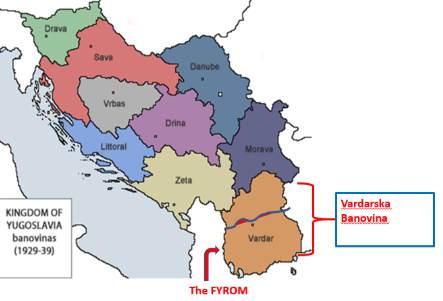
Sauca said the museum status had been "a powerful expression" of Turkey's commitment to inclusion and secularism.

The influential bishop Hilarion, who heads the Russian Orthodox Church's department for external church relations, also expressed his sorrow.

"It is a blow to global Christianity ... For us [Hagia Sophia] remains a cathedral dedicated to the Saviour," he told state-controlled TV Rossiya24 late on Friday.

But Ozgur Unluhisarcikli, Ankara director of the German Marshall Fund, told AFP the move would win hearts and minds at home as most Turks "would favour such a decision for religious or nationalist sentiments.

"This is a debate president Erdogan cannot lose and the opposition cannot win. As a matter of fact, this issue also has the potential to disunite the opposition parties."
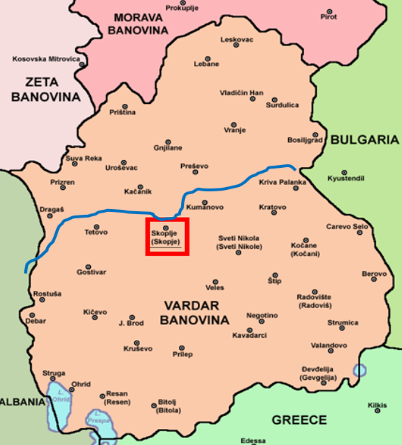
Erdogan's nationalist ally Devlet Bahceli welcomed the decision, saying that reopening Hagia Sophia to Muslim worship "has long been our desire".

"We wanted to come and visit Istanbul and the Hagia Sophia museum but unfortunately we realised that from today it is closed," said Renato Daleo, a tourist from Italy.

Ksennia Bessonova, a Russian living in Istanbul flanked by her 16-month-old daughter and her husband, said they had also wanted to visit. "It was our little dream because since our daughter was born we were not able to come and here we go," she said.
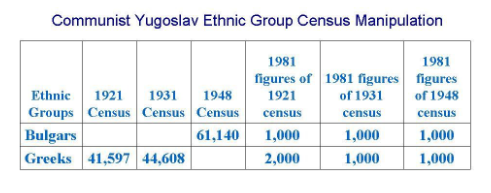
She hoped the authorities would not change anything inside.

"From what our friends and family were telling us it was something special and we wanted to feel the same. At the moment I am not sure what to expect but I feel sad in a way."

On Friday, Erdogan gave assurances that Hagia Sophia would be open to all visitors, including non-Muslims.

"The Hagia Sophia's doors will remain open to visitors from all around the world," his press aide Fahrettin Altun tweeted on Saturday.

"People of all religious denominations are welcome and encouraged to visit it - just as they have been able to visit other mosques, including the Blue Mosque."

Source: Al Jazeera

0 Comments
<<Previous

    Media/News Center

    Keep up to date with the latest news and developments that impact Greece's national security and Balkan regional stability.


    Picture

    Επίσης Διαβάστε

    Τα άρθρα του
    Μάρκου Α. Τέμπλαρ
    στα Ελληνικά εδω.

    Categories

    All
    Annual Assessment
    Current Affairs
    FYROM Watch
    Marcus A. Templar
    Press Releases

    Please Visit & Support

    Picture
    Picture

    RSS Feed

    Highlighted Papers

    Skopje's NATO Adventures: A Conversation on Insanity and Megalomania. The FYROM: Bribing its Way to Membership
    ​
    -- by Marcus A. Templar
    Ilinden: A Story of the Web and the Harpoon - The “People’s Republic of Krushevo”
    -- by Marcus A. Templar
    Fallacies and Facts on the Macedonian Issue
    -- by Marcus A. Templar
    A Synopsis of the FYROM Name Issue
    ​
    -- by Marcus A. Templar
    The Treaty of Bucharest: Borders of the Balkan countries as of 10 August 1913
    ​-- by Marcus A. Templar
    III Communist International, Fifth Congress - June 17-July 8, 1924 "Resolution on National Question in Central Europe and the Balkans" The Balkans: Macedonian and Thracian Questions
    -- Comintern Journal #7
    An Introduction to and Remarks on the Comintern Resolution of 11 January 1934
    -- by Marcus A. Templar
    Eliminating Opposition One Way or Another: The Case of the Expelled Swabian Germans and the Kidnapping of Greek Children
    ​
    -- by Marcus A. Templar
(c) 2014-2024 The Macedonian League